






Checklist for GDPR Compliance isn’t about ticking boxes and declaring victory. It’s about building a robust, defensible data governance program that stays effective over time.
If you handle any personal data of EU residents, you are playing by their rules, and those rules are strict. This isn’t a one time project.
It’s a continuous operational requirement that demands executive support and cross departmental cooperation.
The goal is to move beyond simply avoiding fines and to genuinely embed privacy by design into how you operate.
Accountability is everything here. You have to be able to demonstrate, with paper, that you’ve done the work, that you’ve thought things through, and that you’ve got controls in place.
1. Inventory Your Data

You can’t protect what you don’t know you have.
The first step, the absolute foundation of any Complete Guide: Checklist for GDPR Compliance effort, is a comprehensive data inventory.
This means mapping every bit of personal data that flows through your organization.
Seriously, I can’t stress this enough. Every system, every spreadsheet, every cloud service.
You need to know:
- What data you hold (name, email, IP address, health data).
- Whose data it is (customers, employees, website visitors).
- Where it lives (database A, cloud folder B, local server C).
- Why you have it (the purpose of processing).
- Who can access it (which departments, which third parties).
- How long you keep it (retention period).
- Where it goes next (international transfers).
This process usually reveals terrifying things. Data squirreled away on old laptops. Shadow IT systems running without oversight. Personal data mixed with operational data in test environments.
It’s a heavy lift, often involving specialized discovery tools and endless meetings with departmental heads. People get defensive about their data silos. I get it. It’s their patch.
But you have to cut through that. You need the Record of Processing Activities (ROPA), mandated by Article 30 of the GDPR. That’s your living document, your map of everything.
If you skip this step, the rest of the checklist is pointless. You’ll have huge, silent holes in your compliance posture, just waiting for an audit or a Subject Access Request (SAR) to expose them.
That cold dread you get when a client asks for “all my personal data” and you know it’s scattered across thirty systems? That’s why you do the inventory first.
2. Verify Legal Bases
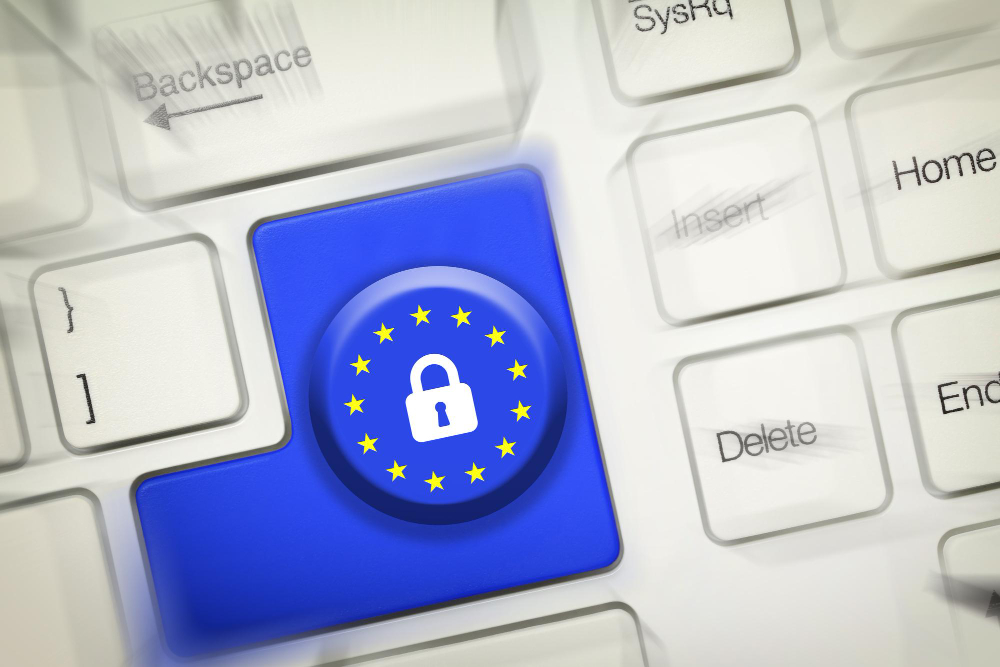
Once you know what data you have, you must justify having it.
Every processing activity you identified in the ROPA needs a valid lawful basis. There are six options, remember.
You need to go line by line through your data processing activities and assign one. And only one.
Is it Consent? If so, is the consent granular, freely given, specific, informed, and unambiguous? Can you prove it? Can the user easily withdraw it? If not, it’s not valid consent. Many cookie banners fail this test completely.
Is it Contractual Necessity? Does the contract actually require this piece of data? If I buy a book, you need my shipping address, but you don’t need my marital status. Be ruthlessly minimal here.
Is it Legitimate Interests? This is the default comfort zone for a lot of companies, and it’s dangerous. You must perform and document a Legitimate Interest Assessment (LIA).
You have to balance your business interest against the data subject’s rights.
Your interest must not override their fundamental privacy rights. This is a judgment call, and it must be defensible.
For any special category data, like health, religion, or political opinions, the bar is much, much higher. You need one of the ten Article 9 exemptions on top of a lawful basis. That’s double justification.
This step forces difficult conversations. You will find data you’ve been collecting for years “just in case” that has no legal justification.
When that happens, you delete it. Retention policies must be updated to reflect this. If there’s no lawful basis to keep it, it goes. Data minimization in practice.
3. Implement Data Subject Rights
The rights of the individual are the enforcement mechanism of the Complete Guide: Checklist for GDPR Compliance.
You need processes to handle Subject Access Requests (SARs), requests for Rectification, and the famous Right to Erasure (or right to be forgotten).
First, you need a public facing, clear mechanism for people to submit a request. An email address, a web form, something accessible.
Second, you need an internal workflow with defined Service Level Agreements (SLAs) for response times.
You typically have one month. That’s fast, especially for a SAR.
The system needs to verify the identity of the requester. You can’t just hand over someone’s data to a random email sender.
Then, you need the technical capability to locate all their personal data, across all systems identified in your ROPA, review it for exemptions, and deliver it in a commonly used, machine readable format, which is the Right to Data Portability.
The Right to Erasure is where most organizations sweat. If I request deletion, can your backups handle it? Can you ensure that all copies held by your sub processors are also deleted? The answer needs to be yes. This often requires system re engineering.
It’s not just a legal problem. It’s an operational and technical challenge.
Drill the process. Send yourself a test SAR. If you can’t get your data back easily, you’re not compliant.
4. Manage Third Parties

The modern enterprise runs on vendors. Cloud providers, marketing agencies, analytics tools, payroll processors. They are all Processors or sub processors.
The Controller (that’s you) remains responsible for their compliance.
Every vendor who processes personal data on your behalf must be covered by a Data Processing Agreement (DPA) that meets the requirements of GDPR Article 28.
It’s non negotiable.
The DPA needs to specify the subject matter, duration, nature, and purpose of the processing, the types of personal data, and the categories of data subjects.
More critically, it needs to contractually obligate the processor to:
- Only act on your documented instructions.
- Ensure personnel are committed to confidentiality.
- Implement appropriate security measures.
- Assist you with SARs and DPIAs.
- Notify you of breaches.
I’ve seen so many compliance projects bog down here because legal teams have to chase hundreds of vendors for updated DPAs.
Don’t sign a vendor contract without a solid DPA attached. It’s a key item on the Complete Guide: Checklist for GDPR Compliance. You are liable for their failings if you haven’t contractually covered yourself.
This also relates to international transfers. If your processor is outside the EEA, you need a valid transfer mechanism like Standard Contractual Clauses (SCCs) in that DPA. We’ll talk about transfers in depth later.
5. Security Measures and Breach Plan
Security is a foundational principle: integrity and confidentiality.
The GDPR is technology neutral, meaning it doesn’t mandate specific technologies, but it does mandate appropriate technical and organizational measures relative to the risk.
This involves:
- Encryption and Pseudonymization of personal data where appropriate.
- Implementing access controls and the principle of least privilege. People only see the data they absolutely need to do their job.
- Ensuring system resilience and the ability to quickly restore availability in case of a physical or technical incident. Backups, failovers, recovery plans.
The organizational measures are just as important. Think training, clean desk policies, and formal internal incident procedures.
And then there’s the Breach Notification Procedure.
You must have a documented, tested plan for managing a personal data breach.
The 72 hour clock is unforgiving. You can’t scramble to figure out who to call when the fire is burning.
The plan must define:
- Who is on the Incident Response Team.
- The exact criteria for determining if an incident is a ‘personal data breach’.
- The process for internal investigation and containment.
- The template for notifying the Supervisory Authority (SA) within 72 hours.
- The template for notifying the affected data subjects if the risk is high.
Test this plan regularly. A desktop exercise where you simulate a breach, like an unencrypted database leak, is an excellent investment.
The feeling of not being ready for that 72 hour window is a horrible pressure. Get the Complete Guide: Checklist for GDPR Compliance process drilled and ready.
6. Conduct Impact Assessments
Not every processing activity is high risk, but for the ones that are, you need a formal Data Protection Impact Assessment (DPIA).
A DPIA is mandatory when processing is “likely to result in a high risk to the rights and freedoms of natural persons.”
The EDPB lists criteria for high risk. If you meet two of these, you probably need a DPIA:
- Systematic monitoring (e.g., CCTV in public areas).
- Automated decision making with legal or similar significant effect (e.g., credit scoring).
- Large scale processing of special category data (e.g., a hospital’s patient records).
The DPIA process is an exercise in applied risk management.
You describe the processing, assess the necessity and proportionality, identify the risks to data subjects, and detail the measures you will take to mitigate those risks.
It forces you to pause before launching a new high risk project.
If you can’t mitigate the high residual risk, you are obligated to consult with your Supervisory Authority before you start processing. That’s a serious compliance gate.
For standard projects, at least conduct a Threshold Assessment to quickly determine if a full DPIA is needed.
Don’t skip the assessment just because you hope it’s low risk. Document why you decided against a full DPIA.
7. International Data Transfers

The legal landscape for moving personal data outside the EEA is constantly shifting and remains one of the most complex parts of GDPR Compliance.
Unless the recipient country has an Adequacy Decision from the European Commission, you need to use specific safeguards.
The main safeguard today is the use of the Standard Contractual Clauses (SCCs). The revised SCCs released in 2021 are now the default for transfers. If you are still using the old ones, you have a compliance gap.
But simply having the SCCs is not enough after the Schrems II ruling.
You must perform a Transfer Impact Assessment (TIA).
The TIA involves:
- Assessing the laws of the third country, specifically the surveillance and government access laws.
- Determining if those laws undermine the protections offered by the SCCs.
- Identifying and implementing supplementary measures to ensure an equivalent level of protection. This might mean enhanced encryption, specialized pseudonymization, or technical controls on access.
This is difficult work, often requiring outside legal counsel with expertise in the non EEA jurisdiction’s laws.
You need to document your TIA. If you haven’t, your transfer is at risk.
Another mechanism is Binding Corporate Rules (BCRs), mainly for large multinationals transferring data within their own corporate group.
They are excellent but take a long time to get SA approval.
You cannot rely on the ‘derogations’ like consent for regular, systemic transfers. Those are for specific, one off, non repetitive events.
8. Maintain Governance and Culture

Compliance isn’t a destination. It’s an ongoing state.
The principle of Accountability means you need a framework for continuous governance.
Appoint a Data Protection Officer (DPO) if required, or at least a high level Privacy Lead. This person needs appropriate resource and organizational standing.
The DPO must report to the highest management level. They are your internal privacy advocate and monitor.
Maintain all your documentation: ROPAs, DPIAs, LIAs, TIAs, breach logs, SAR responses. These are your audit trails.
Conduct regular staff training. If your staff doesn’t understand the rules, the entire system breaks down.
Phishing resistance, data handling procedures, and how to spot a SAR or a breach are mandatory training components.
I suggest mandatory annual training for all staff, and more specialized training for data handling teams.
Establish a Data Governance Committee composed of leaders from Legal, IT, Security, Marketing, and HR. Privacy decisions must be consensus decisions, not siloed.
Regularly audit and review your processes, at least annually, or when new technology is introduced. The technical controls you set up three years ago might be obsolete now. Systems drift. People get complacent.
You need to bake the Checklist for GDPR Compliance into the company culture. It shouldn’t feel like a tax. It should feel like a core value proposition.
Companies that respect privacy are trusted companies. Trust is hard to earn and easy to lose. Data protection is just good business.
A final point on the human side of things. I’ve been in the server room when the breach alert went off. The pit in my stomach, I can feel it now just thinking about it.
That is the feeling you are trying to avoid through proper preparation.
Compliance is boring, yes, but boring means predictable, and predictable means you sleep better at night.
That’s the real payoff. Get the work done, document it all, and keep it current. The law doesn’t care how busy you are. It cares that you did the right thing to protect the data subject.
I can certainly include an authoritative external source. The European Data Protection Board (EDPB) provides excellent, definitive guidelines on all these topics.
For example, their guidelines on the concept of ‘relevant and reasoned objection’ for the one stop shop mechanism are essential reading for any DPO in a multinational organization.
Checking their official website for the latest guidelines should be part of your quarterly review process.
You May Also Like:
- GDPR Meaning: Easy Step by Step Guide
- Employee Recognition Platforms with Gamification | 7 Smart Insights
- Cost of Employee Recognition Platforms | Is It Worth ?
Frequently Asked Questions
What is the most critical compliance document?
The most critical compliance document is the Record of Processing Activities (ROPA). This required documentation provides a complete inventory of what personal data you hold, why you process it, where it is stored, and who has access, which is fundamental to the Complete Guide: Checklist for GDPR Compliance.
How quickly must a data breach be reported?
A personal data breach must be reported to the relevant Supervisory Authority within 72 hours of becoming aware of it. This strict reporting timeline is essential, and your internal incident response plan must prioritize rapid discovery and notification to meet this core requirement of the Complete Guide: Checklist for GDPR Compliance.
Do I need a Data Protection Officer?
You need a Data Protection Officer (DPO) if your core activities involve either the large scale and systematic monitoring of individuals, or the large scale processing of special categories of data. It is a key element of the Complete Guide: Checklist for GDPR Compliance for many public bodies and large corporations.
What are Standard Contractual Clauses?
Standard Contractual Clauses (SCCs) are legally pre approved template terms issued by the European Commission. They are used to legally safeguard the transfer of personal data from the European Economic Area (EEA) to countries that do not have an adequacy decision, making them vital for international data transfers under the Complete Guide: Checklist for GDPR Compliance.