




The traditional office desk once a personal territory, complete with family photos and a favourite mug, feels like relic from another era.
Today many companies are asking: Is hot desking dead? Why hybrid work is changing everything.
Office attendance is no longer eight hours in one spot, technology and flexibility have shifted expectations.
As real-estate costs rise and employee preferences evolve, the model of shared workstations is under scrutiny.
In this article I’ll lay out what’s really happening, what data reveals, and how forward-thinking spaces are adapting to hybrid work’s demands.
1. The Origins of Shared Desks
The idea of sharing workstations isn’t new. The term “hot desking” itself comes from naval practice “hot racking,” where multiple people share the same bunk at different times.
In office environments it emerged as companies sought to reduce real-estate waste and increase flexibility.
Much of the promise was simple: Fewer permanently assigned desks means fewer empty spaces when people are working remotely or flexibly.
By 2024 the data was compelling: For example a study from K2 Space of 2,000 office spaces found one-third of desks unused on a given day.
Employers responded by shifting toward desk-sharing ratios and flexible layouts. Yet as we’ll see the story is changing.
2. Why Hybrid Work Shakes the Model

When employees work part of the week remotely and part in office, the notion of “my desk” changes.
Hybrid work demands different kinds of support: Collaboration hubs, quiet zones, and booking tools.
Many organisations now ask: Is hot desking dead? Why hybrid work is changing everything.
One source from Gable notes that 92% of organisations now use hybrid work models. When you double the flexibility you also double the complexity of workspace management.
Space utilisation becomes less predictable. When people choose when and where to work, the old 1:1 employee-to-desk model no longer holds.
With that shift comes a rethink: Instead of simply swapping assigned seats for shareable ones, workplaces must redesign around choice, technology and employee experience.
3. What the Data Says
Let’s look at the evidence. According to one report, only 40% of companies maintain a 1:1 desk-to-employee ratio, down from 56% in 2023.
In another analysis from Skedda, space-sharing models including hot desking or desk-hoteling rose by 30% globally since 2021. On paper these numbers suggest hot desking is thriving.
But there’s a caveat. Another recent study found significant flaws: many employees reported feeling alienated, lacking a sense of place or belonging when using shared workstations.
In Australia more than half of hot-desking users felt anxious about finding a desk and one quarter spent up to 30 minutes each day just setting up. Sheldon
So while the model remains in use, the experience of it is suffering. And when the experience is poor the question becomes: is hot desking dead in practice?
4. The Experience Gap
From my time consulting with real estate teams I’ve seen the subtle cues of trouble. A new employee arrives, hopes to grab a desk, but finds none.
They settle in a corner, feel disconnected. Their monitor stand is unfamiliar, the plug-lead awkward. They glance around and don’t feel anchored.
That feeling is real, and it shows up in feedback and productivity.
When companies rush to adopt a “grab any desk” mentality without redesigning systems, the promise of flexibility falls short.
The human need for a sense of territory, for familiarity, doesn’t vanish just because the workplace is labelled flexible. As one article puts it: “It feels like a hotel lobby, not a workplace”.
My view is that hot desking doesn’t die because the concept is flawed. It falters because the implementation ignores how people feel, how they work, and how they connect.
5. Signs That Hot Desking is Transforming
If you ask me: Yes, we are witnessing that hot desking is evolving. It’s not gone, but the way we apply it is shifting. Here are signs of that shift:
- Teams seeking semi-assigned “neighbourhoods” rather than random seats.
- Booking systems and zone discovery apps becoming standard rather than optional.
- Design of offices separating focus zones, team hubs and hot-desk areas rather than one flat open plan.
- Analytics driving desk supply, not rules of thumb. In 2025 many organisations use sensors and smart software to track usage.
- Employee experience weighing as heavily as cost savings. Because if people resist the model it won’t work long term.
In short, the question “Is hot desking dead?” is answered with: Not yet. But “as we knew it” might be.
6. Alternative Models Gaining Traction
Since the classic hot-desk model shows cracks, hybrid workplaces are trying new approaches. Desk hoteling (reserve your desk ahead) is one.
Activity-based working (choose your spot based on what you’re doing) is another. Many firms are blending models: part assigned, part flexible.
For example zones dedicated to teams, semi-permanent seats for high-focus work, alongside floating desks for casual drop-in.
This means that while hot desking remains in the toolkit, its role is becoming more nuanced. We are moving away from “everyone shares everything, any time” toward “choose how you work, supported by tech and design”.
7. Why Some Say “Hot Desking Is Dead”

It’s fair to ask: why do some organisations already declare that hot desking is dead? Here are some reasons:
- Employee dissatisfaction: When people feel instability, their sense of belonging drops, morale suffers.
- Productivity drag: Time lost finding a desk, setting up equipment, reconnecting. That adds up.
- Team dynamics weakened: When teams sit in different spots every day, informal interaction can diminish.
- Culture-fit mismatch: Not all jobs lend themselves to floating seats. Workers who need tools, privacy, or repeat collaboration may prefer stable fixtures.
- Design and tech lag: Without the right infrastructure, shared seating becomes a hassle rather than a benefit.
Because of these factors some firms are pivoting. The idea: yes to flexibility, no to chaos.
8. How to Decide for Your Organisation
Given all this, how should a company proceed? Here are guiding questions based on what I’ve seen work.
A. What does your usage data say? Start by measuring. How many people show up on average? What peak days? What percentage of desks lie unused? A lot of cost-savings stems from closing unused seats.
B. What do your people need? Ask employees how they work. Do they need consistency? Do they collaborate daily? Or just drop in occasionally?
C. What kind of workspaces do you provide? Flexibility means more than desks: quiet zones, collaboration hubs, breakout areas. If you just keep the old layout you will miss the benefit.
D. What technology supports your plan? A booking or reservation app, analytics dashboards, integrations with existing tools: these matter.
E. Can you pilot and learn? Don’t switch overnight. Test with one floor or one team. Collect feedback. Refine.
If after this analysis the answer is “yes, we can make shared desks work with design and tech”, then you proceed. If not, maybe the answer is “we need hybrid plus some dedicated seats”.
9. The Future of Shared Workspaces
As an engineer myself with a background in admin and operational change I believe we’re entering a new era. The model of hot desking will survive only if organisations treat it as part of a flexible ecosystem not as a cost-cutting exercise alone.
We’ll see workplaces where:
- Employees can choose their workspace type each day.
- Booking apps show who’s in, where, when.
- Analytics drive seat supply instead of headcount.
- Teams reserve pods when needed, and drop-in seats exist for others.
- People feel connected and anchored, even when they don’t have “their” desk.
In that future the question “Is hot desking dead? Why hybrid work is changing everything” will receive a different answer: hot desking isn’t dead, it’s reborn.
10. My View: Embrace Change with Caution
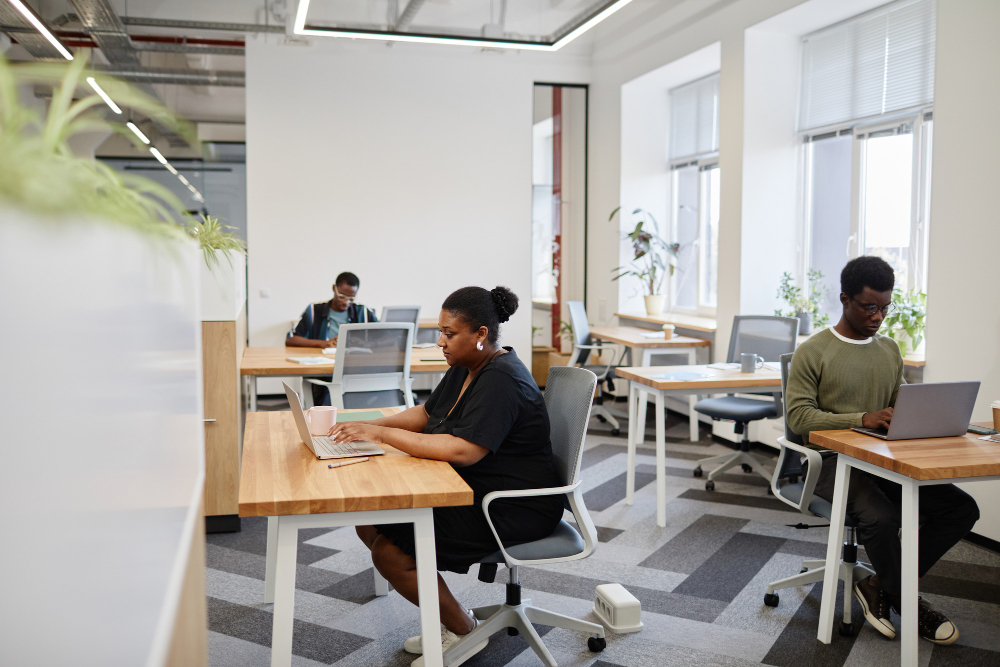
Having walked through offices, seen people struggle with floating seats, and observed successful redesigns, I come away convinced that ditching assigned desks wholesale without culture and tech support is risky.
In my view you must treat the shift like, you are rewiring the workplace.
You must listen to people, you must give choice with support, you must enable connection.
If you do that one lock-in becomes clear: hot desking done well thrives; done poorly fails and leaves many convinced the model is dead.
FAQs
What about employees who dislike shared seats?
When employees resist floating desks, it often comes down to lack of consistency or control. A hybrid work model that integrates clear booking tools and team zones can ease the transition, showing that the concept of “Is hot desking dead? Why hybrid work is changing everything” isn’t a threat but a shift toward empowerment.
Does hot desking still save costs?
Should every company adopt hot desking?
No. Some operations require dedicated desks for equipment, confidentiality, or team cohesion. The better question: does your hybrid strategy align with shared workspaces? If not, the model might be less applicable.