





If you have ever watched a team slowly lose its spark because no one feels truly seen, you already understand why an employee rewards programs matters.
It is not just about giving people gifts or points, it is about creating a workplace where effort is noticed in real time, not months later during some rushed performance review.
Most companies say they value their people, but in the middle of deadlines and meetings, the good work gets buried.
And that is usually when frustration starts creeping in.
The funny thing is, the moment you bring recognition back into the daily routine, even in the simplest way, everything shifts.
You feel the mood change, conversations become easier, people share ideas without that hesitation that comes from not feeling appreciated.
A proper rewards programs brings structure to that. It sets a clear rhythm, something everyone can understand, something that feels fair.
And when people feel the system is fair, they show up with a different attitude. They push a little more. They stick around longer. They care about the results because they feel the company cares about them.
This guide breaks everything down so you can shape a program that actually works for your team, not just one that looks good on paper.
What Are Employee Rewards Programs?

An employee rewards programs is essentially a structured system designed to acknowledge and appreciate the work of your employees.
It is the tangible expression of a company’s gratitude.
Think of it as moving beyond the annual review and the predictable bonus.
It is about creating moments of genuine recognition, both big and small, that reinforce positive behaviors, celebrate achievements, and make people feel seen.
These programs are not monolithic.
They can be as simple as a public shout out in a team meeting or as complex as a global, points based platform integrated with your existing HR software.
The core idea, however, is universal. It is about deliberately creating a culture where effort does not go unnoticed.
A truly effective program is not a sporadic series of gestures, but a woven part of the company’s fabric, something employees can trust and engage with consistently.
It tells a story about what the organization values, from collaborative wins to innovative ideas and simple, consistent reliability.
Benefits of Employee Rewards Programs

Why should a business, especially one navigating the complexities of hybrid or hot desking models, care about this?
The data and the lived experience of countless companies point to a powerful return on investment that touches every part of the organization.
First, consider retention. Replacing an employee is notoriously expensive, with costs often ranging from one half to two times the employee’s annual salary.
A SHRM report highlights the sheer financial drain of turnover. A robust employee rewards programs acts as a powerful antidote.
When people feel valued, they are far less likely to look for opportunities elsewhere. This loyalty is priceless.
Then there is engagement. Disengaged employees are present in body but not in spirit or mind. They do the minimum.
A recognized employee, however, is an engaged employee. They are the ones who log in with purpose, who collaborate freely, who go the extra mile to solve a client’s problem.
This heightened engagement directly fuels productivity and quality of work.
These programs also become a powerful recruitment tool. In a competitive job market, a strong culture of recognition is a significant differentiator.
Talented individuals are attracted to workplaces where they know their contributions will be celebrated.
It becomes a key part of your employer brand, a signal that you are a modern, people centric organization.
Furthermore, they strengthen company culture, especially in fluid work environments.
For teams that may not share a physical desk every day, a digital recognition platform can become the virtual watercooler for positivity.
It builds bridges between remote workers and in office staff, creating a shared sense of community and shared purpose that transcends physical location.
Finally, it drives performance. By clearly defining and rewarding desired behaviors, you are not just thanking people, you are actively guiding your team toward the goals that matter most for the business.
Top 20 Employee Rewards Platforms

Navigating the landscape of recognition platforms can feel overwhelming. The market is flooded with options, each promising to be the best.
To help you cut through the noise, here is a detailed look at 20 leading platforms, with a frank assessment of their pros, cons, and pricing to guide your decision.
Bonusly
A platform built on the power of peer to peer recognition. Employees are given a monthly allowance to give micro bonuses to their colleagues, which can be redeemed for a wide variety of gifts.
Pros: Its social feed is incredibly engaging and fun, it promotes a culture of continuous appreciation, and the integration with Slack and Teams is seamless.
Cons: The monthly allowance model might not suit companies looking for a more formal, performance based reward structure.
Pricing: Starts at approximately $3 per user per month, with custom enterprise pricing available.
Nectar
Nectar combines peer recognition, rewards, and wellness challenges into a single, sleek platform. It offers a vast rewards catalog including gift cards and company branded swag.
Pros: The all in one approach is very compelling, the interface is user friendly, and the ability to run wellness challenges is a unique bonus for holistic employee engagement.
Cons: Can feel a bit broad, and some of the more premium rewards require a significant points accumulation.
Pricing: Plans start around $3.50 per user per month, with a free basic version for smaller teams.
Guusto
This platform focuses on the simplicity of sending gifts and recognition. Managers can quickly send a Starbucks coffee or an Amazon gift card to thank an employee in real time.
Pros: Extremely easy and fast to use, no points system to manage, great for instant, tangible recognition.
Cons: Lacks the social community feed and long term engagement features of other platforms.
Pricing: Offers a free plan for up to 25 employees, with paid plans starting at a flat monthly rate.
Motivosity
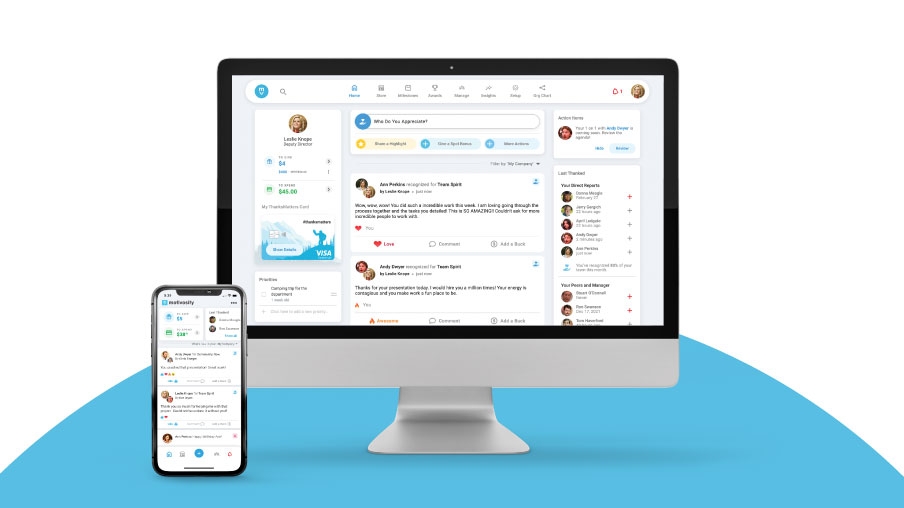
Motivosity structures its platform around four key areas: connection, recognition, feedback, and leadership tools.
It is designed to help managers build deeper relationships with their teams.
Pros: A strong emphasis on the human connection aspect of management, good feedback mechanisms.
Cons: The breadth of features can make it feel less focused purely on rewards than some competitors.
Pricing: Pricing is quote based, typically starting around $5 per user per month.
Kudos
A veteran in the space, Kudos emphasizes reinforcing company values through its recognition badges.
It offers rich analytics to track recognition trends across the organization.
Pros: Excellent for value driven recognition, powerful reporting suite for HR leaders.
Cons: The interface can feel a bit less modern and playful compared to newer entrants.
Pricing: Custom pricing based on organization size and needs.
Awardco
Awardco has partnered with Amazon Business to offer an enormous selection of rewards without any markups.
Employees can use their points on millions of items.
Pros: Unbeatable selection of rewards, the Amazon integration is a massive perk, no markup on items.
Cons: The sheer size of the catalog can be overwhelming for some users.
Pricing: The platform is free for organizations, with revenue coming from a percentage of the gift card sales.
WorkTango
WorkTango combines employee rewards with advanced surveys and insights.
It is for organizations that want to not only recognize employees but also deeply understand their sentiment.
Pros: A powerful combination of recognition and actionable people data.
Cons: Might be overkill for companies that just want a simple recognition tool.
Pricing: Custom pricing upon request.
Culture Amp
Primarily known as a top tier employee feedback and analytics platform, Culture Amp has integrated recognition features that tie feedback directly to appreciation.
Pros: Seamlessly integrates recognition into the larger performance and development cycle.
Cons: Its recognition features are not as robust or standalone as dedicated reward platforms.
Pricing: Enterprise level pricing, focused on mid to large sized companies.
Blueboard
Blueboard specializes in experiential rewards. Instead of points or gift cards, employees choose from curated experiences like weekend getaways, adventure sports, or gourmet dining.
Pros: Creates unforgettable memories, highly personalized, breaks the monotony of material gifts.
Cons: Higher cost per reward, making it less suitable for frequent, micro recognition.
Pricing: Premium service with custom pricing.
Tango
Tango is a card based platform that allows for both digital and physical delivery of rewards. It is simple, visual, and effective.
Pros: The tactile nature of the cards, even digital ones, feels more personal than a points transfer.
Cons: Less scalable for very large organizations that need deep analytics.
Pricing: Offers both free and paid premium plans.
Gloat

Gloat is an internal talent marketplace that includes recognition as a core component. It helps employees find new projects and roles internally, and get recognized for their skills.
Pros: Ties recognition directly to career growth and skill development, a forward thinking approach.
Cons: A very specific platform suited for large enterprises focused on internal mobility.
Pricing: Enterprise level pricing.
Fond

Fond is a consolidated rewards and recognition platform that offers both peer recognition and access to a wide range of corporate discounts.
Pros: The combination of recognition and employee discounts provides both recognition and everyday value.
Cons: The discount/perks side can sometimes overshadow the recognition element.
Pricing: Quote based pricing.
BambooHR
While primarily an all in one HRIS, BambooHR includes a solid employee recognition module that integrates directly with employee profiles.
Cons: The recognition features are good but not as advanced as best of breed standalone platforms. Pros: Perfect for companies already using BambooHR, as it keeps everything in one place.
Pricing: Included in their HRIS suite, which has quote based pricing.
15Five
A performance management platform built on weekly check ins, 15Five includes “High Fives” as a core feature for peer to peer recognition.
Pros: Integrates recognition into the regular rhythm of work and feedback.
Cons: The recognition element is quite basic compared to dedicated systems.
Pricing: Starts at $4 per user per month.
Lattice
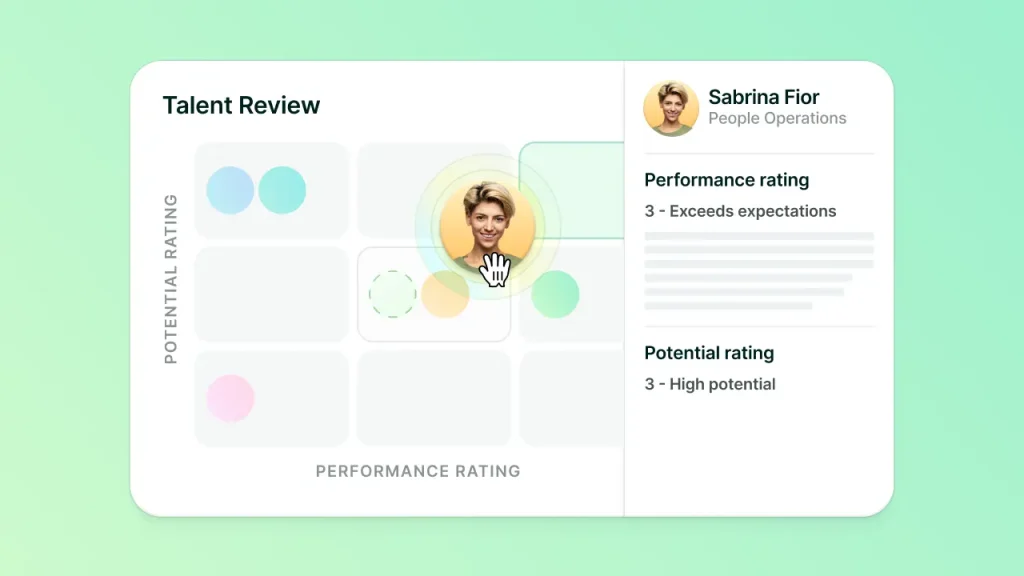
Similar to 15Five, Lattice is a performance management tool that incorporates recognition and praise into its platform to foster a positive culture.
Pros: Strong integration with goals and performance reviews.
Cons: Recognition is a feature, not the main product.
Pricing: Starts at $4 per user per month for the base plan.
Achievers
One of the original players in the space, Achievers offers a comprehensive, points based employee rewards programs with a large selection of rewards.
- Pros: Very mature and robust platform, trusted by many large enterprises.
- Cons: Can feel a bit corporate and less agile than newer, cloud native solutions.
- Pricing: Enterprise level custom pricing.
Workday
For massive enterprises using Workday as their HCM, its recognition module provides a native, integrated solution.
- Pros: Deep integration with HR, finance, and planning data.
- Cons: Part of a massive ERP system, so it is not a standalone or agile solution.
- Pricing: Part of the broader Workday HCM package.
Reward Gateway
This platform offers a full employee engagement suite, including recognition, discounts, surveys, and communications all in one place.
- Pros: An all in one hub for employee engagement, reducing the need for multiple tool logins.
- Cons: The breadth can sometimes mean depth is sacrificed in certain areas.
- Pricing: Custom pricing for mid to large businesses.
Terryberry
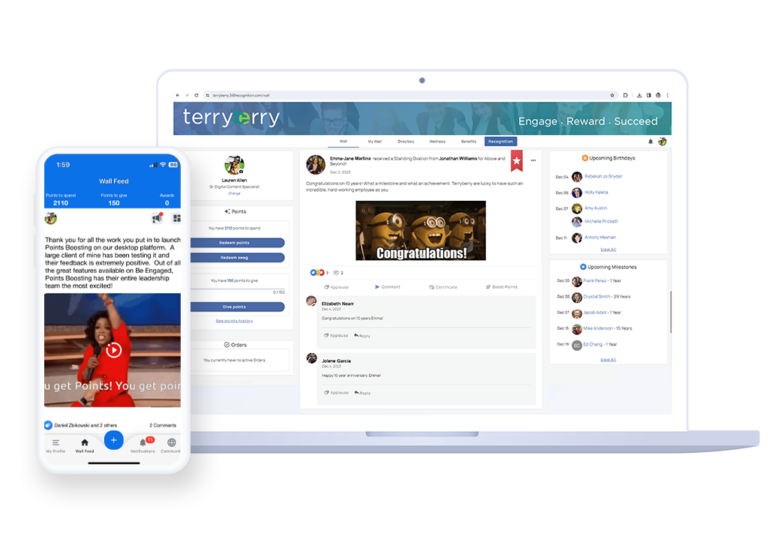
A well established company offering a range of recognition solutions, including service awards, peer to peer recognition, and wellness incentives.
Pros: Very strong in traditional service awards and physical recognition items like rings and plaques.
Cons: May be perceived as less modern and digitally focused than some competitors.
Pricing: Custom pricing based on program design.
30 Creative Reward Ideas
A platform provides the engine, but the rewards themselves are the fuel.
They need to be desirable, meaningful, and varied to cater to a diverse workforce.
Here are 30 ideas that go beyond the standard gift card.
- Extra Paid Time Off. A full day, completely disconnected, to recharge. This is a powerful way to acknowledge burnout prevention.
- Experience Vouchers. Tickets to a concert, a cooking class, or a hot air balloon ride. You are gifting a memory, not an object.
- Lunch with Leadership. An informal, no agenda meal with a CEO or department head. It provides recognition and valuable mentorship.
- Professional Development Fund. Money dedicated to a course, conference, or certification. It invests in their future.
- Charity Donation Match. The company matches a donation to an employee’s chosen charity. This aligns rewards with personal values.
- Work from Anywhere Week. The freedom to work from a different city or country for a week. Ultimate trust and flexibility.
- Subscription Box. A curated box delivered monthly, from gourmet coffee to books. It is a gift that keeps on giving.
- Home Office Upgrade. A high quality ergonomic chair, a monitor, or a desk plant. It directly improves their daily work life.
- Team Offsite Celebration. A dedicated budget for the team to celebrate a win together, strengthening bonds.
- Priority Parking. A coveted spot right by the office entrance. A simple but highly visible perk.
- Gourmet Coffee or Tea Hamper. A selection of high end beans or leaves for the caffeine connoisseurs on your team.
- Fitness Tracker or Subscription. A nod to employee wellness, like a Fitbit or a year of a meditation app.
- Bookstore Shopping Spree. A generous gift card to a local or online bookstore for the lifelong learners.
- “First Pick” Privilege. For hot desking environments, the first choice of desk or meeting room for a month.
- Company Wide Shout Out. A feature in the all company newsletter or a dedicated Slack channel.
- Customized Swag. High quality, useful branded merchandise they would actually want to use, like a Patagonia vest.
- Breakfast or Catered Lunch. A team meal, on the company, to kick off a day or celebrate a milestone.
- Skill Sharing Session. The opportunity for the employee to lead a workshop on a topic they are passionate about.
- Flexible Friday. The ability to log off at 1 PM every Friday for a month. A fantastic way to start the weekend.
- Volunteer Day. A paid day off to volunteer for a cause they care about.
- Surprise Delivery. A surprise dinner delivery to their home on a busy workday. A thoughtful, practical gesture.
- Massage or Spa Voucher. The gift of relaxation and stress relief.
- Latest Tech Gadget. The newest headphones, a smart speaker, or a tablet.
- Personalized Thank You Note. A handwritten note from their manager, specific and sincere.
- “CEO for the Day” Symbolic Role. A fun, symbolic title with small perks like choosing the lunch menu.
- Learning Library Access. A subscription to a platform like MasterClass or LinkedIn Learning.
- Child or Pet Care Stipend. A direct contribution to easing the logistics of their personal life.
- Foodie Adventure. A gift card for a tasting menu at a renowned local restaurant.
- Project Autonomy. The reward of getting to choose their next exciting project.
- A Surprise Day Off. An unplanned, paid day off announced spontaneously as a thank you for a team’s hard push.
Designing a Successful Program

Rolling out a random collection of rewards is a recipe for inconsistency and confusion.
A truly impactful employee rewards programs requires thoughtful design, almost like building a product for your most important customers, your employees.
Here is a step by step guide to building one from the ground up.
1. Define Your Clear Objectives
Before you look at a single platform or reward idea, you must ask yourself why. What problem are you trying to solve?
Is it low employee engagement scores? High turnover in a specific department? A lack of cross team collaboration?
Your objectives will be the North Star for every decision you make. If your goal is to improve collaboration, your program must reward collaborative behaviors, not just individual star performers.
Write these objectives down and share them widely.
2. Secure Leadership Buy In
A recognition program that lacks vocal and active support from the top is doomed to fade into obscurity.
Leaders must not just approve the budget, they must participate. They need to be the chief recognition officers, modeling the behavior you want to see across the company.
When the CEO takes time to give a meaningful shout out, it validates the entire system and signals that this is a real company priority, not just an HR initiative.
3. Align with Company Values
This is the heart of a meaningful program. Your rewards should directly reinforce the behaviors that embody your company’s core values.
If “Innovation” is a value, create a specific reward or badge for employees who propose novel ideas. If “Customer Obsession” is key, recognize those who go above and beyond for a client.
This alignment turns abstract values into tangible, celebrated actions, weeding out any dissonance between what you say you value and what you actually reward.
4. Choose Your Mix
The most successful programs operate on multiple levels. You need a healthy mix of formal and informal, monetary and non monetary, and private and public recognition.
The mix might include annual performance bonuses (formal, monetary), peer to peer points (informal, monetary), a simple thank you channel on Slack (informal, non monetary), and service awards (formal, non monetary).
This variety ensures that there is a type of recognition that resonates with every employee, regardless of their personality or role.
5. Select Your Platform
With your strategy defined, now you can choose the tool. Refer back to the list of top platforms and evaluate them against your specific objectives, company size, and budget.
Key considerations include integration with your existing tech stack like Slack or Microsoft Teams, the user friendliness of the interface, the quality and range of the rewards catalog, and the robustness of the reporting and analytics.
A platform that is a chore to use will simply not be adopted.
6. Communicate and Launch
A quiet, timid launch will get quiet, timid results. Treat the launch of your employee rewards programs like a product launch.
Build anticipation beforehand. Create a clear, simple, and engaging communication plan that explains the why, the how, and the what.
Use video, live demonstrations, and internal champions to generate excitement.
Make it impossible for employees to miss the message, and ensure everyone knows exactly how to participate from day one.
7. Train Your Managers
Managers are the linchpin. They are the ones who will be using the system most frequently to recognize their teams.
If they are not equipped or motivated, the program will stall. Provide dedicated training sessions.
Help them understand their budget for rewards, show them how to give meaningful and specific recognition, and empower them to be ambassadors for the program within their own teams. Their enthusiasm, or lack thereof, is contagious.
8. Gather Feedback and Iterate
Your program is not a “set it and forget it” system. It is a living part of your culture. Regularly solicit feedback through surveys, focus groups, or simply by monitoring usage data.
Are people using it? What rewards are most popular? What are the pain points? Be prepared to adapt.
Maybe you need to add more experiential rewards, or simplify the points system.
Continuous improvement shows your employees that you are listening and that you are committed to making the program work for them.
The Final Word

An employee rewards programs, at its absolute best, ceases to be a program at all. It evolves into the natural rhythm of how your company operates.
It becomes the default language of appreciation, the expected response to a job well done, and the visible proof that people are seen and valued not just for their output, but for their humanity.
In our current era of work, where flexibility and purpose are paramount, this is no longer a nice to have.
It is a strategic imperative. It is the difference between a workplace that people tolerate and a community they are proud to build.
The initial investment of time and resources is significant, yes, but the return a team that is engaged, loyal, and passionately invested in the company’s success is immeasurable.
Start the conversation today, and build a culture of recognition that truly resonates.
You May Also Like:
- Employee Recognition Platforms with Gamification: Boosting Motivation
- Cost of Employee Recognition Platforms: Is It Worth the Investment
- Employee Recognition Platforms for Remote Teams: Best Practices
- What Are Employee Recognition Platforms? A Complete Beginner’s Guide
Frequently Asked Questions
What makes a rewards programs successful?
A successful program is clearly aligned with company values, has strong leadership participation, is easy and enjoyable to use, and offers a variety of meaningful rewards that employees genuinely desire.
How do you measure the program’s effectiveness?
Look at key metrics like employee engagement survey scores, employee turnover rates, participation rates in the recognition platform itself, and anecdotal feedback from teams and managers.
What is a common mistake to avoid?
The most common mistake is creating a program that only recognizes top sales performance or years of service, ignoring the daily efforts and smaller wins that truly drive a company’s culture forward.
Are these programs only for large companies?
Absolutely not. Small and medium sized businesses can benefit tremendously, often starting with simple, low cost initiatives like a dedicated recognition channel or manager training on giving effective feedback.
Can rewards be non monetary?
Yes, and often non monetary recognition like a sincere, public thank you from a senior leader can be more impactful and memorable than a generic gift card.