






What is customer interaction management, this is the question that every modern business leader faces when trying to understand how to connect with people in a world where attention is fragmented and expectations are high.
The concept is not abstract, it is practical, it is about how companies handle every single touchpoint with their customers, from a quick chat on social media to a complex support case.
In this article we go straight into the subject, no detours, no boring stories, just a clear and human explanation of what customer interaction management means, why it matters, and how it shapes the future of business.
2. Defining Customer Interaction Management

Customer interaction management, often shortened to CIM, is the structured process of managing and optimizing all exchanges between a company and its customers across multiple channels.
It is not only about answering questions, it is about creating a consistent and personalized experience.
CIM combines technology, data, and human engagement to ensure that every conversation, email, call, or message contributes to satisfaction and loyalty.
Think of it as the operating system of customer communication.
It organizes the flow, tracks the context, and ensures that no matter where the customer comes from, the business responds with clarity and relevance.
3. Importance of Customer Interaction Management
The importance of customer interaction management lies in its ability to directly influence loyalty and retention.
A single poor interaction can push a customer away, while a seamless and empathetic response can turn them into advocates.
Studies show that customers abandon brands after negative service experiences.
CIM is not a luxury, it is a necessity. In competitive markets, where alternatives are one click away, the way a company manages interactions becomes a differentiator.
It is the bridge between marketing promises and actual delivery.
4. Key Features of Interaction Management Systems

When we ask what is customer interaction management, the answer is not complete until we look at the systems that make it possible.
These platforms are not abstract, they are the daily tools that shape how conversations unfold.
Expanding this section means going deeper into the mechanics, the feel, and the impact of each feature.
Unified Communication Hub
Imagine a desk where every message, call, and chat lands in one place. That is the hub. It prevents the chaos of switching tabs and losing track of who said what.
Customers do not want to repeat themselves, and businesses cannot afford to miss a detail.
A unified hub keeps the flow intact, making every interaction part of a bigger picture.
Data Tracking and Context
This is where memory comes in. Systems record histories, preferences, and even tone of past conversations. It is not surveillance, it is context.
When a customer reaches out, the agent already knows the background.
No need for the customer to explain the same issue twice.
That small detail changes the entire experience, making it feel human and attentive.
Automation Tools
Automation is the quiet worker in the background. It sends confirmations, schedules reminders, and handles repetitive tasks without fuss.
The point is not to replace people, it is to free them.
Agents can then focus on the conversations that require empathy, judgment, and creativity.
Automation ensures consistency, because machines do not forget or delay.
Analytics Dashboards
Numbers are not just numbers, they are signals. Dashboards show how fast teams respond, how satisfied customers feel, and where bottlenecks appear.
Managers can see patterns, like slower replies on weekends or higher demand during product launches.
Analytics turn raw data into decisions, guiding improvements that customers actually notice.
Personalization Engines
Personalization is the feature that makes customers feel seen. Systems adapt responses, recommend products, or adjust tone based on profiles.
A loyal customer might get a warmer greeting, while a new one receives clear guidance.
It is recognition, not manipulation. It shows the company values the individual, not just the transaction.
Integration with CRM
Although customer interaction management is distinct from customer relationship management, integration matters.
Interaction systems feed real-time data into CRM, enriching the long-term view.
CRM informs CIM with history, CIM updates CRM with fresh exchanges.
Together they create a loop that keeps relationships alive and relevant.
Security and Compliance
Trust is fragile. Systems must protect customer data with encryption, access controls, and compliance with regulations like GDPR.
Without these safeguards, even the best interaction strategy collapses.
Security is not a side feature, it is central to credibility.
Scalability
Growth brings pressure. A startup may handle hundreds of interactions, but a growing company faces thousands.
Systems must scale without breaking.
Scalability is not only technical, it is strategic, because without it, customer interaction management becomes chaos.
In practice, these features are not isolated.
They work together, forming a system that turns scattered conversations into structured engagement.
That is what makes customer interaction management more than a buzzword, it is the foundation of modern communication.
5. Benefits for Businesses

For businesses, customer interaction management delivers measurable benefits:
- Efficiency by reducing duplicated efforts and streamlining workflows.
- Consistency across departments, ensuring the brand voice remains stable.
- Insight through data analysis that reveals patterns and opportunities.
- Revenue growth by improving conversion rates and upselling through better engagement.
- Risk reduction by identifying dissatisfied customers early and addressing issues before they escalate.
6. Benefits for Customers

Customers benefit equally from CIM:
- Faster responses that save time and reduce frustration.
- Personalized experiences that make them feel valued.
- Seamless journeys across channels without repeating information.
- Trust in the brand’s ability to listen and act.
- Satisfaction that leads to loyalty and advocacy.
7. Common Challenges in Interaction Management
Despite its advantages, CIM faces challenges:
- Integration complexity when systems are fragmented.
- Data overload that makes it hard to extract meaningful insights.
- Human factor where employees may resist new processes.
- Channel inconsistency when some platforms are managed better than others.
- Scalability issues as customer bases grow faster than infrastructure.
These challenges require strategic planning and investment.
8. Customer Interaction Management vs Customer Relationship Management
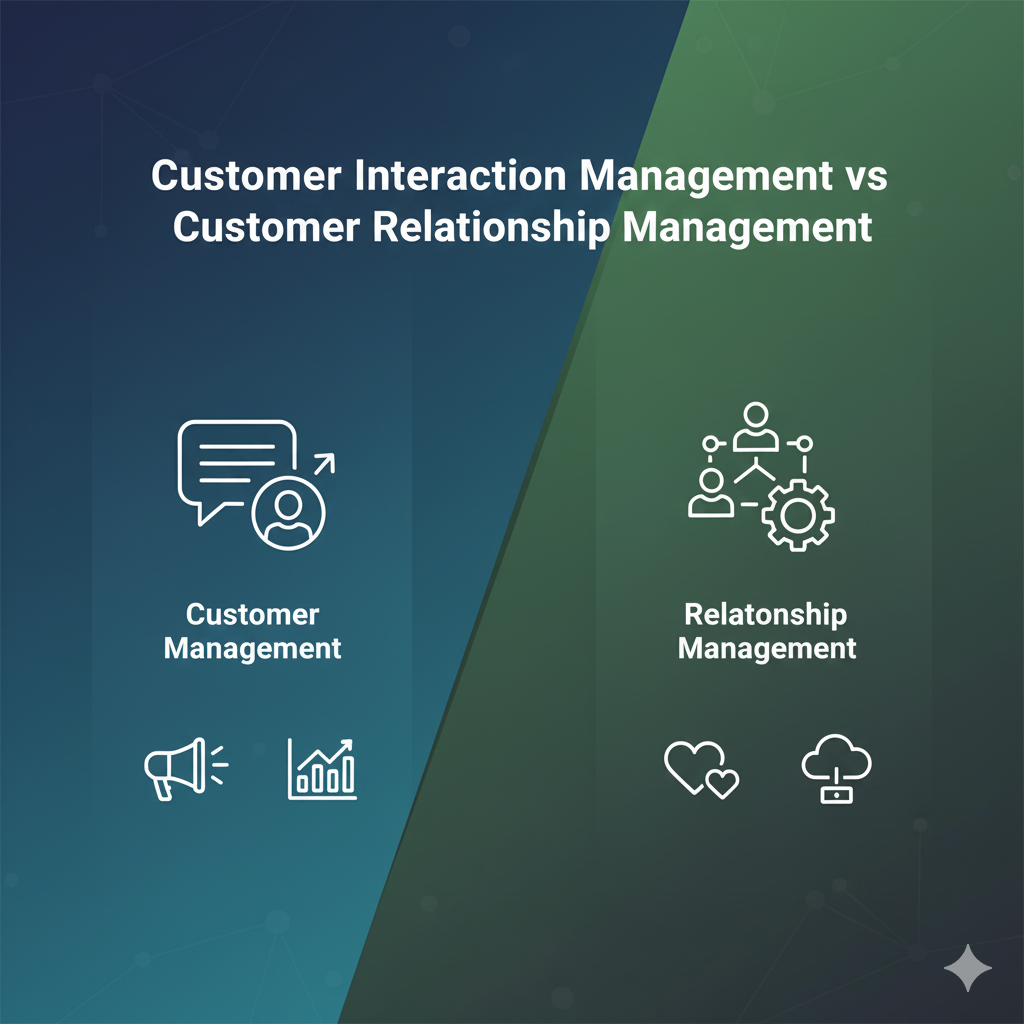
Customer interaction management is often confused with customer relationship management. The difference is clear.
- CRM focuses on long-term relationship building, storing data about customers, and managing sales pipelines.
- CIM focuses on the real-time handling of interactions across channels.
CRM is the library, CIM is the conversation. Both are essential, but they serve different purposes.
9. Best Practices for Effective Interaction Management
Effective CIM requires best practices:
- Centralize communication in one platform.
- Train employees to use systems with empathy and efficiency.
- Measure performance with clear KPIs like response time and satisfaction.
- Personalize interactions using customer data responsibly.
- Maintain consistency across all channels.
- Update technology regularly to avoid outdated processes.
10. Role of Technology and Automation
Technology plays a decisive role in CIM. Automation handles repetitive tasks, artificial intelligence predicts customer needs, and cloud platforms ensure scalability.
Automation does not replace human touch, it enhances it by freeing employees to focus on complex issues.
The role of technology is not only operational, it is strategic.
It allows businesses to anticipate trends, adapt quickly, and deliver experiences that feel effortless.
11. Customer Interaction Across Multiple Channels

Modern customers interact through multiple channels. Phone, email, chat, social media, and even in-person meetings.
CIM ensures that these channels are not isolated. It creates a unified view where the customer journey is continuous.
Omnichannel interaction is not optional, it is expected. Customers want to start a conversation on Twitter and finish it via email without losing context. CIM makes this possible.
12. Future Trends in Customer Interaction Management
The future of CIM is shaped by several trends:
- AI-driven personalization that predicts needs before customers express them.
- Voice and video integration as natural communication methods.
- Real-time analytics that guide decisions instantly.
- Ethical data use to maintain trust in privacy-conscious markets.
- Proactive engagement where businesses reach out before issues arise.
These trends redefine how companies and customers connect.
13. Conclusion
Customer interaction management is more than a technical framework, it is the living pulse of how businesses communicate with people.
When we ask what is customer interaction management, we are really asking how companies can transform every conversation into a moment of trust, loyalty, and value.
The conclusion is not abstract, it is practical, because CIM is the discipline that ensures no customer feels ignored, no message is lost, and no opportunity slips away.
Expanding further, CIM is the glue that holds together marketing promises, sales efforts, and service delivery.
Without it, businesses operate in fragments, with disconnected teams and inconsistent voices.
With it, they create a unified experience where customers feel recognized and respected.
This is not only about satisfaction, it is about survival in markets where alternatives are endless and patience is short.
The conclusion also points to the future. As technology evolves, CIM will integrate artificial intelligence, predictive analytics, and proactive engagement.
Businesses will not wait for customers to complain, they will anticipate needs and act before issues arise.
Ethical data use will become central, because trust is fragile and transparency is demanded.
For customers, the impact is equally strong. They will enjoy seamless journeys across channels, personalized responses that feel human, and faster resolutions that save time.
For businesses, the reward is loyalty, advocacy, and sustainable growth.
So when we talk about what is customer interaction management, we are not just defining a system, we are describing the foundation of modern business success.
It is the discipline that turns communication into connection, and connection into long-term value. Companies that embrace it will thrive, those that ignore it will struggle.
The conclusion is clear, CIM is not optional, it is essential, and it is the future of customer experience.
You May Also Like:
- What Is A Customer Relationship Management System
- The Ultimate 10 Best CRM for Real Estate Investors in 2025
- The Ultimate 10 Best CRM for Financial Advisors in 2025
- How to Use CRM System Effectively for Maximum Results | Guide 2025
Frequently Asked Question
What is customer interaction management in simple terms
It is the way businesses organize and optimize every conversation with customers across all channels.
How does customer interaction management help businesses
It improves efficiency, consistency, and revenue by streamlining communication and analyzing customer data.
Is customer interaction management the same as CRM
No, CRM focuses on long-term relationships, CIM focuses on real-time interactions.
What are future trends in customer interaction management
AI personalization, omnichannel integration, real-time analytics, and ethical data practices are leading trends.
Why is customer interaction management important for customers
It gives them faster responses, personalized experiences, and seamless journeys across different platforms.