




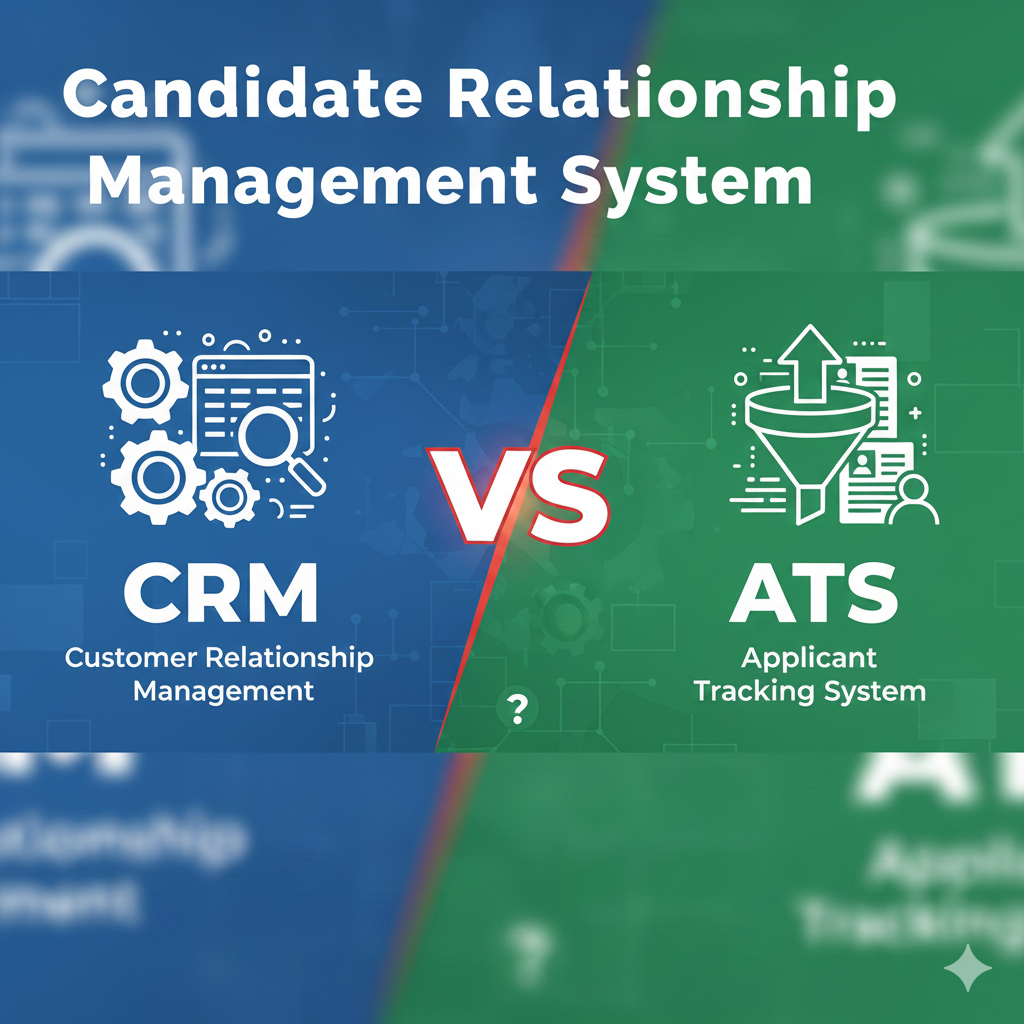
Candidate Relationship Management System vs Applicant Tracking System is a comparison every modern recruiter eventually faces, especially when hiring volume grows and candidate expectations rise faster than most teams can handle manually.
The topic matters because companies are no longer judged only on who they hire, they are judged on how they hire.
When I sit with recruitment teams and watch them move between spreadsheets, copied emails, and endless follow ups, I see how quickly the process becomes overwhelming.
This is exactly where choosing the right combination of software reshapes the entire experience.
A clear view of Candidate Relationship Management System vs Applicant Tracking System helps any company understand how each tool works, where each one fits, and how they come together to support a more human, organised, and efficient recruitment flow.
2. What Is a Candidate Relationship Management System

A Candidate Relationship Management System is built to manage long term relationships with potential hires.
It works like a living environment where candidate profiles grow, update, and stay connected with your brand even when roles are not open.
When I first used a CRM system in a large scale hiring project, the immediate feeling was relief, almost physical, because the tool finally gave structure to something that had always been messy.
Every conversation, every interaction, every note, everything stayed centralised.
The system allows recruiters to segment talent pools, personalise communication, and send ongoing engagement messages without needing to track everything manually.
It supports actions like sending newsletters to tech talent, creating pipelines for future roles, nurturing passive candidates, and tracking interest levels in real time.
The CRM system creates the kind of ongoing connection that keeps future candidates warm, informed, and receptive to upcoming opportunities.
For companies that rely on relationships with scarce talent, this becomes essential.
In practice, the Candidate Relationship Management System works more like marketing software for recruitment.
It builds interest, maintains attention, and keeps your brand present in the candidate’s mind long before an application begins.
The core of a CRM system is relationship nurturing, not application processing.
3. What Is an Applicant Tracking System

An Applicant Tracking System is the operational engine of recruitment. It manages job postings, receives applications, tracks candidate progress, and organises the entire hiring workflow.
When a candidate submits an application, the ATS becomes the backbone that moves them through screening, interviews, feedback cycles, and final decisions.
It is more administrative, more structured, and more process driven than a CRM system.
While a Candidate Relationship Management System deals with attraction and engagement, the ATS deals with qualifications, compliance, and evaluation.
For example, when I watched a hiring team process two thousand applications for a single role, everything depended on the ATS workflow. Without it, the team would drown in manual sorting and email duplication.
An ATS stores resumes, schedules interviews, captures evaluation notes, and helps hiring managers collaborate.
Companies often choose ATS platforms because they integrate with job boards, automate filtering steps, and support reporting for performance tracking.
If the CRM system handles the pre application relationship, the ATS handles the active hiring journey from start to finish.
External sources such as SHRM describe the ATS as foundational for any structured recruitment environment because it reduces manual workload and supports measurable hiring decisions.
4. Key Differences Between CRM System and ATS
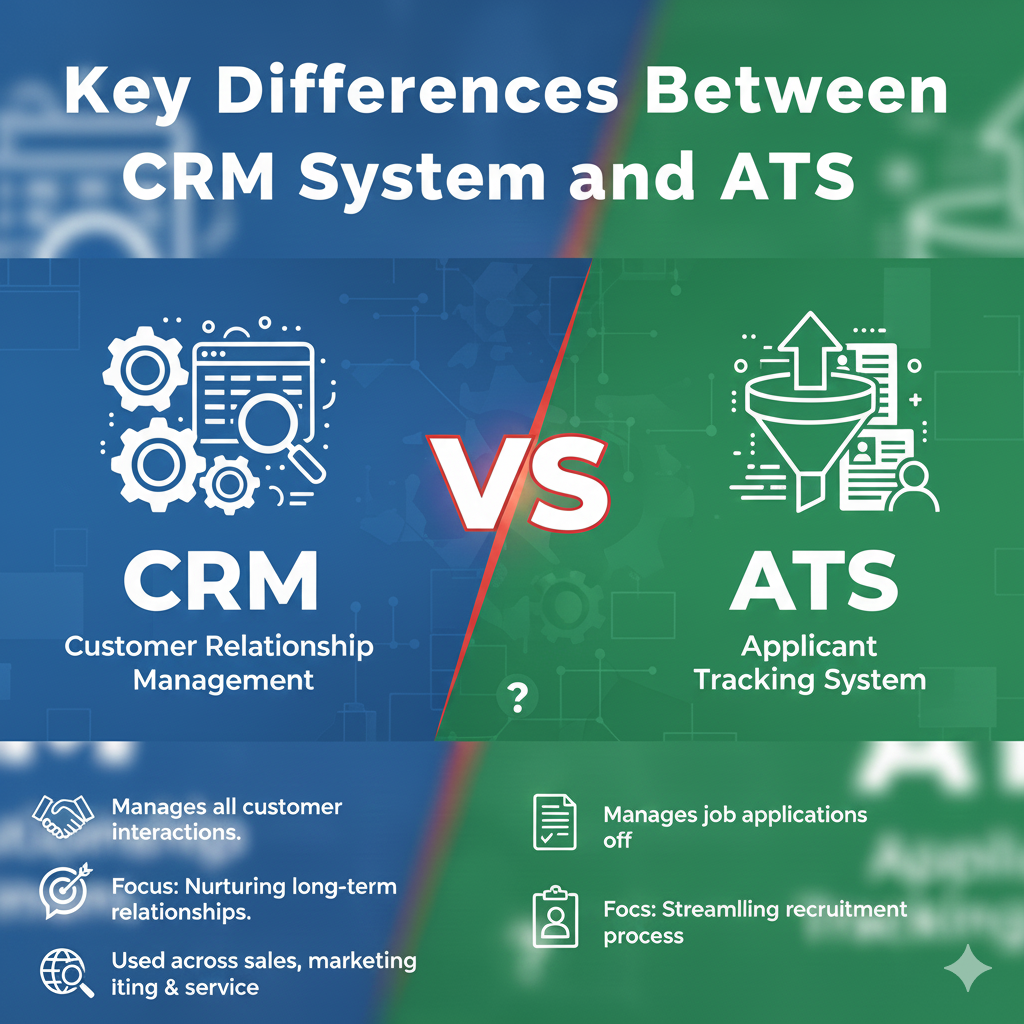
The comparison of Candidate Relationship Management System vs Applicant Tracking System becomes clearer when we look at how differently they function in daily use.
- A CRM focuses on attraction and engagement, an ATS focuses on processing and hiring.
- A CRM keeps relationships alive long before applications exist, an ATS manages candidates only after they apply.
- A CRM builds warm talent pools, an ATS filters candidate lists.
- A CRM communicates in a personalised, ongoing rhythm, an ATS communicates based on specific job stages.
- A CRM supports marketing style campaigns, an ATS supports structured compliance workflows.
- A CRM helps reduce cold recruiting, an ATS helps reduce administrative overload.
- A CRM stores dynamic interest profiles, an ATS stores formal applications and documents.
- A CRM works over months or years, an ATS works during the active recruitment cycle.
When teams try to use one system to replace the other, frustration appears immediately. They do different jobs, they serve different moments, and they support completely different mindsets inside recruitment.
5. Benefits of a Candidate Relationship Management System

Using a Candidate Relationship Management System brings clear advantages, especially for companies that compete aggressively for talent.
- Long term engagement grows naturally because communication flows consistently without feeling forced.
- Candidate experience becomes warmer and more personal because messages consider past interactions and preferences.
- Talent pools stay alive with updated profiles and segmented groups, which reduces the time spent sourcing.
- Recruiters can run targeted recruitment campaigns, such as inviting only senior developers to a private event or webinar.
- Passive candidates convert more easily into active applicants because the relationship already exists.
- Brand loyalty increases because candidates feel valued before any job discussion begins.
- Data insights show which groups are most engaged, which communication works best, and where the brand is gaining or losing attention.
- Recruiters reduce cold outreach fatigue, which saves energy and improves success rates.
The strongest benefit I see is simple. A CRM system creates a human feeling at scale. Candidates no longer feel like a number in a database.
6. Benefits of an Applicant Tracking System

The Applicant Tracking System brings another set of advantages that are equally important in structured hiring.
- It keeps all applications organised in one environment with clear workflow stages.
- Automated screening reduces manual time spent on repetitive tasks.
- Integration with job boards expands reach without additional work.
- Interview scheduling becomes easier because the ATS synchronises calendars.
- Evaluation notes stay centralised, helping hiring managers collaborate with clarity.
- Reporting tools show time to hire, source effectiveness, and bottlenecks.
- Compliance becomes easier because candidate information stays secure and traceable.
- A consistent hiring process improves fairness and reduces bias.
An ATS becomes essential when hiring volume grows, especially when the team wants predictable structure. Without an ATS, everything becomes scattered and unmanageable.
7. Limitations of CRM System

A Candidate Relationship Management System is powerful but not perfect. Some limitations appear in real world use.
- It cannot manage formal recruitment workflows.
- It does not handle applications, screening, or interview progress.
- It cannot replace ATS compliance functions.
- It requires disciplined segmentation or the database becomes overwhelming.
- Engagement campaigns require planning or they become irrelevant.
- Without proper data hygiene, talent pools lose quality over time.
The CRM system is excellent for relationships but incomplete for hiring operations.
8. Limitations of ATS

The ATS also has limitations, especially when used alone.
- It cannot nurture relationships before an application.
- It often feels transactional to candidates.
- Communication is more rigid because it depends on job stages.
- It cannot run marketing style talent engagement.
- Talent pools remain static because the system is not built for long term nurturing.
- Recruiters cannot easily manage passive candidates inside the ATS.
Teams that rely only on ATS platforms often struggle to maintain warm relationships with future talent.
9. How CRM System and ATS Complement Each Other

The strongest recruitment strategies use both tools. When analysing Candidate Relationship Management System vs Applicant Tracking System, I often explain that the comparison is not a fight, it is a partnership.
The CRM system warms the audience, educates potential candidates, and builds trust over time. Then the ATS takes over when someone is ready to apply.
Once I watched a tech company reduce hiring time by almost half simply because the CRM system had already nurtured most of the pipeline before any job was posted.
When new roles opened, the ATS received immediate applications from people who already felt connected to the brand.
Together they create continuity. The candidate journey flows from curiosity, to interest, to application, to hiring, without losing momentum.
10. Use Cases for CRM System

A Candidate Relationship Management System becomes especially valuable in scenarios like these:
- Building pipelines for roles with chronic scarcity such as senior engineers or specialised healthcare roles.
- Reengaging candidates who previously applied but were not selected.
- Running campaigns for employer branding content such as newsletters and events.
- Managing university or early career outreach where long term relationship matters.
- Keeping track of community events, meetups, and networking connections.
Any situation where long term trust matters becomes a perfect environment for CRM work.
11. Use Cases for ATS
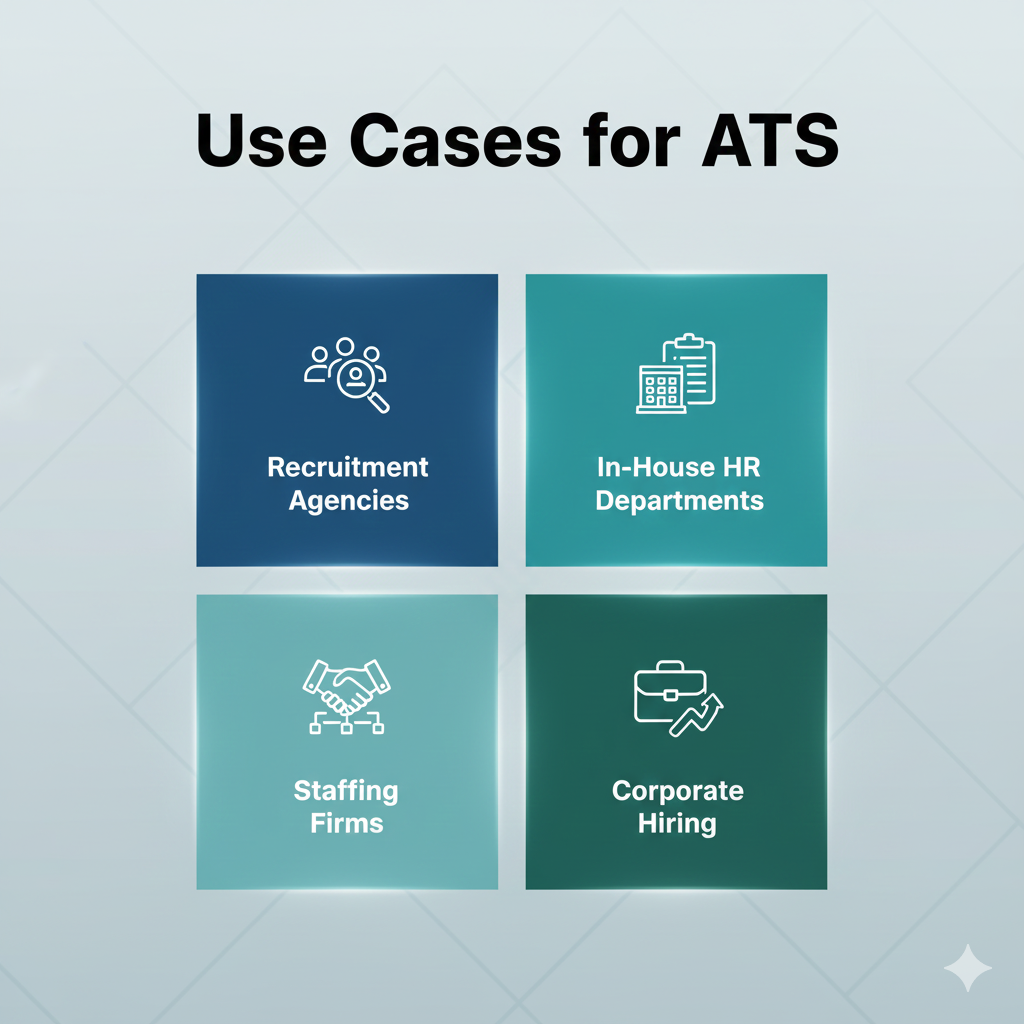
The ATS becomes essential for operational recruitment tasks such as:
- Handling high application volumes for open roles.
- Managing structured hiring steps with hiring managers.
- Storing resumes, evaluation sheets, and interview notes.
- Ensuring compliance in industries that require traceable processes.
- Coordinating multi stage interviews with different departments.
Any scenario where precision, documentation, and process control is required fits the ATS perfectly.
12. Choosing the Right Tool for Your Recruitment Strategy
Deciding between Candidate Relationship Management System vs Applicant Tracking System depends on the company’s hiring maturity.
When the hiring team wants to build a talent community, create ongoing communication, and maintain relationships, a CRM system should lead the strategy.
When the team needs strict organisation, formal workflow stages, and compliance support, the ATS becomes the central tool.
For fast growing companies, the right decision is almost always to use both.
Startups often begin with an ATS for structure, then add a CRM system as they scale and realise they cannot rely on cold recruiting forever.
Mid sized companies usually do the opposite, they start with CRM work to build presence and only later add ATS tools when hiring volume increases.
The key is alignment. If the goal is human connection, the CRM system wins. If the goal is operational reliability, the ATS wins.
If the goal is a complete recruitment ecosystem, the combination wins every time.
13. Future Trends in CRM System and ATS

The future of recruitment software is moving toward deeper integration between CRM systems and ATS platforms.
Right now they feel like separate tools, but industry trends show a strong push toward unified environments.
Artificial intelligence will impact both, especially in talent segmentation, predictive scoring, interview scheduling, and candidate experience optimisation.
Some trends already visible include:
- AI powered profile enrichment that updates candidate data automatically.
- Predictive analytics that identify which passive candidates are most likely to convert.
- Conversational assistants that personalise communication inside CRM environments.
- Automated evaluation systems inside ATS platforms that reduce reviewer fatigue.
- Stronger employer branding tools integrated directly into recruitment software.
- Unified dashboards where CRM insights and ATS workflows merge in one place.
These shifts will eventually make the Candidate Relationship Management System vs Applicant Tracking System comparison less about competition and more about harmony.
Both tools will gradually operate as a single recruitment ecosystem.
14. Conclusion
Understanding Candidate Relationship Management System vs Applicant Tracking System helps teams make smarter choices about how to approach the entire talent journey.
A CRM system builds relationships, warms the audience, and establishes long term trust.
An ATS manages structured hiring, ensures consistency, and takes applications from start to finish.
When combined, they create a fluid, human, and efficient recruitment experience that supports growth without sacrificing quality.
Recruitment success no longer depends only on attracting candidates, it depends on building relationships before they apply and managing them professionally once they do.
Companies that adapt to this dual approach will always stand out as more prepared, more organised, and more human in the way they hire.
You May Also Like:
- How a Candidate Relationship Management System Improves Candidate Experience
- 10 Amazing Benefits of a Candidate Relationship Management System for Recruiters
- 9 Powerful Key Features of a Candidate Relationship Management System
Frequently Asked Questions
1. What tool manages relationships before applications
A Candidate Relationship Management System manages relationships before any application exists, helping companies build warm talent pools through ongoing engagement.
2. What tool controls the hiring workflow
The Applicant Tracking System controls structured hiring steps, storing resumes, evaluation notes, and interview progress in a centralised place.
3. Do companies need both CRM and ATS
Many companies benefit from using both tools because each one supports a different stage of the hiring process, making the overall strategy more complete.
4. Can a CRM system replace an ATS
A CRM system cannot replace an ATS because it does not manage compliance, formal workflows, or structured evaluations.
5. Which tool improves candidate experience
Both tools improve candidate experience, the CRM system enhances long term communication and the ATS ensures smooth and organised hiring stages.