


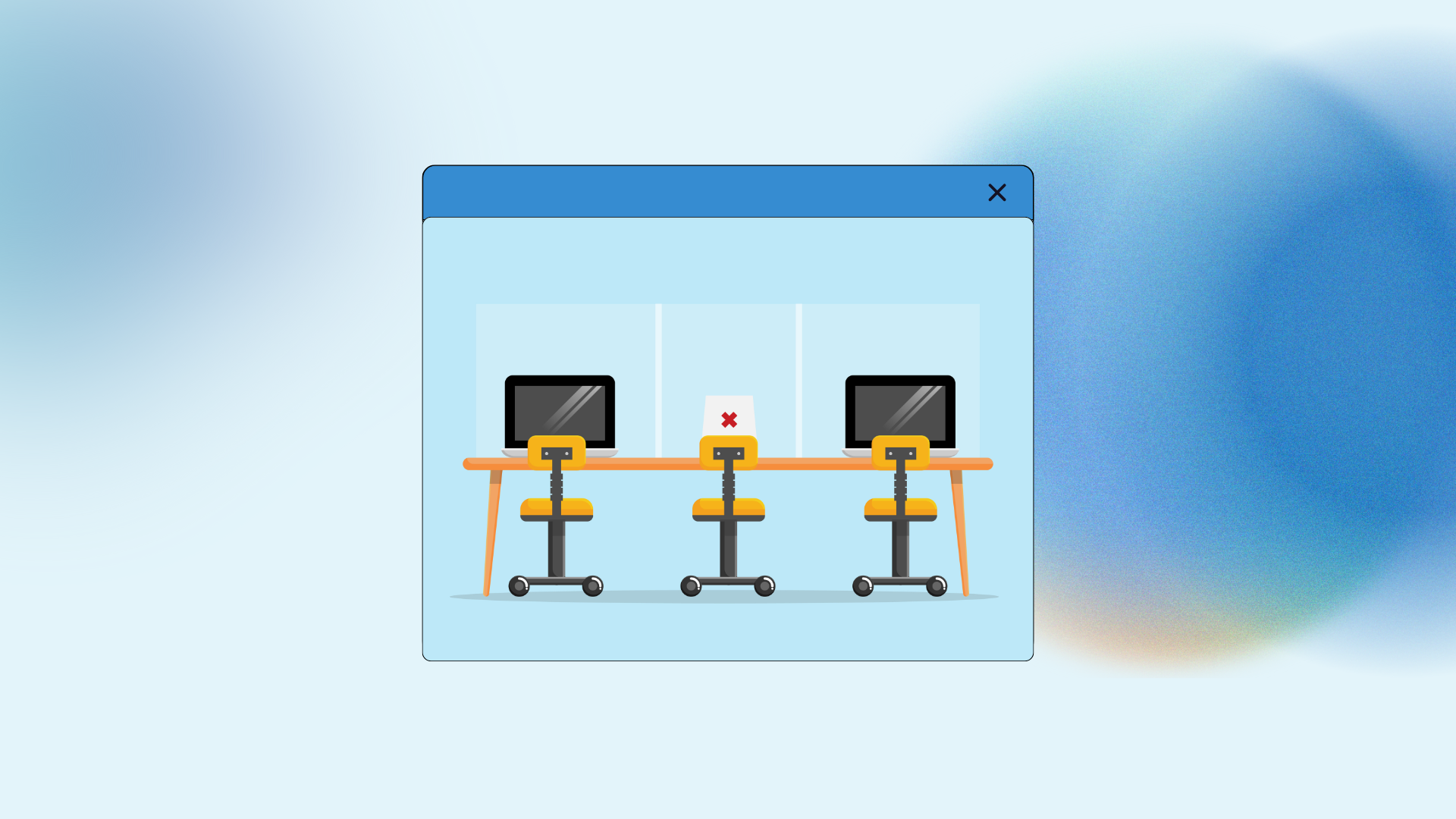



The Future of Workspaces Is Quietly Changing
It began with an empty chair. Then another. Across corporate headquarters from London to São Paulo, half the office sits unoccupied by midweek.
Real estate reports estimate that desk utilization in hybrid organizations averages below 45 percent, even among firms with strong return-to-office mandates.
The implication is hard to ignore: Companies pay premium rent for desks that no longer anchor people’s workdays.
This is where desk sharing emerges, not as a trend, but as a structural response to an economic and cultural transformation.
I’ve seen CIOs hesitate at first, fearing chaos or loss of identity.
Yet the shift, when done right, is not about removing ownership, but rethinking how people interact with space, data, and one another. It’s about visibility, rhythm, and choice.
From Assigned Seats to Adaptive Systems

The old workplace model assumed permanence. Your nameplate on the desk, the same coffee mug every morning, the ritual of settling in before the day began.
Desk sharing challenges this intimacy by introducing fluidity. It asks a deeper question: does a fixed place define productivity, or does flexibility?
In most transitions I’ve witnessed, the answer starts with data. When leadership finally visualizes how underutilized the workspace truly is, priorities shift.
A global bank in Frankfurt discovered through occupancy sensors that entire wings sat idle three days a week. The IT director told me, “We weren’t downsizing, we were digitizing the footprint.”
Desk sharing, supported by workplace booking software, allowed them to cut floor space by 28 percent and reinvest in technology upgrades.
But the hidden victory was cultural. Employees began planning their office presence intentionally, meeting in clusters that mirrored project cycles rather than department lines.
The Human Architecture Behind Desk Sharing

Technology enables desk sharing, but behavior sustains it.
Most resistance comes not from tools, but from uncertainty.
People need to know where they fit, literally and symbolically.
This is where communication strategy becomes decisive. I often remind executives that implementing desk sharing without narrative is like reorganizing furniture in the dark.
You might save space, but you’ll lose orientation.
Leaders must articulate what the system stands for—efficiency, sustainability, connection—and translate it into tangible routines.
At a large insurance firm in Johannesburg, the team piloted desk sharing in two departments.
Managers were trained to act as “space mentors,” guiding staff through new booking platforms, resolving conflicts, and collecting feedback in real time. Adoption rose to 92 percent in under six weeks.
What made it work was not the app itself, but the shared ownership of the experiment.
Technology as the Coordination Layer

The modern desk sharing ecosystem is defined by integration. It’s no longer sufficient to rely on spreadsheets or generic calendars.
Organizations need unified platforms that connect identity management, occupancy analytics, and hybrid scheduling.
Take, for instance, Get Joan, a meeting room and desk booking solution designed for minimal friction.
In environments where simplicity drives adoption, Joan’s e-ink displays and mobile interface offer clarity without noise.
In another case, Skedda became the silent orchestrator of hybrid patterns for a mid-sized law firm that shifted to part-time presence schedules.
The firm discovered through Skedda’s reporting tools that Tuesdays and Thursdays peaked at 87 percent occupancy, while Fridays rarely exceeded 30 percent.
These insights fed directly into policy changes: shorter Friday office hours, enhanced remote connectivity, and a measurable boost in satisfaction scores.
It’s not about technology for technology’s sake—it’s about extracting rhythm from data.
I’ve also seen enterprises pair Envoy’s visitor management and workplace reservation system with their security and HR stack to streamline onboarding for hybrid hires.
It brought consistency to chaotic Mondays. Similarly, Condeco’s analytics modules provided the macro visibility needed for real estate forecasting.
Their dashboards don’t just count desks—they reveal behavioral patterns that guide strategic lease decisions.
When these systems work together, desk sharing stops being a scheduling challenge and becomes an intelligent infrastructure layer.
Real Estate, Reimagined

By 2028, CBRE predicts that flexible work models will dominate over 70 percent of corporate leases in developed markets.
The arithmetic is clear: companies no longer measure space in square meters per employee, but in value per collaboration.
In a recent Deloitte study, organizations that adopted desk sharing frameworks reported an average of 25 percent reduction in facility costs and a 17 percent improvement in perceived team connection. The latter metric often surprises CFOs, but it shouldn’t.
When employees choose where and when to work, they tend to use office time for higher-value interactions.
One executive I met described it perfectly: “We stopped owning desks and started owning moments.” That shift redefines ROI itself.
IT’s Hidden Workload in Desk Sharing

Few outside the IT department grasp how technically demanding desk sharing can be. Integration with identity systems like Azure AD or Okta, management of network access points, and balancing occupancy sensors with privacy compliance all fall within their scope.
I remember standing in an operations room with a facilities engineer as he monitored live seat occupancy across multiple floors.
Every green light on the screen represented a desk in use, every red one an opportunity. Behind that simple view were hundreds of conditional API calls feeding from IoT endpoints.
The most underestimated component is bandwidth stability.
As employees transition between shared zones, network handoffs must remain seamless to avoid session drops, especially in environments running virtual desktops.
This is where IT’s invisible architecture makes or breaks the employee experience.
CIOs must also anticipate resistance from cybersecurity teams.
Dynamic work patterns complicate endpoint tracking, which is why zero-trust frameworks become critical companions to desk sharing infrastructure.
The Cultural Calibration

Even with flawless tech, culture determines success. Some organizations interpret desk sharing as a cost-cutting measure, others as a flexibility benefit.
The narrative determines adoption speed.
When the message is framed around empowerment—“choose your workspace, connect your way”—people engage with curiosity. When it sounds like downsizing, they retreat.
I’ve facilitated workshops where staff mapped emotional reactions to workspace changes. The difference between “my desk was taken” and “I can sit where I’m most effective” was entirely psychological.
Executives must model the behavior they wish to see. I’ve watched leaders who book their own seats weekly gain more trust than those who delegate it. Visibility builds legitimacy.
Measuring Impact Beyond Space

Quantifying desk sharing success demands a mix of metrics. Utilization rates matter, but so do interaction frequencies, IT support tickets, and employee sentiment analysis.
At a pharmaceutical firm that implemented sensor-based occupancy tracking, leadership discovered that average meeting room duration dropped by 22 percent after desk sharing was introduced.
The reason?
Employees scheduled shorter, more intentional meetings because availability became visible. Productivity is not just doing more, but doing less with purpose.
Other indicators include reduced commuting hours, energy savings from dynamic lighting systems, and even carbon footprint reduction.
These secondary gains often strengthen ESG narratives, positioning organizations as adaptive and sustainable.
Leadership Lessons from the Field

Desk sharing is not a plug-and-play model. It requires executive patience and iterative learning. The best rollouts follow three principles I’ve learned to respect over the years:
- Pilot Before Policy – Start small. Test behavior, not just tools.
- Communicate Relentlessly – Overexplain intentions until they become shared logic.
- Anchor in Analytics – Let real-time data, not intuition, drive layout evolution.
In a sense, desk sharing is leadership architecture. It reshapes how decisions are made and how accountability circulates through space.
I recall a CTO telling me, “When we stopped assigning desks, people stopped hiding behind them.” Transparency became literal.
The Unspoken Future: Work as a Fluid System
As generative AI enters workplace orchestration, we’ll soon see predictive desk allocation that adapts to project timelines, travel calendars, and even energy optimization.
The office will feel alive, responsive, almost self-curating.
Gartner’s recent projection suggests that by 2030, over half of enterprise workspaces will employ AI-driven occupancy planning.
The implications for IT governance and HR coordination are profound. Desk sharing, in that vision, is not a static policy but a dynamic algorithm.
Yet amid all the sophistication, one truth remains human. People need connection. They crave a sense of belonging even in fluid systems.
The organizations that succeed will not be those with the smartest sensors, but those that design spaces for spontaneous collaboration, quiet focus, and trust.
Final Reflection

Every executive grappling with post-pandemic office strategy faces the same paradox: how to maintain cohesion without physical permanence.
Desk sharing offers a pragmatic path, but it demands emotional intelligence, not just spatial planning.
When done thoughtfully, it teaches something timeless—that work has always been less about where we sit and more about how we connect.
The future of offices, I believe, is not smaller. It’s smarter, lighter, and deeply human.
What is desk sharing in modern offices?
Desk sharing is a flexible workspace model where employees use shared desks instead of fixed seats. It allows organizations to optimize space, reduce costs, and align with hybrid work patterns.
How does desk sharing impact productivity?
When supported by strong IT systems and clear communication, desk sharing enhances productivity by promoting intentional office presence and reducing idle space.
Which software supports desk sharing?
Platforms such as Get Joan, Skedda, Envoy, and Condeco offer booking and analytics tools that coordinate seating, meeting spaces, and occupancy visibility.
Is desk sharing suitable for all companies?
Not always. It works best in hybrid or project-based organizations where employees alternate between remote and office work. Culture and communication determine its success.
What are the main challenges of desk sharing?
The key challenges include change resistance, IT integration, cybersecurity management, and maintaining team identity within a fluid workspace model.