




deskbird represents a specific shift in how organizations manage physical office spaces in a landscape where hybrid schedules are the standard rather than the exception.
- 1. Overview – Deskbird Review
- 2. Why You Can Trust Us
- 3. Key Features
- 4. User Experience
- 5. Performance and Reliability
- 6. Products
- 7. Pricing and Plans
- 8. Integrations and Compatibility
- 10. Product Specification
- 11. Pros and Cons
- 12. Customer Support
- 13. Ideal Use Cases
- 14. Alternatives
- 15. Bottom Line: Our Verdict
- You May Also Like:
- Frequently Asked Questions
The software functions as a workplace management platform that allows employees to book desks, meeting rooms, and parking spaces through an intuitive interface.
It solves the immediate, practical problem of space uncertainty by providing real time visibility into who is coming into the office and where they will be sitting.
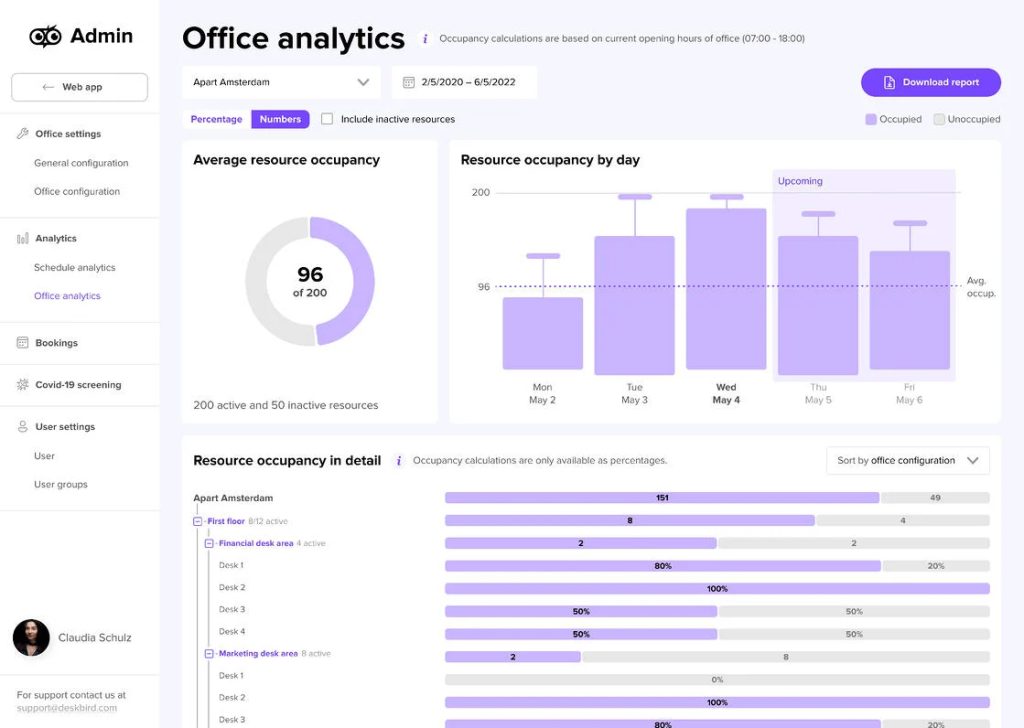
For managers, it offers a data driven way to understand office utilization rates, helping to decide if floor space should be expanded or reduced based on actual occupancy trends.
By integrating directly with common communication tools, deskbird removes the friction usually associated with coordination.
Employees can see their colleagues’ schedules and book spots near their team members, which facilitates the collaborative intent of the office environment.
The system is designed to be lean and fast, focusing on high adoption rates among staff who likely already feel overwhelmed by corporate software.
It prioritizes the mobile experience and quick calendar syncs, ensuring that the process of securing a workspace takes only a few seconds.
This focus on the user experience, combined with robust backend analytics for facility managers, makes it a comprehensive choice for companies navigating the complexities of flexible work arrangements.
1. Overview – Deskbird Review
deskbird is a comprehensive workplace management solution specifically built to streamline the challenges of hybrid work and office space optimization.
It provides a centralized platform where employees can view interactive office maps and reserve desks, rooms, or parking spots in advance or on the fly.
The primary objective of deskbird is to simplify the logistical hurdles that arise when a company no longer operates on a fixed, five day office week.
By making the office searchable and bookable, it ensures that employees always have a functional workspace waiting for them when they decide to commute.
The platform distinguishes itself through a strong focus on employee wellbeing and social connection.
It allows users to share their status and location, making it easier for teams to synchronize their office days for face to face meetings or social interactions.
Administratively, deskbird provides powerful analytics that track how different areas of the office are being used over time.
This data is essential for facilities management, allowing for informed decisions regarding lease renewals, furniture layout, and energy usage.
With native integrations for Microsoft Teams and Slack, deskbird fits into existing workflows, ensuring that the transition to a managed hybrid model is as smooth as possible for both the IT department and the end users.
2. Why You Can Trust Us
The conclusions in this deskbird review are based on a rigorous evaluation process that prioritizes functional reality over marketing claims.
We analyze the software by looking at its deployment success in various corporate environments and assessing its technical stability.
Our methodology involves a deep dive into the platform’s API capabilities, security protocols, and the actual time savings reported by administrative users.
We pay close attention to the frequency of software updates and the responsiveness of the development team to user feedback, which indicates the long term viability of the product.
We also examine the platform through the lens of a daily user, testing the speed of the mobile app and the accuracy of the calendar synchronization.
Our research includes a thorough comparison of deskbird against its primary competitors in the space management market, evaluating specific metrics such as implementation time and user adoption rates.
We do not rely on high level summaries, but instead look at the granular details of the analytics dashboard and the flexibility of the booking rules.
This fact based, analytical approach ensures that the information we provide is reliable, thorough, and grounded in the practical needs of modern business operations.
3. Key Features
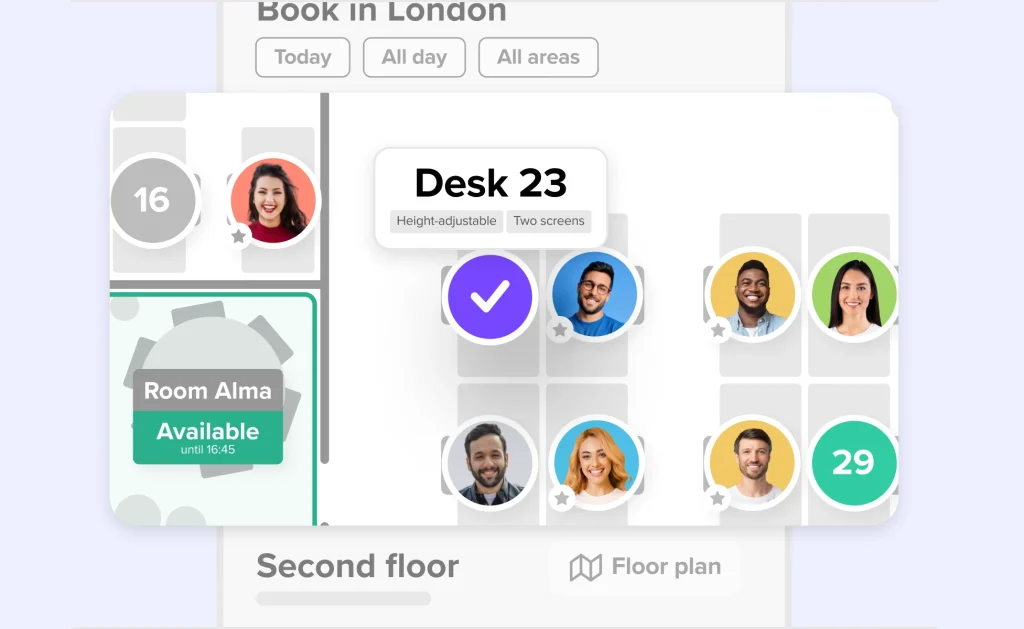
The functionality of deskbird is designed to address both the immediate needs of employees and the strategic requirements of workplace managers.
- Interactive Floor Plans: Users can view high resolution, digital maps of their office space. These maps show real time availability of desks and rooms, allowing for a visual booking experience that helps employees choose the best location for their specific tasks.
- Desk and Room Booking: The core of the platform allows for quick reservations of various assets. This includes standard workstations, quiet zones, standing desks, and meeting rooms equipped with specific audiovisual technology.
- Weekly Planning and Status: Employees can set their working status for the week, indicating whether they are working from home, in the office, or traveling. This visibility helps team leads manage capacity and facilitates spontaneous collaboration.
- Analytics and Reporting: The management dashboard provides detailed insights into office occupancy. Data can be filtered by floor, department, or specific days of the week, helping administrators identify peak usage times and underutilized areas.
- Office Parking Management: To solve another common hybrid work headache, deskbird includes modules for booking parking spaces, ensuring that employees who drive to the office have a guaranteed spot.
- Booking Rules and Restrictions: Administrators can set specific rules, such as limiting the number of days someone can book a desk or reserving certain areas for specific departments, ensuring a fair distribution of resources.
- Mobile and Web Access: The platform is accessible via a dedicated mobile app for on the go bookings and a web interface for more detailed scheduling and management tasks.
These features work together to create a flexible environment where the physical office becomes a manageable, efficient resource rather than a source of scheduling conflict.
4. User Experience
The user experience within deskbird is centered on speed and simplicity. For the average employee, the process of booking a desk needs to be faster than checking an email, or they simply will not use the tool.
The mobile interface is clean, utilizing a two tap booking system that allows users to select a date and confirm a favorite spot almost instantly.
The interactive maps are responsive, providing clear visual cues for available versus occupied spaces, which reduces the cognitive load on the user.
On the administrative side, the experience is similarly streamlined. Setting up a new office floor involves uploading a plan and dragging and dropping desk icons onto the layout.
The logic for booking permissions is straightforward, avoiding the overly complex nested menus found in some legacy facility management tools.
One of the most appreciated aspects of the deskbird experience is the integration with Slack and Microsoft Teams.
Instead of logging into another separate portal, employees can manage their office days directly from the chat apps where they spend most of their time.
This reduces friction and leads to higher data accuracy, as employees are more likely to update their status when it is part of their existing communication workflow.
5. Performance and Reliability
When evaluating a workplace management tool, reliability is paramount because a system failure can lead to hundreds of employees arriving at an office with no place to sit.
deskbird maintains high uptime standards, utilizing cloud infrastructure that ensures the booking database is always accessible.
The synchronization between the mobile app, the web interface, and integrated calendars like Outlook or Google Calendar is generally excellent, with updates reflecting across all platforms in near real time.
In terms of performance, the app loads quickly even on older mobile devices, which is critical for employees booking spots while walking from the train station.
The backend analytics engine processes large sets of occupancy data without noticeable lag, allowing managers to generate reports and visualize trends instantly.
Security is also a strong point, with the platform offering Single Sign On options and adhering to GDPR standards, which is essential for enterprise level reliability.
While no software is perfect, the rare instances of downtime or sync delays are typically handled through prompt technical updates.
The platform’s ability to handle high concurrency, such as on a Monday morning when the entire staff might be planning their week, proves its robustness for large scale deployments.
6. Products
deskbird offers a suite of modules that allow companies to scale their workplace management as their needs evolve.
- Desk Booking: The primary product designed for workstation management. It includes interactive maps and the core booking engine that allows for individual and group reservations.
- Room Booking: A specialized module for managing meeting spaces. It integrates with digital room displays and calendar systems to prevent double bookings and manage specialized equipment requests.
- Workplace Analytics: A data focused product that provides facility managers with heatmaps, occupancy trends, and cost saving recommendations based on actual office usage.
- Parking Management: An add on module that extends the booking logic to company parking lots, solving the “first come, first served” frustration that often plagues hybrid offices.
- Global Office Management: For multinational corporations, this product allows for the management of multiple office locations across different time zones and languages from a single administrative console.
The modular nature of the software means that a company can start with basic desk booking and add layers like parking or advanced analytics as they gather more data about their hybrid work habits.
This prevents the “feature bloat” that occurs when a company pays for complex tools they are not yet ready to implement.
7. Pricing and Plans
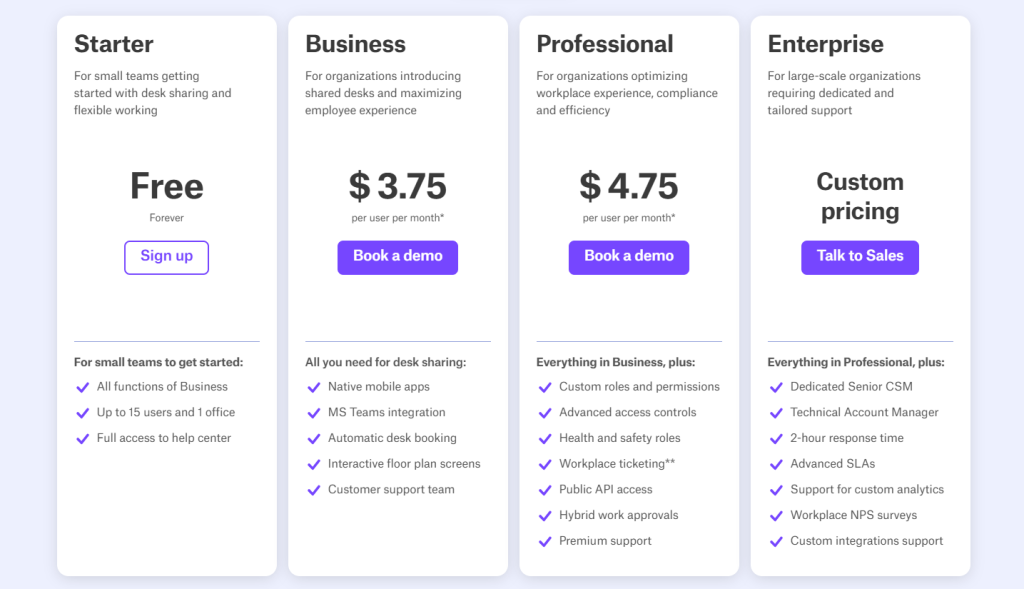
deskbird employs a transparent pricing model that scales based on the number of users, making it accessible for small startups while remaining cost effective for large enterprises.
Unlike legacy tools that charge per square foot or per desk, the user based pricing aligns costs with the actual size of the workforce using the platform.
The initial price typically starts at approximately $3.75 per user per month when billed annually, though this varies based on the specific feature set and the total volume of users.
| Plan Name | Best For | Estimated Price (Per User) | Key Features |
| Business | Small to Medium Teams | $3.75 / month | Desk booking, Maps, Teams/Slack integration |
| Professional | Large Organizations | $4.75 / month | Advanced Analytics, Custom SSO, Global Support |
| Enterprise | Specialized Needs | Bespoke Pricing | Parking, Room booking, Full API access |
The Business plan is the standard entry point, providing all the essential tools for a hybrid office to function smoothly.
It focuses on the employee experience and basic reporting. The Enterprise plan is geared toward companies requiring more stringent security measures, dedicated account management, and deep data exports for long term real estate planning.
For companies needing specialized modules like parking or advanced meeting room configurations, a Custom quote is usually provided.
While the initial costs are competitive, the true value lies in the potential real estate savings discovered through the analytics, which often far exceed the monthly subscription cost of the software.
8. Integrations and Compatibility
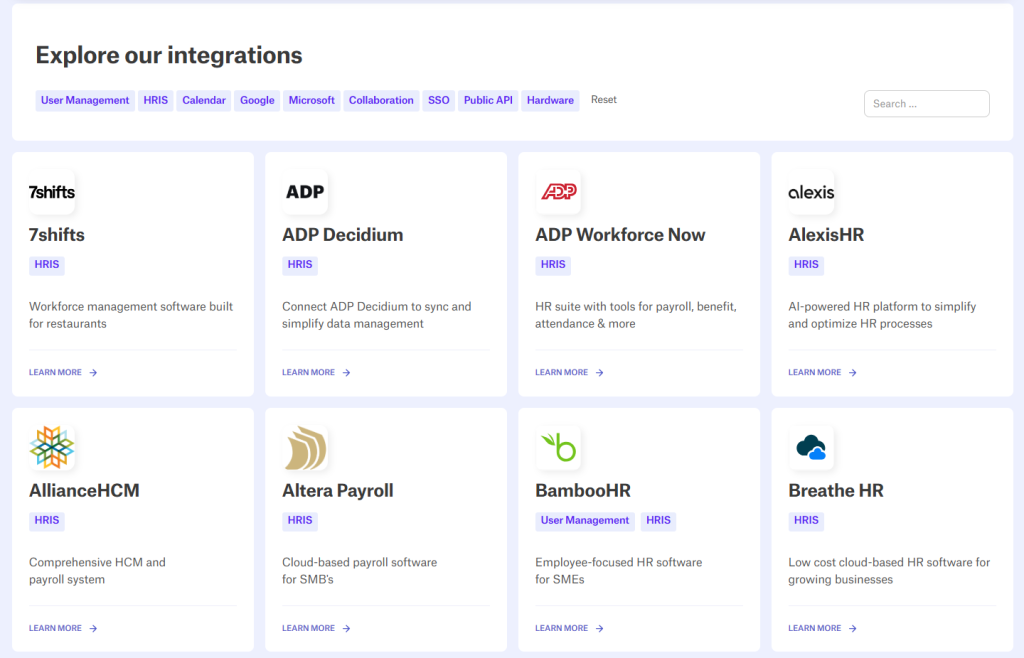
One of the strongest technical arguments for deskbird is its deep integration into the existing IT ecosystem of a modern company. It does not try to exist as an island, but rather as an extension of the tools employees are already using every day.
- Microsoft Teams: A native app within Teams allows employees to book desks and see who is in the office without ever leaving the Teams client.
- Slack: Similar to the Teams integration, the Slack app provides notifications and quick booking commands, making workplace management a natural part of the conversation.
- Calendar Sync: Full bidirectional synchronization with Microsoft Outlook and Google Calendar ensures that bookings are reflected in the user’s main schedule.
- Single Sign-On (SSO): Support for Azure AD, Okta, and Google Workspace means that IT teams can manage user access and security settings centrally.
- HR Systems: deskbird can integrate with various HRIS platforms to automate user onboarding and offboarding, ensuring that the desk booking database is always up to date with the current employee list.
This level of compatibility reduces the administrative burden on IT departments and lowers the barrier to entry for employees.
When a tool is integrated into the primary communication channel, adoption rates are significantly higher, and the data gathered by the system is more accurate.
The platform’s open API also allows for custom integrations with building management systems or smart hardware, such as occupancy sensors, providing a path for future technical expansion.
10. Product Specification
The technical framework of deskbird is designed for modern web and mobile standards, ensuring accessibility and performance across various hardware configurations.
| Specification | Detail |
| Deployment Model | Cloud based SaaS |
| Mobile Platforms | iOS, Android |
| Web Browser Support | Chrome, Safari, Firefox, Edge |
| Security Standards | GDPR compliant, SOC2, ISO 27001 |
| Integrations | MS Teams, Slack, Outlook, Google Calendar |
| Administrative Control | Granular permissions, interactive map editor |
| Reporting Features | Real time occupancy, historical trends, CSV export |
| Language Support | Multilingual (English, German, French, etc.) |
The cloud based nature of the software means there is no on site server maintenance required, and updates are pushed automatically to all users.
The mobile applications are optimized for performance, ensuring that the interactive maps load quickly even on standard data connections.
Security is a primary focus, with the platform meeting the rigorous requirements of enterprise IT departments, including data encryption both at rest and in transit.
This technical profile makes deskbird a low risk, high reward implementation for organizations of all sizes.
11. Pros and Cons

Evaluating deskbird requires an objective look at where it excels and where there might be limitations for certain types of organizations.
| Pros | Cons |
| Very high user adoption rates | Advanced analytics require a learning curve |
| Deep Teams and Slack integrations | Initial map setup requires time and effort |
| Extremely fast booking process | Limited hardware sensor integration in basic plan |
| Transparent per user pricing | Mobile app dependency for some features |
| Great visual office floor plans | Parking module is an additional cost |
The most significant benefit of deskbird is its very high user adoption rates, which stems from the intuitive design and deep Teams and Slack integrations.
The extremely fast booking process ensures that employees don’t view the software as a burden.
From a budget perspective, the transparent per user pricing makes it easy to predict costs as the company grows.
The great visual office floor plans provide a much better experience than simple list based booking systems.
On the other hand, the advanced analytics require a learning curve for managers to fully utilize the insights provided.
The initial map setup requires time and effort to ensure the digital layout accurately reflects the physical office.
There is a limited hardware sensor integration in the basic plan, which might be a drawback for companies looking for fully automated occupancy tracking.
The mobile app dependency for some features might not suit teams that prefer a web only environment.
Finally, the fact that the parking module is an additional cost is something to consider when calculating the total cost of ownership.
12. Customer Support
The support structure for deskbird is designed to facilitate quick onboarding and provide ongoing technical assistance for enterprise users.
They offer a tiered support model that ensures large scale deployments receive the attention they require while smaller teams have access to comprehensive self service resources.
- Dedicated Account Managers: For enterprise clients, deskbird provides a specific point of contact who assists with the initial implementation, map creation, and strategic optimization of the platform.
- Help Center and Tutorials: A robust library of articles and video guides covers every aspect of the software, from basic user functions to advanced administrative configurations.
- Email and Chat Support: Technical support is available through standard digital channels, with responsive turnaround times for resolving bugs or configuration issues.
- Onboarding Services: The company offers specialized assistance during the rollout phase, helping IT teams with SSO setup and HR system integrations.
The feedback regarding deskbird support is generally positive, with users citing the team’s willingness to help with custom map layouts and their responsiveness to feature requests.
For a SaaS product in the workplace management space, the quality of support during the “go live” phase is critical, and deskbird appears to invest heavily in ensuring that the initial transition is successful for its clients.
13. Ideal Use Cases

The specific design and feature set of deskbird make it an ideal choice for several different types of organizations and office models.
The primary use case is the Rapidly Scaling Hybrid Company. Organizations that are moving from a fixed office model to a flexible one need a tool that can be deployed quickly and used by everyone without extensive training.
deskbird fits this profile perfectly because its interface is familiar and the integration with Slack or Teams means the learning curve is nearly flat.
Another ideal scenario is the Enterprise with Multiple Global Locations. Managing offices in different countries with varying local regulations and office cultures can be difficult.
The centralized dashboard in deskbird allows global facilities managers to oversee all locations in one view, while still giving local office managers the autonomy to set their own booking rules and floor plans.
The Data Driven Facilities Team also benefits significantly.
For managers tasked with reducing real estate costs, the detailed occupancy analytics provide the objective data needed to justify closing a floor or moving to a smaller building.
Instead of relying on anecdotes about “the office feeling empty,” they have precise reports on peak utilization and desk turnover rates.
Finally, Co-working Spaces or Shared Offices find the platform useful for managing high volumes of transient users.
The ability to book spots quickly and the visual map interface make it easy for people who are not in the office every day to find their way around and secure a productive workspace.
14. Alternatives
While deskbird is a top contender in the market, several other platforms offer workplace management solutions that might be better suited for specific technical requirements or budgets.
| Alternative | Primary Strength | Best For |
| Envoy | Visitor management and security | Offices with high visitor traffic |
| Robin | Deep meeting room management | Teams focused on room scheduling |
| Kadence | Advanced team coordination | Distributed teams focusing on social sync |
| Maptician | Highly detailed office mapping | Complex, large scale office environments |
Exportar para Sheets
Envoy is a strong competitor that originally focused on visitor management and has since expanded into desk booking.
It is a great choice for companies that prioritize a secure front desk experience and integrated visitor logs alongside their employee desk management.
Robin is often cited for its superior meeting room management features.
If an organization spends more time coordinating complex room schedules with integrated hardware displays than managing individual desks, Robin might be the more focused tool for that specific need.
Kadence places a heavy emphasis on team coordination. It is designed for managers who want to actively schedule when specific teams should be in the office together, providing more proactive suggestions for team office days than a standard booking tool.
Maptician offers extremely detailed, CAD like office mapping capabilities.
For very large organizations with highly complex floor plans and thousands of assets to track, the level of detail provided by Maptician might outweigh the simplicity and ease of use found in deskbird.
Choosing between these options depends on whether the priority is visitor security, room scheduling, team social coordination, or map complexity.
15. Bottom Line: Our Verdict

deskbird stands out as a highly effective, user centric workplace management platform that successfully bridges the gap between employee convenience and administrative insight.
Its greatest strength lies in its simplicity, which directly leads to the high adoption rates necessary for a hybrid office model to succeed.
By integrating into the tools where employees already work, such as Microsoft Teams and Slack, it eliminates the “another app” fatigue that often kills corporate software initiatives.
The platform provides a clear, visual way for employees to reclaim the office space on their own terms, while giving facility managers the hard data they need to make strategic real estate decisions.
While the initial setup of interactive maps requires some legwork, the long term benefits of having a real time view of office utilization are substantial.
The per user pricing model is fair and transparent, allowing the software to grow alongside the company.
For any organization struggling with the logistics of hybrid work or looking to optimize their physical office footprint, deskbird is a top tier recommendation.
It is a practical, reliable, and modern solution that focuses on the human element of the workplace.
The balance of a fast mobile experience for employees and deep analytics for managers makes it a comprehensive tool that delivers immediate value in the modern business environment.
You May Also Like:
- Is Hot Desking Dead? Why Hybrid Work Is Changing Everything
- Hot Desking Etiquette: Rules Every Office Needs
- How Hot Desking Impacts Employee Productivity
- Top 10 Hot Desking Software Tools for 2025
Frequently Asked Questions
Is deskbird easy for employees to use?
Yes, deskbird is designed with a focus on simplicity. Most employees can book a desk or check their team’s schedule in just a few seconds through the mobile app or via integrations with Slack and Microsoft Teams, requiring almost no training.
Does deskbird integrate with Microsoft Teams?
Yes, deskbird offers a native integration for Microsoft Teams. This allows users to manage their desk bookings and view office maps directly within the Teams interface, which significantly increases the software adoption rate among staff.
Can I manage parking with deskbird?
Yes, the platform includes a dedicated module for office parking management. This allows employees to reserve a parking spot at the same time they book their desk, preventing morning frustrations and ensuring a smooth commute to the office.
How does deskbird help save money?
deskbird provides detailed analytics on office occupancy and utilization. By understanding which areas of the office are actually being used, companies can make informed decisions about reducing their real estate footprint or redesigning space to be more efficient, leading to significant cost savings.
Is my data secure with deskbird?
Yes, deskbird adheres to high security standards, including GDPR compliance and SOC2 certification. It offers Single Sign On (SSO) options, ensuring that user access is managed through the company’s existing secure identity protocols.
deskbird
deskbird is a premier workplace management tool that excels in user adoption through its simple interface and deep integrations with Teams and Slack.
Price: 3.75
Price Currency: USD
Operating System: iOS, Android, Web Browser
Application Category: BusinessApplication
8.5
Pros
- Very high user adoption rates
- Deep Teams and Slack integrations
- Extremely fast booking process
- Transparent per user pricing
- Great visual office floor plans
Cons
- Advanced analytics require a learning curve
- Initial map setup requires time and effort
- Limited hardware sensor integration in basic plan
- Mobile app dependency for some features
- Parking module is an additional cost