





It is striking how the rhythm of work has shifted over the past few years, with employees coming in fewer days, teams scattering, and offices evolving.
In that evolving landscape the debate between Hot Desking vs. Desk Hoteling (sometimes called hoteling) becomes central to how workplaces organise themselves.
We examine both approaches, weighing how they perform in real-life, how culture, technology and space-planning intersect, and ultimately which model fits your workplace.
1. Understanding the Models
What is Hot Desking
In hot desking employees arrive and choose any available workstation, there are no permanent assignments.
That first-in-first-served dynamic emphasises flexibility but brings uncertainty. According to recent research about hot desking only 39% of employees in strictly hot-desk setups said they enjoyed the office environment. The key benefit lies in efficient space-utilisation.
What is Desk Hoteling
Desk hoteling on the other hand introduces a reservation layer.
Employees book a desk (or workspace) in advance, securing a spot for the day or period, blending flexibility with predictability.
The distinction is clear: hot desking requires no booking process, hoteling does.
The Core Difference
Summing it up: with hot desking you walk in and pick a desk, with desk hoteling you book ahead. That booking mechanism provides structure; The free-choice model gives agility. Both aim to optimise space and support hybrid working, but they achieve it in different ways.
2. Pros and Cons of Each Model
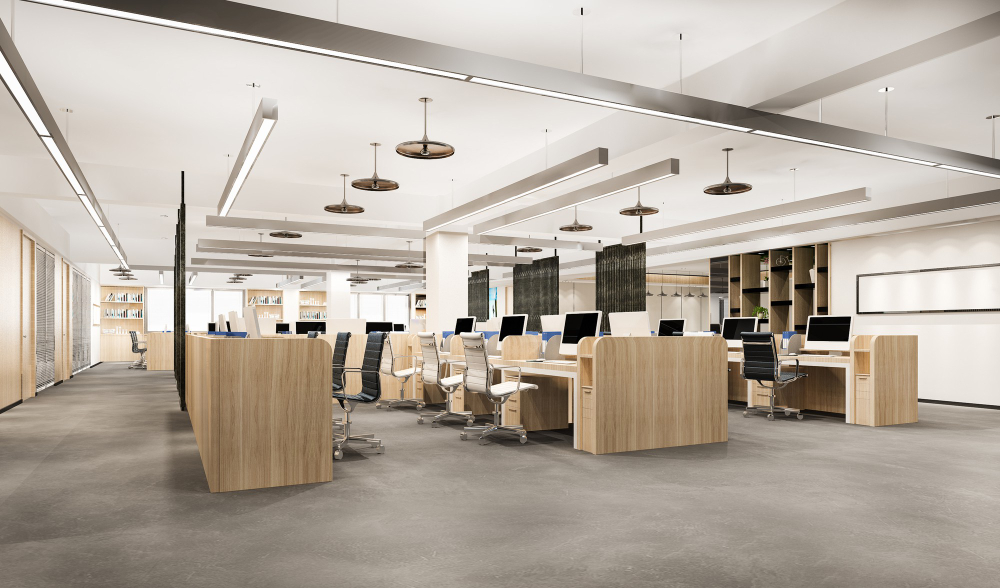
Hot Desking – The Pros
- Great for workforces where attendance fluctuates radically, you don’t want to support empty desks.
- Encourages informal mixing, cross-team interactions, new perspectives.
- Real estate cost savings: some studies suggest up to 30 % reduction in operating costs when desks are shared dynamically.
Hot Desking – The Cons
- No guarantee of workspace. On busy days employees may waste time finding a desk.
- Reduced sense of ownership, possible drop in employee satisfaction when personal items can’t stay at a desk.
- Teams may find it harder to sit together, hamper spontaneous collaboration or mentoring.
Desk Hoteling – The Pros
- Guaranteed workspace once booked, so less stress for the employee.
- Better data capture for workplace managers: you know how many are in office, which zones busy, allows optimisation.
- Supports hybrid models where people reserve in-office days, offering both flexibility and structure.
Desk Hoteling – The Cons
- Booking requirement reduces spontaneity; someone must plan ahead.
- Risk of no-shows or under-utilisation: if desk booked but not used, space wasted.
- Slightly higher system or process overhead (desk booking software, policies, guidance).
3. Fit for Your Workplace
Assessing Your Culture
If your workforce is highly mobile, remote frequently, or you have many freelancers and contractors, hot desking may deliver the agility you need. But if teams rely on being co-located, or if employees value consistency and sense of place, desk hoteling may feel more comfortable.
Look at Attendance Patterns
If you see many desks empty mid-week, and the occupancy rate drops significantly, hot desking shines. For example recent data shows only around 40 % of companies maintain a one-to-one desk-to-employee ratio. If you have a predictable office schedule (e.g., Tuesdays and Thursdays in-office), then the booking model of desk hoteling aligns.
Consider Technology & Layout
Whichever model you pick you need supporting infrastructure: desk-booking software, real-time availability, sensors, flexible furniture, lockers for personal items. Without that, even the best model stumbles.
The layout also matters: focus zones, team neighbourhoods, solo zones—and the model should work around that.
4. Mixing Models
It is not necessarily an either-or. Many organisations adopt hybrid approaches: some desks operate on hot desking, others reserved via hoteling.
This lets you cater to different workstyles within the same environment.
For example creative teams might benefit from hot desking, whereas specialist technical groups might prefer the predictability of hoteling. Mixing allows you to calibrate.
5. Hot Desking vs. Desk Hoteling: Real-World Examples
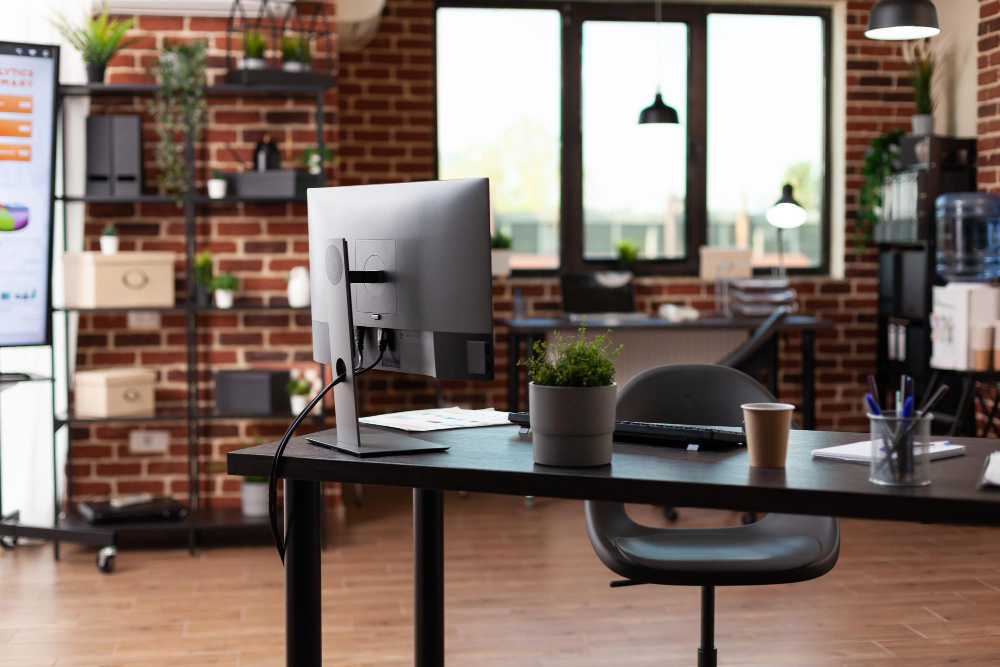
I visited a tech startup in Lisbon that implemented pure hot desking. They removed assigned spaces, gave each employee a locker, and tracked occupancy.
On arrival I felt the buzz of spontaneous seat-choice, but by midday some early-arrivers had snagged preferred seats. And latecomers still struggled.
Meanwhile at a financial services firm in Amsterdam they rolled out desk hoteling: employees booked via app, spaces grouped by team.
The predictability meant project teams could reserve together and sit as a pod—morale improved. These two examples illustrate how culture and business demands shape the fit.
6. Implementation Tips
- Define clear zones: allocate collaboration areas, quiet zones, team neighbourhoods. This works for whichever model you choose.
- Equip each desk uniformly: same monitor, docking station, cable, chair. When employees shift seats it must feel seamless.
- Communicate strong policy: show how the model works, why you choose it, how to book (if hoteling) or arrive early (if hot desking).
- Monitor and iterate: track desk-utilisation rates, employee feedback on satisfaction and productivity. Data drives success.
- Provide personal storage: especially in hot-desking contexts you must offer lockers. A study via NuraSpace found that without storage employees felt unsettled.
- Plan for spikes: ensure you have overflow desks when many come in, else both models may fail during high-occupancy days.
7. Decision Framework
Here is a simplified decision ladder:
- If your in-office attendance is highly unpredictable → hot desking can optimise space.
- If your teams value knowing where they’ll be and work together on-site days → desk hoteling might win.
- If you have mixture of both behaviours → adopt a hybrid of both.
- Always back your choice with employee consultation, pilot trials, and flexibility to change.
8. Final Thoughts
In a traditional office era each person had their own fixed desk and everything was predictable. But the world changed.
Now as we step into this hybrid era the question of hot desking vs. desk hoteling is no longer niche, it is central.
The right model won’t solve every problem, but the wrong one will create them: Empty desks, frustrated employees, wasted cost.
So choose deliberately, design thoughtfully, execute with clarity and adjust as you learn. In doing this you enable your workplace to flex and thrive.
FAQ
What is hot desking in practice?
Hot desking means employees choose any available desk when they arrive, there are no reservations and no fixed spots, it emphasises flexibility and shared use of workspaces.
How does desk hoteling differ from hot desking?
In desk hoteling employees reserve a desk ahead of time through a booking tool, so although there are no permanent assignments the user has a guarantee of a workspace compared to the spontaneity of hot desking.
What are the main pros of hot desking?
The main benefits include maximising space utilisation, enabling cost savings on real estate, encouraging cross-team interaction and supporting very flexible attendance models.
What are the main cons of desk hoteling?
The booking process may reduce spontaneity, if reservations are unused you may under-utilise space, and the system requires good technology and discipline to manage bookings effectively.
Can both models be used together?
Yes definitely. Many workplaces mix hot desking and desk hoteling so that some zones operate on a first-come basis while others require booking, tailoring the approach to different team needs and seat-styles.