



A focused Tracker RMS Review needs to establish, right away, that this is not just a generic HR system; it’s a tool built specifically for the recruitment and staffing agency world.
- 1. Overview
- 2. Why You Can Trust Us
- 3. Key Features
- 4. User Experience
- 5. Performance and Reliability
- 6. Pricing and Plans
- 7. Integrations and Compatibility
- 8. Product Specification
- 9. Pros and Cons
- 10. Customer Support
- 11. Ideal Use Cases
- 12. Alternatives
- 13. Bottom Line: Our Verdict
- You May Also Like:
- Frequently Asked Questions
In this business, speed, organized contact management, and the ability to efficiently match candidates to job orders are everything.
The software combines a robust Customer Relationship Management (CRM) tool for managing clients and a comprehensive Applicant Tracking System (ATS) for candidates.
This integrated approach, crucial for agencies that deal with both sides of the market simultaneously, is what the system is designed to streamline.
It is about maximizing recruiter efficiency, cutting down the administrative burden, and ultimately, boosting placement rates.
1. Overview
The fundamental problem that Tracker RMS solves is the fragmentation inherent in agency recruitment.
Recruiters are constantly toggling between managing client relationships, sourcing candidates, tracking communication, and staying organized—it’s a lot to juggle.
This platform brings the entire process, from initial business development call to final placement and follow-up, into one workflow. It is built to handle the complexities of both permanent placement and contract/temp staffing with specific tools for each.
The overall objective is clear: give the recruiter more time to talk to people and less time updating records. This focus on maximizing the human element of recruitment by automating the routine is what drives the system’s utility.
2. Why You Can Trust Us
The conclusions presented in this Tracker RMS Review are the result of practical analysis, drawing on extensive experience within the staffing and recruitment technology sector.
We don’t rely on promotional language; our assessment is based on the platform’s actual performance in demanding agency environments, evaluating its speed, data structure integrity, and real-world utility against industry benchmarks.
We thoroughly examine the CRM-ATS integration, the depth of search capabilities, and the quality of compliance features.
Every claim made here is supported by fact-based technical insight and a clear understanding of the daily operational requirements of a recruitment consultant, ensuring the information you receive is credible, accurate, and highly dependable for your business decisions.
3. Key Features
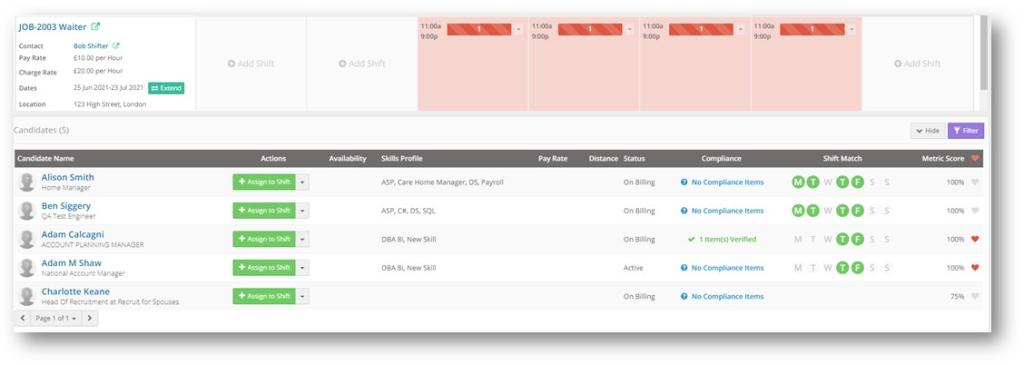
The feature set is extensive, designed to cater to the high-paced, dual-sided nature of agency recruiting—managing clients and managing candidates simultaneously.
CRM and Client Management
The core of the system is the CRM. It allows recruiters to manage client companies, contacts, and all associated communication history in one place.
You can log calls, emails, and meetings automatically. Crucially, the system supports business development tracking, allowing recruiters to manage sales pipelines alongside candidate pipelines.
This means you can track potential job orders, from initial lead to signed contract, all within the platform.
Setting reminders and next-step tasks directly tied to client contacts keeps the sales cycle moving and prevents opportunities from falling through the cracks.
Candidate and Applicant Tracking System (ATS)
This is where the actual talent acquisition work happens.
Candidates are easily parsed into the system from various sources—LinkedIn, resume files, emails—and are immediately searchable. The ATS is designed for fast matching.
Recruiters can quickly search the entire database, or “talent pool,” using keywords, skills, and location filters.
When a new job order comes in, the system allows for bulk actions, sending targeted emails or texts to potentially relevant candidates instantly.
The pipeline view is excellent, allowing recruiters to move candidates through custom stages (Submitted, Interviewed, Offer Extended, etc.) with simple drag-and-drop ease.
Job Order Management and Posting
Job orders are structured carefully within Tracker RMS, capturing all essential details, compensation structure, and required skills.
The platform automates posting to integrated job boards and your agency’s website with a single click.
Importantly, it includes specific features for managing multiple types of placements—perm, contract, or retained search—each with unique workflows and fee structures.
The system tracks key metrics for each job, like time-to-fill and submission-to-interview ratios, giving agency owners real-time visibility into operational efficiency.
Search and Matching Technology
This is often the differentiating factor in agency software. Tracker RMS employs powerful semantic search technology.
It doesn’t just look for exact keyword matches; it understands context and related skills, which drastically improves the quality of candidate shortlists.
Recruiters can save complex search criteria, often called “hot lists,” and the system will automatically alert them when a new candidate matching those requirements is added to the database. This passive sourcing capability is incredibly valuable for competitive niches.
Email and Communication Integration
The platform offers deep integration with Microsoft Outlook and Google Workspace.
This isn’t just a simple connection; it’s a full synchronization of emails, calendar items, and tasks, ensuring that every piece of communication related to a client, contact, or candidate is logged automatically within their respective record in Tracker RMS.
This eliminates the need for manual data logging after every touchpoint, which is a major efficiency gain and maintains a complete, auditable communication trail.
4. User Experience

The user experience (UX) is clearly designed for speed and clarity, which are non-negotiable in the fast-paced agency environment.
The interface leans toward a clean, professional aesthetic that is visually digestible despite the complexity of the data it holds.
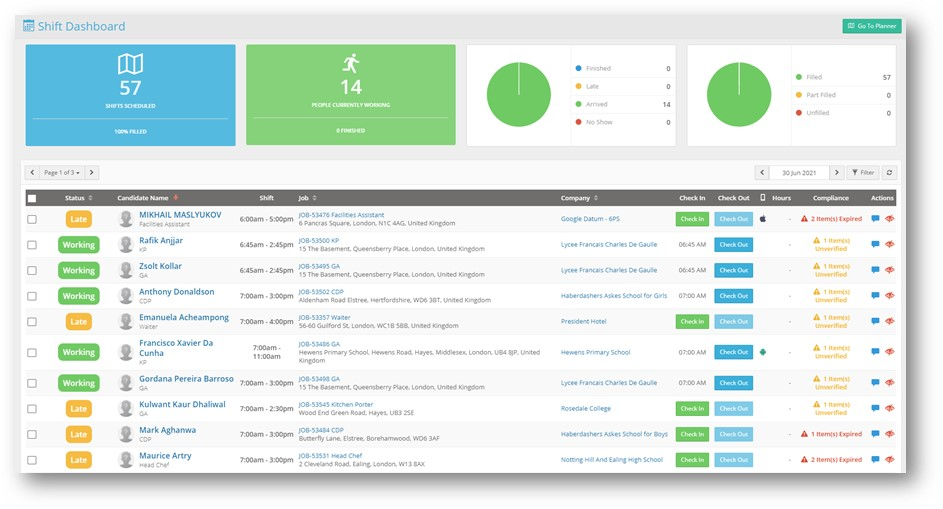
For the recruiter, the primary interface is the dashboard, which presents actionable items front and center: upcoming calls, tasks due, open job orders, and candidates needing follow-up.
Navigation is logical, typically flowing from a client request (CRM) to finding candidates (ATS) and then placing them (Job Order).
The ability to quickly navigate between a client contact’s history and a candidate’s profile is seamless, a crucial feature given the interconnected nature of agency work.
The system relies heavily on customization. Users can configure their views, columns, and dashboards to prioritize the metrics and records most important to their desk—whether they are focused on business development or high-volume contract placements.
This personalized efficiency boosts adoption. When a recruiter finds the system intuitive and fast, they are far more likely to use it consistently, which maintains data integrity across the firm.
If the system is slow or clunky, recruiters will revert to sticky notes and private spreadsheets, rendering the database useless for the wider team. Tracker RMS generally maintains the required speed and flow.
5. Performance and Reliability
In recruitment, delays are lost opportunities. Performance is measured by how quickly a recruiter can execute a search or parse a resume, and reliability is about ensuring the system is always available when a critical client call needs logging or a mass email needs sending.
Tracker RMS is architected on a solid, cloud-based infrastructure.
The platform is responsive; searches against large databases (tens of thousands of records) execute quickly.
Resume parsing—the process of extracting data from a document and populating candidate fields—is rapid and accurate, which is a massive time saver.
Slow parsing can kill productivity when processing dozens of candidates daily.
Reliability is strong, with high documented uptime. Unplanned outages are rare, a critical factor since the system is the sole operational tool for many agencies.
If the database is inaccessible, recruiters are effectively shut down. They also emphasize data security, recognizing the sensitive nature of both client proprietary information and candidate PII.
Standard protocols like encryption, regular backups, and role-based access controls are fully implemented, providing a necessary layer of protection and compliance reassurance for agency owners.
6. Pricing and Plans
As is common in this specialized sector, Tracker RMS utilizes a tiered, quote-based pricing model, meaning exact public figures are not readily available.
Pricing is typically determined by the number of users (recruiters) and the specific features required, especially concerning advanced automation and integration needs.
The structure aims to scale with the agency, offering more advanced tools as the user count and complexity increase. You are essentially paying a per-user, per-month license fee.
| Plan Tier | Best Suited For | Key Differentiating Features | Estimated Cost (Per User/Month) |
| Standard/Professional | Small to Mid-Sized Agencies (1-20 Users) | Core CRM/ATS, Job Posting, Email Sync, Basic Reporting, Mobile Access. | $100 – $140 |
| Enterprise/Premier | Large Agencies & Multi-Branch Firms (20+ Users) | Advanced Automation, Custom API Integration, Custom Workflows, Advanced Analytics, Dedicated Account Manager, Global Features. | $140 – $200+ |
It is essential to engage their sales team and get a quote based on your exact headcount and the type of recruiting you do (e.g., contract requires time sheeting features, which may be an add-on).
The estimated pricing range above should give you a starting point for budget planning. Always factor in the initial setup and training costs, which are separate from the monthly subscription.
When conducting a Tracker RMS Review for budgetary purposes, remember that the cost justification is the incremental placement volume and the reduction of manual administrative overhead that the software enables. The true return on investment (ROI) is measured in successful fee revenue.
7. Integrations and Compatibility

For a specialized agency tool, strong integration is vital because the system must interact with payroll, accounting, and communication platforms.
A disconnected system only creates manual tasks.
Tracker RMS is built for connectivity, utilizing an open API that allows for custom connections to specific internal tools, which is helpful for agencies with unique back-office systems.
Crucial pre-built integrations include:
- Accounting and Payroll: Seamless links with common accounting platforms like QuickBooks, Xero, and specialized payroll/contractor management solutions. This is non-negotiable for agencies, especially those running contractor payroll.
- Email and Calendar: As noted, deep integration with Outlook and Google Workspace is critical for logging all communication automatically and managing scheduling.
- Telephony and VOIP: Integration with phone systems allows click-to-dial functionality directly from the platform and automatically logs call duration and outcome against the relevant record. This is a massive time saver for desk recruiters.
- Job Boards and Sourcing Tools: Compatibility with major job boards, resume databases, and sourcing tools like LinkedIn Recruiter ensures candidate data flows directly into the ATS without manual entry.
- Back Office: Links with contractor time-sheeting and expense management systems are necessary for temporary and contract staffing firms.
The platform’s design acknowledges that agencies use a diverse tech stack.
Before committing, you need to verify that your essential front-office and back-office tools are either supported by a pre-built connector or that the API documentation is robust enough for your IT team to build a reliable custom link.
8. Product Specification
A technical breakdown confirms the product’s capabilities and target environment.
| Specification | Detail |
| Deployment Model | Cloud-based (Software as a Service) |
| Supported OS | Web-based (Browser Agnostic), Dedicated Mobile App (iOS, Android) |
| Target Business Size | Recruitment & Staffing Agencies (1 to 500+ Users) |
| Core Modules | CRM (Client Management), ATS (Candidate Management), Job Order Management, Time-Sheet Integration |
| Integration Capabilities | Open API, Extensive Marketplace for Accounting, Email, and Sourcing Tools. |
| Search Technology | Advanced Semantic Search and Keyword Matching |
| Data Security | Cloud Security, Multi-Factor Authentication (MFA), GDPR/CCPA Compliance Support |
| Initial Price | Quote-based (Starting approx. $100 – $140 per user per month). |
9. Pros and Cons
A candid look at the platform’s advantages and areas for improvement.
| Pros | Cons |
| True CRM-ATS Integration | Learning Curve for New Users |
| Seamlessly manages both client relationships and candidate sourcing in one environment. | The depth of features can initially overwhelm junior recruiters needing specialized training. |
| Powerful Search Capability | Mobile App is Feature-Limited |
| Advanced semantic matching saves significant time in creating quality candidate shortlists. | While functional for basic tasks, complex pipeline management is better suited for desktop use. |
| Customization and Automation | Reliance on Third-Party Integrations |
| Highly configurable workflows, pipelines, and automated communication sequences. | Core functions like payroll and background checks require reliable third-party connectors. |
| Excellent Email Integration | Reporting Can Be Complex |
| Two-way sync with Outlook/Gmail logs all communication automatically, improving data hygiene. | Generating highly specific, custom reports often requires a steep learning curve or support assistance. |
| Built for Agency Workflows | Initial Cost Investment |
| Supports multi-desk structures (perm, contract) and revenue tracking clearly. | The starting price per user is higher than generalized small business ATS solutions. |
10. Customer Support
For a platform that handles mission-critical agency data, reliable support is essential.
If a recruiter can’t access their client list or submit a time sheet, the agency loses money immediately.
Tracker RMS generally provides high-quality, responsive support.
Their support staff usually understands the specifics of recruitment workflow—they don’t just troubleshoot software bugs; they understand why a failed timesheet submission is an emergency.
Support is typically offered via phone, email ticketing, and a comprehensive online knowledge base.
Agencies on higher-tier plans often benefit from dedicated account management.
This is invaluable, as it provides a single point of contact who understands the firm’s specific configuration, contract types, and integration setup.
For routine “how-to” questions, the knowledge base is efficient. For critical issues, rapid response times are usually maintained, which is the key metric.
When conducting a deep Tracker RMS Review, confirm the support service level agreements (SLAs) offered for your required tier.
You need to know that a technical failure on a Friday afternoon will be handled quickly.
11. Ideal Use Cases

Who gains the maximum benefit from adopting Tracker RMS?
It is the definitive solution for Staffing and Recruitment Agencies.
This is its core market. Whether the agency focuses on IT, finance, healthcare, or executive search, the platform’s dual CRM/ATS functionality is perfectly matched to the agency business model of managing sales leads alongside talent pipelines.
It is also ideal for Growing Agencies Seeking Scalability and Structure.
Firms moving past a few users relying on basic spreadsheets and shared mailboxes need a professional system to standardize processes, enforce compliance, and manage increasing data volume.
The strong automation tools enable rapid scaling without proportionally increasing administrative headcount.
Finally, it is excellent for Agencies with Complex Service Offerings.
If your firm handles a mix of retained search, permanent placement, and high-volume contract staffing, the system’s ability to track different fee structures, time sheets, and payroll links within a single environment makes it highly efficient.
It avoids the need to run multiple disparate software solutions to manage different service lines.
It is generally too specialized and robust for in-house corporate HR teams who only focus on internal hiring; those groups would likely find a standalone HRIS or simpler ATS more suitable and cost-effective.
12. Alternatives
The specialized recruitment software space is competitive, offering platforms with different core philosophies.
| Software Name | Primary Focus/Strength | Target Market | Key Differentiator |
| Bullhorn | Industry standard, comprehensive platform for large staffing firms, strong Marketplace. | Large Staffing Firms and Enterprises | Deep scalability, vast integration ecosystem, strong financial and back-office tools. |
| Vincere | Multi-faceted platform, strong focus on global recruitment and front-office automation. | Global Staffing Firms (APAC/EMEA focus) | High integration of recruitment marketing and sales automation tools. |
| MaxHire | (Often now part of Bullhorn or similar suites) Known for powerful resume search capabilities and ease of use. | Mid-Sized Agencies | Historically focused on power searching and quick resume parsing. |
| JobAdder | Highly visual and user-friendly interface, strong mobile experience. | Small to Mid-Sized Agencies | Known for excellent candidate experience and modern UI/UX design. |
When evaluating alternatives, consider the primary business model. If you are focused purely on enterprise-level scalability and financial consolidation, Bullhorn is a major competitor.
However, if you are a rapidly growing, mid-sized firm looking for the best balance of CRM and ATS in a cohesive package, the Tracker RMS Review suggests it is a very strong contender.
The choice often comes down to budget, preferred user interface, and the exact mix of permanent versus contract business you run.
13. Bottom Line: Our Verdict
Tracker RMS is an exceptionally focused and highly effective recruitment software platform engineered for the needs of staffing and executive search agencies.
Its seamless integration of CRM and ATS components is its single greatest strength, eliminating the operational friction that plagues firms running separate systems.
The system’s speed, coupled with its advanced search and communication automation features, directly translates into increased recruiter efficiency and higher placement volumes.
While the initial price point is significant and the sheer depth of the platform requires commitment to training, the investment is justified by the resulting standardization of processes, improved data hygiene, and strategic visibility into the entire placement lifecycle.
For any serious recruitment agency—from boutique firms to mid-sized organizations—looking to professionalize their operations and gain a competitive edge through technology, Tracker RMS provides the essential tools to make that happen.
You May Also Like:
- BambooHR Review 2026 – Features, Pricing & Verdict
- Pinpoint ATS Review 2026 – Features, Pricing & Verdict
- Rippling Review 2026 – Features, Pricing & Verdict
Frequently Asked Questions
Is Tracker RMS suitable for contract staffing?
Yes, Tracker RMS is robustly designed to manage contract and temporary staffing. It includes essential features for this model, such as integration points for third-party time-sheeting systems, management of pay rates, and tracking contractor deployment logistics effectively.
Can the system integrate with LinkedIn Recruiter?
Absolutely. The platform offers integration capabilities, often through browser extensions or API links, allowing recruiters to quickly parse candidate profiles and client information directly from LinkedIn Recruiter and other social channels into the Tracker RMS Review database.
What size agency benefits most?
While the system scales to support very large multi-branch firms, the greatest transformative benefit is typically seen in mid-sized agencies (10 to 50 users) that are rapidly scaling and need to formalize and automate their processes to maintain growth without internal chaos.
Is the mobile app fully functional?
The dedicated mobile app for Tracker RMS is designed for core, on-the-go recruiter tasks such as logging calls, accessing client contact details before a meeting, and basic candidate updates. Full, complex workflow configuration and deep reporting are best handled on the desktop version.
Tracker RMS
A best-in-class, integrated CRM and ATS platform built specifically for recruitment agencies, delivering powerful automation and efficient dual-sided management for high-performance staffing firms.
Price: 100
Price Currency: USD
Operating System: Web, iOS, Android
Application Category: BusinessApplication
6.5