HiBob Review: HR Automation and Talent Tools
By Afonso Macosso & Nathan Cole · Reviewed by Zari M'Bale
HiBob links employee data with talent processes, workforce analytics and HR automation, helping companies replace scattered admin tasks with clearer people operations.
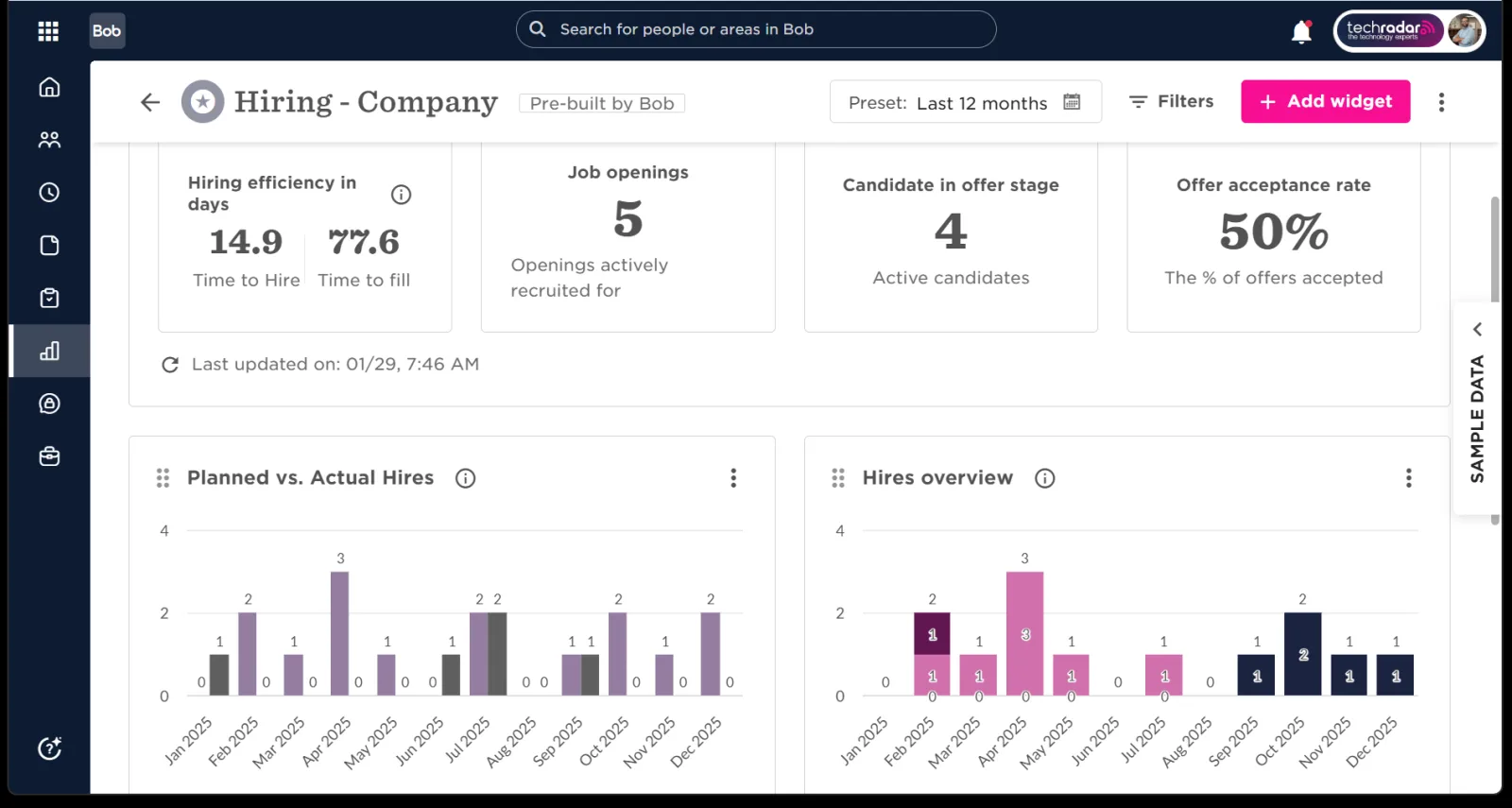
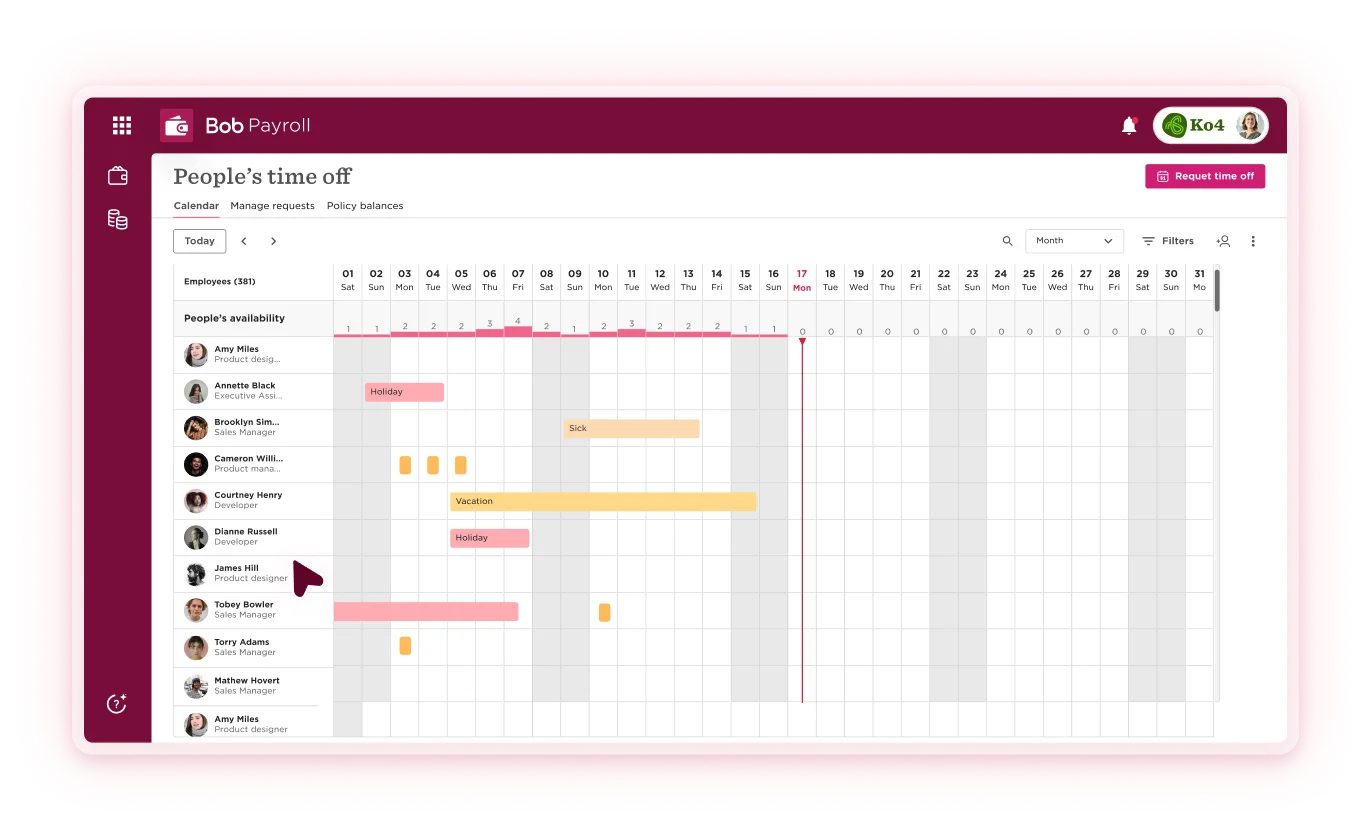
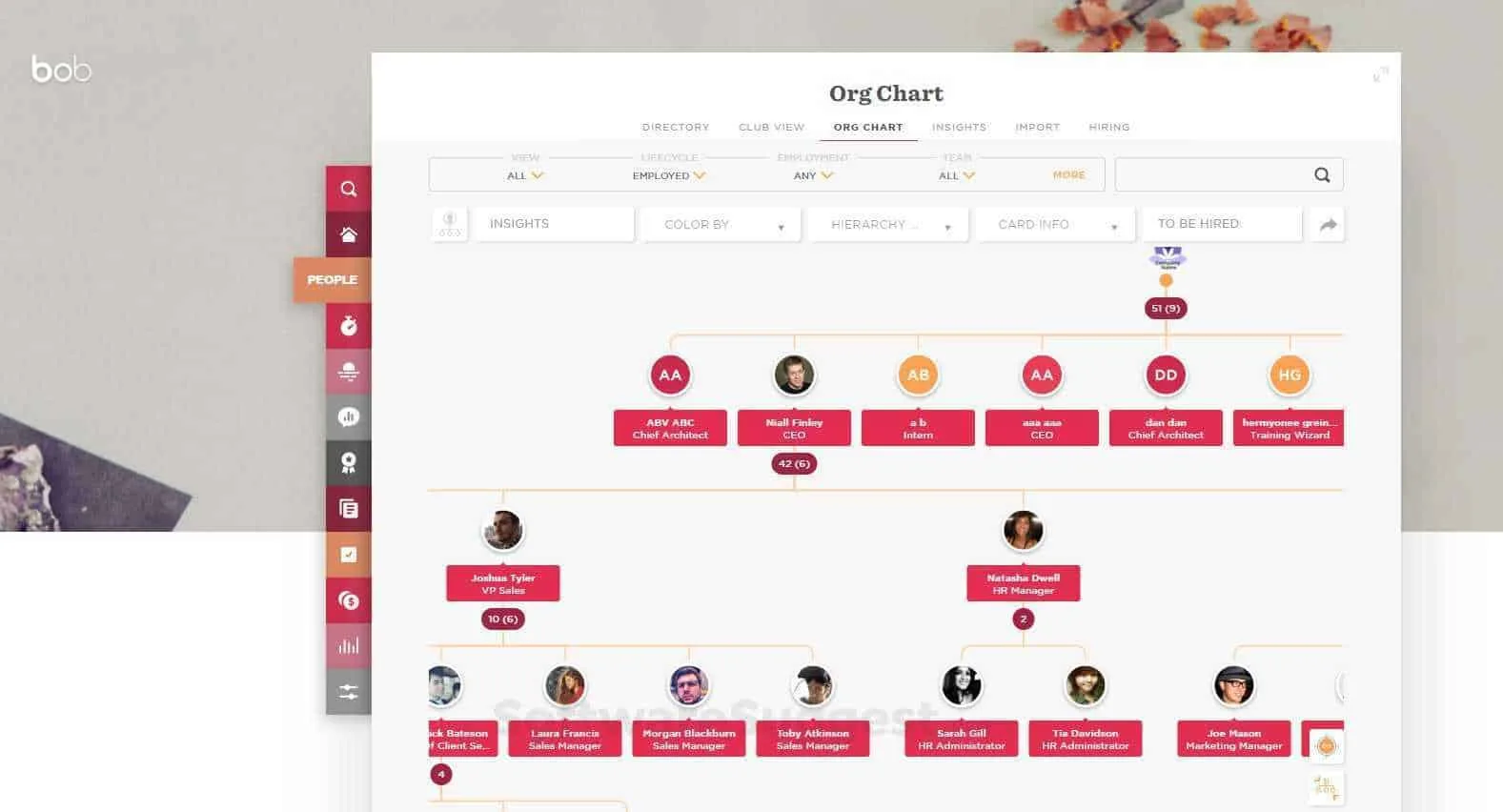
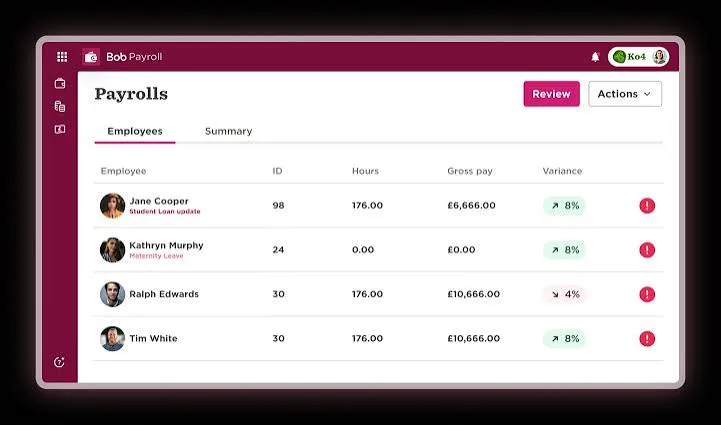
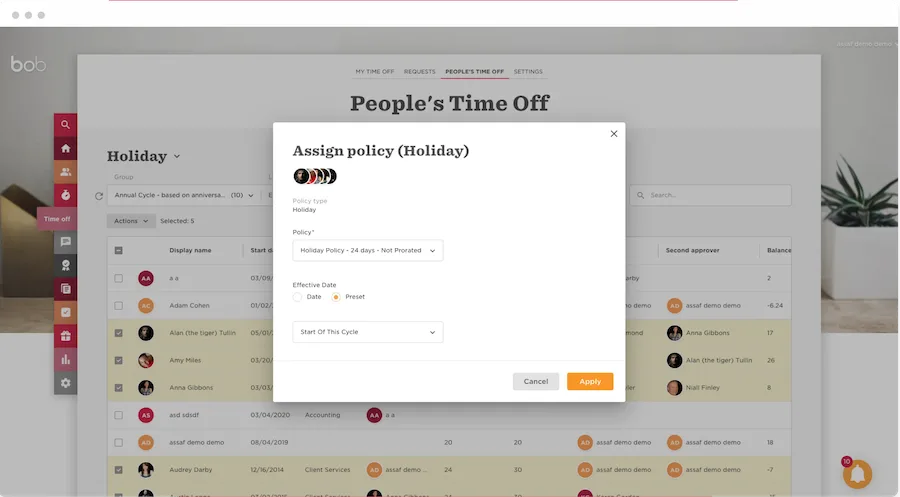
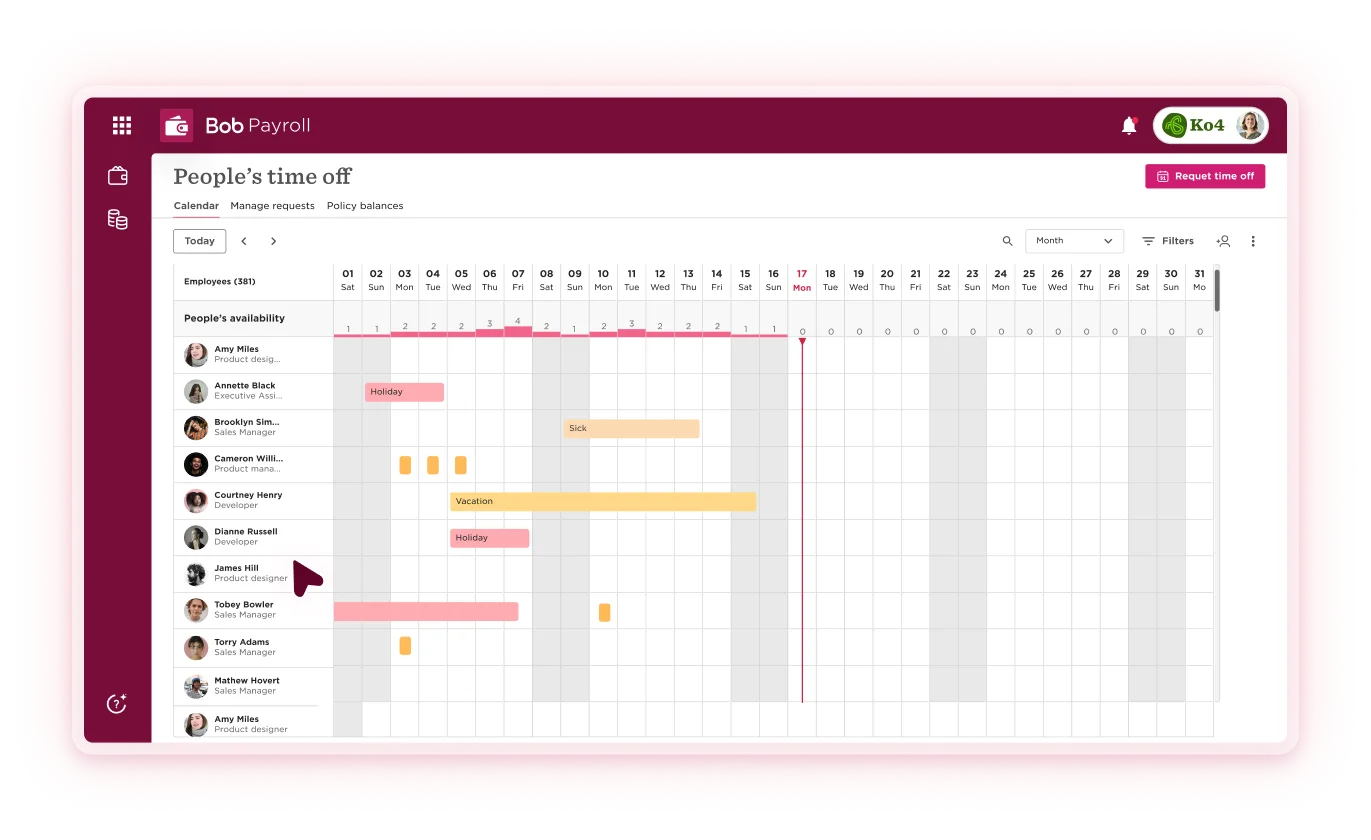
Table of contents
- 1. HiBob HRIS and Workforce Management
- 2. How This HiBob Review Was Evaluated
- 3. Core HR Records and Employee Data
- 4. Onboarding and Lifecycle Workflows
- 5. Employee Self Service and Time Off
- 6. Performance Management and Talent Development
- 7. Recruiting and Hiring Coordination
- 8. Compensation and Benefits Processes
- 9. Payroll and International Operations
- 10. Workforce Analytics and Planning
- 11. Integrations and Technical Requirements
- 12. Security, Privacy and AI Governance
- Frequently Asked Questions
1. HiBob HRIS and Workforce Management
HiBob gives organizations a way to coordinate employee information, HR administration, talent processes and workforce planning through its Bob platform.
Its appeal lies in connecting activities that are often split between spreadsheets, email and separate business applications.
Employee records can support onboarding, time off, performance management and reporting, while integrations connect HR processes with other systems.
This approach can help companies that need more consistent people operations as their structure becomes more complex.
Buyers should still confirm the modules, country coverage, integrations and services included in their specific agreement before choosing the platform.
The product is built around the idea that employee information is useful beyond the personnel record itself.
A new employee's details may be relevant to onboarding, access provisioning, payroll, team reporting and workforce planning.
A promotion may affect job information, compensation, approvals and organizational structure.
If each activity is handled in a separate system, teams must coordinate changes and check that the information remains consistent.
Bob brings a range of HR functions into one environment.
Depending on the products selected, these can include core HR, employee self service, onboarding, time off, performance, compensation, analytics, recruiting, planning and payroll related capabilities.
Organizations can assess which functions are necessary now and which may become useful later.
This breadth makes HiBob relevant to companies that have reached a point where basic personnel administration is no longer sufficient.
HR may need standardized processes across departments, managers may need clearer information about their teams, and leadership may want more reliable workforce reporting.
The platform can provide a shared operating environment for those needs, provided the company invests in setup and data quality.
A connected system does not automatically make a business process efficient.
If approval rules are unclear, employee records are incomplete or responsibilities are poorly defined, software can simply formalize existing confusion.
The best implementation begins with the decisions the organization needs to make and the tasks it wants to simplify.
HiBob is therefore worth considering when the company wants a broader HR system rather than a single purpose leave tracker or employee directory.
Its value depends on how well its available modules match the organization's real workflows, how easily it connects with existing applications, and whether the overall cost is justified by the operational improvements it can deliver.
2. How This HiBob Review Was Evaluated
This review uses a buyer focused framework to examine HiBob's stated product capabilities, likely operational use cases, pricing approach, integration requirements and implementation considerations.
It is designed to help readers understand the questions that matter before purchasing HR software, rather than treating a feature catalogue as proof of business value.
The assessment draws on publicly described product information and general software evaluation principles.
It does not claim access to a private customer account, independent laboratory testing or measured results from a live deployment.
Where a capability depends on a selected product, integration, region or contract, buyers should confirm it with the vendor.
The official HiBob platform information is available.
It describes the wider platform and its HR related capabilities.
This is a useful starting point for understanding the product family, but it should not be interpreted as a guarantee that every listed feature is included in every subscription.
A serious review of HR software needs to consider more than the user interface.
Employee data must be accurate, permissions must match responsibilities, approval workflows must reflect company policy, and integrations must transfer information reliably.
Reporting should help answer practical questions, such as where headcount is changing or which onboarding tasks remain incomplete.
Implementation effort is another important consideration.
A company moving from spreadsheets may need to clean employee records, define consistent job structures, map existing processes and train managers.
A larger organization may also need to coordinate several payroll providers, identity systems and regional policies.
Those requirements affect the time and resources needed to make the platform useful.
Commercial fit requires similar care.
A customized quote may include several modules and services, while another proposal may cover only a narrower set of functions.
Comparing total cost requires clarity about subscription charges, implementation, support, integration work and any additional products the business expects to use.
The most dependable buying process is to test specific scenarios with the vendor.
Ask the team to demonstrate how a new employee is added, how a manager approves time off, how a role change updates the employee record and how workforce data reaches another system.
These exercises reveal whether the configuration fits the business better than a broad product presentation alone.
3. Core HR Records and Employee Data
Core HR is the foundation of the Bob platform.
It provides a structured place to maintain employee information and organizational records.
For a company that has relied on separate spreadsheets, the immediate objective is to reduce duplication and create a more consistent way to manage changes.
Employee records commonly contain names, contact information, job titles, departments, managers, employment dates and other details needed for administration.
Depending on the configuration, records may also support related documents and information used by talent or workforce processes.
Before migration, the organization should decide which fields are required and who owns each type of information.
A centralized employee record can make changes easier to manage.
When someone moves to another department, receives a promotion or changes their reporting relationship, HR should have a clear process for updating the relevant information.
If other systems depend on that information, the company also needs to understand how the change reaches them.
The first challenge is often data quality.
Existing spreadsheets may contain duplicate employees, inconsistent job titles, outdated managers or incomplete dates.
Importing those records without review can create confusion inside the new platform.
A better process involves defining the required fields, standardizing values, checking duplicates and testing a representative group of records before completing the migration.
Organizational charts can help employees understand reporting relationships and departments.
They can also provide useful context for management discussions about team structure, leadership responsibilities and headcount.
Their value depends on accurate reporting lines and a clear process for keeping the information current.
Document management is another consideration.
Employee documents may need to be associated with a person's record or a particular HR process.
Buyers should verify which document types are supported, how access is controlled, what retention options are available and how the configuration meets the company's recordkeeping obligations.
Sensitive files should not be accessible to people merely because they work in the same department.
Permissions should reflect the actual responsibilities of different users.
HR administrators may require broad access, while managers may need a more limited view of their teams.
Finance may need certain workforce or compensation details, while employees should be able to access their own permitted information.
A role based model can reduce unnecessary exposure when configured carefully.
Companies should test permissions with realistic user accounts.
It is not enough to check that an administrator can access everything.
The implementation team should also verify that a manager cannot see unrelated employee records and that a department transfer changes access where required.
Access should be reviewed when someone changes roles or leaves.
Core HR becomes more useful when it supports several processes without forcing employees to maintain the same information repeatedly.
It can provide a consistent starting point for onboarding, talent administration and workforce reporting.
For growing companies, that consistency may be more valuable than adding numerous specialized features that remain disconnected from everyday work.
4. Onboarding and Lifecycle Workflows
Employee onboarding involves several people and deadlines.
HR may collect information and documents, IT may prepare accounts, a manager may organize training, and facilities may need to arrange equipment or access.
When those tasks are coordinated manually, it is easy for responsibilities to become unclear or for important steps to be missed.
HiBob supports onboarding and employee lifecycle workflows intended to coordinate tasks around employment events.
The exact processes depend on configuration and the products included in the agreement.
A company should confirm how its required workflows can be implemented rather than assuming every possible scenario is available without setup.
A well designed onboarding process starts before the employee's first day.
HR should decide which information must be collected, which documents need completion, who approves the necessary steps and when other departments should be notified.
A clear checklist gives each participant an understanding of what is expected and how progress is tracked.
Different employees may need different onboarding paths.
A remote employee may require equipment delivery and additional access instructions.
A manager may need leadership resources, while an employee in a regulated role may require additional documentation.
Temporary workers may follow a different process from permanent employees.
The company should decide which variations are necessary and avoid creating unnecessary complexity.
Lifecycle workflows can also support changes after onboarding.
A promotion may require a revised job title, updated compensation and new permissions.
A department transfer may change the manager, cost centre or approval chain.
An employee departure may trigger equipment return, account deactivation and payroll coordination.
These activities are easier to manage when responsibility and completion status are visible.
Automation is only as dependable as its rules.
If a task is assigned to a manager who has left the company, the workflow may stall.
If a deadline is unrealistic, tasks may remain overdue even when employees are acting reasonably.
Every process needs a responsible owner, sensible timing and an escalation route for exceptions.
Before rollout, administrators should test more than the standard case.
Include a postponed start date, a transfer between departments, a change in manager and an employee departure.
Check whether the right people are notified and whether incomplete tasks remain visible.
This kind of testing helps reveal gaps before they affect real employees.
The company should also decide how it will measure whether onboarding is improving.
Useful indicators may include task completion, delays, repeated data requests and feedback from new employees or managers.
These measures should support improvement rather than create arbitrary pressure to finish every task regardless of quality.
After launch, HR should review recurring problems.
If the same tasks remain incomplete, the cause may be unclear instructions, missing ownership or a workflow that does not match the real process.
Adjustments should follow evidence from actual usage, not merely the desire to automate more activities.
For organizations with several departments or locations, lifecycle workflows can reduce repetitive coordination and make employee transitions more consistent.
The strongest results come from combining appropriate automation with clear policies and ongoing administration.
5. Employee Self Service and Time Off
Employee self service gives staff a way to handle routine HR tasks without relying on an administrator for every question.
Depending on the configuration, employees may be able to review their information, update permitted details, request time off and access relevant documents.
Managers can handle assigned approvals and review information about their teams.
This approach can reduce interruptions for HR.
Employees who can check the status of a request or find an approved policy themselves are less likely to send repeated messages asking for basic information.
HR can then spend more time on work requiring judgement, such as supporting managers or improving employee processes.
Time off management is one of the most practical self service workflows.
Employees submit requests, managers review them and the decision is recorded.
A shared process can be easier to monitor than scattered emails and private calendars, especially when several managers are responsible for different teams.
Policy configuration is essential.
Leave entitlement may depend on location, employment type, length of service, contract terms and local legislation.
Accrual rules, carryover limits, public holidays and approval requirements must be checked carefully.
If those settings are incorrect, employees may see misleading balances or managers may make decisions using inaccurate information.
Testing should include employees with different working arrangements.
A new hire may have a different entitlement from a long serving employee.
Part time staff may follow a different calculation.
Employees who transfer between countries or employment categories may need special handling.
These scenarios should be verified before the system becomes the primary record for leave requests.
Time and attendance needs differ by business.
A professional services company may mainly need absence requests and team calendars, while a retail or manufacturing operation may require detailed shift coordination and attendance records.
Buyers should confirm which functions are included in their proposed HiBob package and whether those functions satisfy the requirements of their workforce.
Mobile access can make self service more convenient for employees who do not work at a desk.
Managers may also benefit from being able to respond to routine requests while away from their computers.
Still, organizations should test the exact actions they need on mobile devices instead of assuming every desktop function is available in the same way.
Self service needs clear communication.
Employees should understand which information they can change themselves, which requests require approval and how to report a mistake.
Managers need expectations about response times and a process for handling requests that fall outside the normal policy.
A successful rollout often includes concise guides, manager training and a designated channel for questions.
HR should review the most common support requests after launch and identify whether they stem from confusing policy, poor configuration or limited employee understanding.
The aim is to make everyday processes easier for everyone involved.
A self service portal that employees avoid because the instructions are unclear will not deliver the expected benefit.
Simplicity, accurate rules and consistent communication are just as important as the software's available functions.
6. Performance Management and Talent Development
HiBob's broader product offering includes talent capabilities such as performance management, goals, feedback, learning and employee development.
Connecting these processes with core HR records can help an organization maintain more consistent information about roles, responsibilities and development activities.
Performance management is most effective when it supports regular discussions rather than existing only as an annual form.
Managers need a structured way to agree on expectations, discuss progress, record feedback and identify development priorities.
HR needs to coordinate the process and understand where reviews remain incomplete.
A typical review cycle may involve employee self assessment, manager feedback, a discussion meeting and an agreed development plan.
Some companies also require calibration, additional approvals or multiple review stages.
Buyers should verify whether the platform supports their preferred model and how easily the process can be adjusted when company policy changes.
Review templates should reflect the organization's management approach.
A company focused on measurable objectives may need different questions from one that prioritizes behaviours, skills or career growth.
A rigid process can create administrative burden without improving the quality of feedback.
The system should support the review process rather than dictate a management philosophy that does not fit.
Goal management can help connect individual responsibilities with team priorities.
The organization needs to define how goals are created, updated and reviewed, including who can view them and how progress is discussed.
If goals are entered once and ignored until the next review cycle, the software will not produce meaningful accountability on its own.
Feedback tools can make it easier to record observations throughout the year.
However, employees and managers need clear guidance on what belongs in formal records, who can access feedback and how it will be used.
Sensitive information should be handled according to the company's policies and permissions.
Learning and development capabilities may help HR organize training and employee development activities.
Before relying on HiBob as a comprehensive learning management system, buyers should confirm the available course assignment, content management, completion tracking and reporting functions.
Organizations with extensive compliance training or certification requirements may need a specialist product.
Talent data can inform career development, succession planning and internal mobility.
Yet information about performance and potential can be subjective and sensitive.
The company should define how assessments are made, who can see them and how long records are retained.
Managers need guidance to avoid treating subjective ratings as unquestionable facts.
Performance reports should be interpreted with context.
Lower review completion in one department may indicate a scheduling problem or a manager who needs support.
Differences in ratings may reflect inconsistent standards rather than actual differences in performance.
Reports can identify patterns, but they cannot explain every cause.
HiBob is most relevant when a company wants talent processes to work alongside its core HR administration.
Buyers should compare the specific modules with their review philosophy, development goals and management capacity.
A successful implementation should improve the quality and consistency of talent processes, not simply digitize forms that nobody finds useful.
7. Recruiting and Hiring Coordination
Recruiting brings together HR, hiring managers, interviewers and finance.
A vacancy may need budget approval, a job description, candidate screening, interviews, feedback and an offer.
When those steps are managed across different applications and email threads, it can become difficult to understand progress or identify who needs to act next.
HiBob's wider product offering includes recruiting and hiring capabilities.
Buyers should confirm the exact scope of the recruiting functions available in their proposed configuration.
Relevant questions include how vacancies are approved, how candidates are tracked, how interview feedback is collected and how accepted offers move into onboarding.
Headcount approval should be part of the process.
A company needs to know who can request a new position, who approves the budget and how changes to an existing role are handled.
Without a clear approval process, recruitment activity may progress before the business has agreed on the need or available funds.
Candidate tracking should provide a clear view of each applicant's status and next step.
Recruiters need to understand which candidates require screening, which interviews are scheduled and which decisions remain outstanding.
Interviewers need instructions and a suitable place to provide feedback.
The process should be easy enough that participants update it consistently.
The transition from candidate to employee is especially important.
Once an offer is accepted, information may need to be transferred into the employee record and used to initiate onboarding.
Buyers should ask which fields transfer automatically, which require manual review and how the system handles a delayed start date or a candidate who withdraws.
Some organizations may already use a dedicated applicant tracking system.
Replacing it simply to consolidate software may not be the best choice if it supports specialized hiring workflows or established agency relationships.
A connection between the existing recruiting tool and HiBob may be more appropriate, provided the data transfer is reliable.
Candidate information requires privacy controls.
Access should be restricted to people involved in the hiring process, retention rules should be documented and records should not be kept indefinitely without a valid reason.
Companies recruiting in multiple countries should check the applicable privacy and employment requirements.
Recruiting analytics can help teams review vacancy progress, hiring activity and delays.
The figures are only meaningful if recruiters use consistent stage definitions and update records promptly.
If one team records interviews immediately while another leaves candidates in an earlier stage, reports may provide a misleading picture.
A useful demonstration should follow one real vacancy from initial approval to offer acceptance and onboarding.
Include a change in hiring manager, a candidate who is rejected and a delayed start date.
These scenarios reveal whether the workflow reflects the organization's actual recruiting process.
Recruiting software is most useful when it reduces coordination and provides a dependable view of progress.
Buyers should confirm that HiBob's available capabilities match their hiring volume and complexity rather than assuming that a broad HR platform automatically replaces every specialist recruitment tool.
8. Compensation and Benefits Processes
Compensation decisions require accurate employee data, clear approval rules and an understanding of financial impact.
HiBob's wider platform includes compensation related capabilities intended to support compensation reviews and connect decisions with employee information.
The precise features and regional options should be confirmed for the package under consideration.
A compensation cycle may involve HR, finance, department leaders and line managers.
HR coordinates the process, managers propose changes, and finance monitors budgets.
A structured workflow can help track recommendations, approvals and outstanding decisions, reducing the need to reconcile several separate spreadsheets.
The organization should define the compensation policy before configuring the system.
That includes who can propose a change, who approves it, which effective dates are permitted and what information each participant can see.
Without clear rules, a formal digital process may reproduce inconsistent decisions.
Salary bands and ranges can support a consistent approach to pay.
They need regular review, however, and should reflect the company's job structure, locations and compensation strategy.
A range should not be treated as automatically appropriate merely because it has been entered into software.
Compensation analytics can help HR identify patterns and prepare review discussions.
Differences between employees may reflect role scope, location, experience, working hours or historical decisions.
A report can point to a question that deserves investigation, but it does not establish the reason for a difference or determine whether a decision is fair.
Benefits administration also depends on regional requirements.
Eligibility, enrollment periods, provider connections and employee contributions may differ by country and employment arrangement.
Buyers should confirm whether HiBob manages the relevant processes directly or connects with specialist providers.
A general benefits capability should not be interpreted as proof that every local plan can be administered natively.
Workforce and finance planning can benefit from consistent compensation information.
A proposed promotion or new hire may affect future personnel costs, and leaders may need to understand those changes before approving a plan.
To make that analysis useful, the organization needs reliable job structures, compensation data and rules that distinguish proposed changes from approved commitments.
Compensation information is particularly sensitive.
Access permissions should limit who can see individual salary data, export records or approve changes.
The implementation team should test those permissions with representative users and confirm how historical information is retained.
Before buying, ask the vendor to demonstrate a compensation review from start to finish.
The demonstration should include budget allocation, manager recommendations, approvals, employee changes and reporting.
It should also show how the process handles an employee who transfers departments during the cycle.
HiBob may help organizations make compensation processes more structured, especially when employee records and planning are already managed in the platform.
The buying decision should depend on the depth of the compensation functions, the required integrations and whether the available workflows fit the company's policies.
9. Payroll and International Operations
Payroll is a critical business process because employee changes can affect payments, deductions, benefits and reporting.
Companies need a reliable way to transfer accurate information between HR and payroll, whether payroll calculations are handled by a native service or an external provider.
HiBob offers payroll related products, including Payroll Hub and native payroll capabilities in certain markets.
Availability depends on country and product configuration.
Businesses operating internationally should confirm the exact arrangement for every jurisdiction rather than assuming a single native payroll service covers all their employees.
For organizations using external payroll providers, integration quality is essential.
A new hire, compensation change, bank detail update or termination may need to reach payroll before a specific deadline.
Buyers should understand which fields synchronize, how frequently updates occur, which system owns each field and how failures are detected.
The company should define the role of each system.
HR may own employee records, while a payroll provider manages payment calculations and statutory processes.
If both systems allow the same field to be edited independently, the organization needs a clear rule for resolving conflicting values.
Otherwise, updates may be overwritten or records may drift apart.
Integration testing should cover more than a basic new employee record.
Include a salary adjustment, a department transfer, a leave of absence and a termination.
Check effective dates, confirm that the correct information arrives and verify that administrators can identify rejected or incomplete transfers.
International operations add complexity.
Local payroll rules, currencies, languages, employment regulations and support arrangements may differ.
An integration with a global payroll provider does not mean HiBob itself calculates payroll in every country.
Buyers should distinguish between payroll processing, employee data synchronization and general HR administration.
Time and attendance data may also influence payroll.
Organizations with hourly employees or complex shifts should verify how working hours and approved absences are recorded and transferred.
Additional approval or reconciliation steps should be included in the operating model and assigned to specific owners.
Before switching payroll processes, companies should conduct appropriate parallel checks.
Results from the new configuration can be compared with the established process before the organization relies on it for a live payment cycle.
Any discrepancies should be investigated and resolved before launch.
Ongoing ownership matters after implementation.
HR, finance, IT and the payroll provider should know who responds to an integration failure and how urgent changes are handled near a payroll deadline.
A connection that works during a demonstration is not enough unless the business can support it in daily operations.
HiBob can be useful as part of a connected payroll environment when accurate employee data needs to reach other systems.
Its suitability for multinational payroll depends on local coverage, selected products and provider capabilities.
Buyers should request a country by country confirmation before making the platform a central part of payroll operations.
10. Workforce Analytics and Planning
People analytics helps organizations understand workforce patterns using employee and organizational data.
HiBob offers reporting and analytics capabilities, alongside planning products intended to support headcount analysis, organizational design and compensation decisions.
These tools are most useful when they help leaders answer specific business questions.
HR teams may need to understand how headcount changes over time, which departments have open positions, where turnover is increasing or how many onboarding tasks remain incomplete.
Leadership may need to compare planned and actual staffing or estimate the effect of proposed hiring.
The right reports depend on the decisions the organization needs to make.
Prebuilt reports can provide a starting point, while customized views may be necessary for company specific questions.
Buyers should test whether users can filter information by department, location, manager and other relevant attributes.
They should also understand how historical changes are represented and whether reports can be exported in the required format.
Data quality is fundamental.
If employee records contain outdated department assignments or vacancies are not maintained consistently, reports may misrepresent the organization.
Before building dashboards, the company should agree on definitions for headcount, vacancies, turnover and other measures.
Different departments should not use conflicting definitions for the same metric.
Workforce planning extends reporting by considering future needs.
HR and finance may model new positions, planned departures, reorganizations or compensation changes.
A structured planning process can make assumptions more visible and reduce the effort needed to reconcile separate spreadsheets before a leadership discussion.
Scenario planning can help compare different business assumptions.
A company might assess a cautious hiring plan against a faster growth scenario, estimate the related workforce costs and identify which approvals are needed.
The result depends on assumptions such as start dates, salaries, vacancies and budget ownership.
Those assumptions should be documented and reviewed.
Organizational design information can help leaders examine reporting relationships, open roles and management capacity.
However, a chart cannot fully explain how work is performed or whether a team has the right skills.
Workforce data should inform decisions, not replace discussion with managers and employees.
Analytics also requires care when interpreting patterns.
A rise in turnover may relate to compensation, management, job design, location or external labour market conditions.
A chart identifies a trend but does not prove the cause.
Further investigation is necessary before a company decides what action to take.
Sensitive workforce data needs appropriate access restrictions.
Reports should not reveal personal circumstances to users who have no legitimate reason to see them.
Small teams may create privacy risks even when data is presented as a summary, because individual employees can be identifiable.
Reporting permissions and minimum group sizes should be considered where relevant.
The connection between HR and finance is valuable when both teams need consistent headcount and personnel cost figures.
Yet the departments must agree on effective dates, budget ownership and approval status.
A proposed vacancy should not be counted as an approved hire unless the organization has explicitly defined that rule.
Buyers should bring real questions to a product demonstration.
Ask the vendor to show current headcount by department, open approved positions, planned versus actual staffing and the effect of a proposed expansion on workforce costs.
If producing those views requires substantial manual work, that effort should be included in the buying decision.
11. Integrations and Technical Requirements
Most companies already rely on applications for collaboration, payroll, finance, identity management, recruiting and other business processes.
Replacing every system is rarely practical, so an HR platform needs to fit into the existing technology environment and exchange information reliably.
HiBob provides an integrations marketplace and integration options for connecting with other services.
Examples in the wider ecosystem include Slack, Microsoft Teams, Google Workspace, Okta, Microsoft Entra ID, NetSuite, Jira, Greenhouse and payroll providers.
The available catalogue can change, and a listed connection does not guarantee support for every required workflow.
Integration assessment should start with business events rather than a list of vendor names.
When a new employee joins, the company may need to create an identity account, provision collaboration access and send employee information to payroll.
When an employee leaves, access may need to be revoked and other records updated.
Each event should have an owner and a defined expected result.
Buyers should establish whether a connection is native, partner supplied, API based or dependent on a separate automation service.
They should also ask whether information flows in one direction or both, which fields transfer and how frequently updates occur.
Some integrations may synchronize quickly, while others rely on scheduled updates.
Field mapping deserves attention.
One system may use a department name while another expects a department identifier.
Job titles, locations and employment statuses may also use different values.
The integration needs clear rules for mapping fields and handling information that does not match the expected format.
Duplicate records are another risk.
If two systems create employee records independently, the company may end up with separate identities that do not reconcile.
Stable identifiers and clear matching rules help reduce this problem.
Administrators also need a process for correcting mismatches without losing important history.
Failure handling is just as important as the normal data flow.
A connection may stop because credentials expire, a required field is missing or the external service is unavailable.
The organization should know whether the error generates an alert, who receives it, how the transfer can be retried and which system currently holds the correct value.
The marketplace is useful for discovering available connections, but buyers should test their exact configuration.
An integration may support only certain product editions, regions or data flows.
A demonstration using the organization's own systems is more informative than a general statement that two products are compatible.
HiBob also provides public API and developer resources for more specialized requirements.
Custom development can help connect an application that is not supported by a ready made integration.
It also adds ongoing work, including maintenance, authentication management, monitoring and testing when either system changes.
Security needs to be reviewed across every connection.
The organization should understand what information is shared, which credentials are used and how access can be revoked.
A secure HR platform does not automatically make every connected service secure.
An integration inventory can help IT and HR manage these responsibilities.
For each connection, document its purpose, data owner, fields exchanged, synchronization frequency, error process and technical contact.
This becomes especially valuable when providers change their services or the company reorganizes its internal systems.
HiBob is best evaluated as part of the wider technology environment.
Buyers should prioritize the connections that are essential for daily operations and confirm them early in the project.
A broad marketplace is useful, but it cannot remove the need for clear ownership and integration testing.
12. Security, Privacy and AI Governance
HR platforms hold information that needs careful protection.
Employee records may include contact details, employment documents, compensation information and other sensitive data.
Buyers should review both the vendor's security practices and the way their own organization will configure permissions, retain information and manage connected services.
HiBob publishes security information covering its security management and privacy practices, including ISO certifications and SOC 2 Type II related information.
Buyers should request current documentation and confirm which certifications and reports apply to the service and scope they intend to purchase.
Published security claims are useful evidence, but they do not replace a customer specific review.
Access control is one of the most important areas to examine.
Administrators should create roles that reflect real responsibilities and avoid granting broad privileges simply for convenience.
Permissions should be tested with representative accounts and reviewed whenever employees change roles or leave the organization.
Authentication requirements should align with the company's identity policies.
Buyers should confirm available single sign on options, multifactor authentication support and account recovery procedures.
If the company uses a central identity provider, it should test how account provisioning, role changes and departures affect access to Bob.
Data minimization reduces unnecessary exposure.
The company should identify which employee fields are genuinely required, avoid collecting sensitive information without a clear purpose and establish retention rules.
Keeping data simply because the system can store it increases the amount of information that must be governed.
Privacy obligations vary by jurisdiction and the type of information involved.
International organizations should understand applicable rules for employee data, access requests, retention and cross border transfers.
HiBob can provide platform controls and contractual documentation, but customers remain responsible for their own legal obligations and internal processes.
Data export and deletion should be clarified before a contract is signed.
Buyers should ask how records can be exported at the end of the relationship, what formats are available, how backups are treated and how deletion is handled under the agreement.
A documented exit process is part of sound vendor management.
Integrations also affect security.
A connection to payroll or an identity provider may transfer sensitive employee information or trigger actions in another system.
The organization should document each connection's purpose, permissions and revocation process.
Relevant third party security and contractual arrangements should also be reviewed.
AI assisted features require additional questions.
Buyers should establish which functions are available, what information they can access, how outputs are generated and whether customer data is used for model training.
They should also confirm what controls are available for sensitive information and how users can review or correct generated content.
AI output should not automatically determine consequential employment decisions.
Hiring, compensation, performance assessment and employee relations can affect people's livelihoods and opportunities.
Organizations should retain meaningful human review, apply consistent policies and avoid treating generated recommendations as proof that a person meets a particular standard.
Security and privacy ownership should be explicit.
HR should be responsible for employee data quality, IT should manage access and integrations, privacy or legal specialists should review applicable obligations, and procurement should track vendor commitments.
These responsibilities continue after launch.
HiBob may be appropriate for organizations that need a structured HR platform, but security requirements vary.
Buyers in regulated sectors or companies with strict internal controls should complete their due diligence before migrating employee records.
They should also make sure that administrators have the time and expertise needed to maintain the configuration.
Key features
- Centralized employee record management
- Employee lifecycle workflow automation
- Employee onboarding task coordination
- Configurable employee data fields
- Organizational chart and structure
- Employee document management workflows
- Role based access permissions
- Employee self service capabilities
- Time off request management
- Manager approval workflow coordination
- Time and attendance capabilities
- Performance review cycle management
- Employee goal tracking workflows
- Continuous feedback collection tools
- Learning and development administration
- Recruiting and hiring workflows
- Compensation review cycle coordination
- Salary band and range management
- Payroll data synchronization options
- Payroll Hub integration management
- Workforce analytics and reporting
- Headcount planning and forecasting
- Organizational design scenario modeling
- HR and finance data alignment
- Employee engagement survey capabilities
- Bob AI assisted HR tasks
- Mobile access for employees
- Third party application integrations
- Public API integration options
- Sandbox for testing configuration changes
Pricing
- Centralized employee database management
- Employee document and data workflows
- Time off request management
- Lifecycle automation and task coordination
- Analytics reporting and mobile access
- Performance review cycle management
- Employee goals and feedback workflows
- Learning and development administration
- Recruiting and hiring process support
- Compensation review cycle coordination
- Workforce planning scenario modeling
- Position and organization structure planning
- Headcount and budget visibility
- Compensation bands and budget controls
- HR and finance data alignment
Pros & cons
Pros
- Connected employee records across workflows
- Broad HR lifecycle functionality
- Configurable employee self service
- Structured onboarding task coordination
- Flexible talent management capabilities
- Useful workforce reporting options
- Integrated planning and compensation tools
- Payroll connection options across markets
- Marketplace for business integrations
- Role based access controls
- Mobile access for employees
- Modular platform can scale
- Sandbox supports configuration testing
- API options for custom connections
Cons
- Public subscription prices are unavailable
- Total cost requires a quote
- Module availability varies by agreement
- Implementation requires careful planning
- Data migration needs dedicated preparation
- Payroll coverage varies by country
- Advanced workflows need configuration
- Integration depth varies by provider
- Custom connections add maintenance work
- Reporting depends on data quality
- Security configuration requires ongoing ownership
- Smaller teams may need less
- AI controls require buyer verification
- Multiple modules complicate vendor comparison
specs
- Platforms: Web browser, iOS and Android apps
- Free plan: No publicly listed free plan
- Starting price: Custom quote based on workforce and modules
- Integrations: Marketplace, partner integrations and public API
- Support: Vendor support and implementation partner options
- Best for: Organizations with complex or expanding HR operations
Our verdict
HiBob is worth evaluating when an organization needs employee records, HR administration, talent processes and workforce planning to work together. Its breadth can reduce fragmentation and create more consistent processes, especially for companies managing several departments, locations or payroll connections. However, buyers should not mistake a broad feature set for a turnkey implementation. Data migration, permission design, integration testing and manager adoption all require attention. Smaller businesses with straightforward HR needs may prefer a simpler product, while international employers should verify local payroll coverage. The right decision depends on a tailored demonstration, a clear module list and a written quote that reflects the company's real operating requirements.
Contact SalesFrequently Asked Questions
What is HiBob used for?
How much does HiBob cost?
Does HiBob include payroll?
Can HiBob support remote teams?
Which apps integrate with HiBob?
Reader reviews
Be the first to review