Justworks Review: Payroll Costs and PEO Benefits Explained

By Afonso Macosso & Dr. Isabella Gunn · Reviewed by Zari M'Bale
Justworks combines payroll, HR guidance, compliance support and employee benefits, helping US businesses simplify employment administration while giving teams access to valuable benefits.
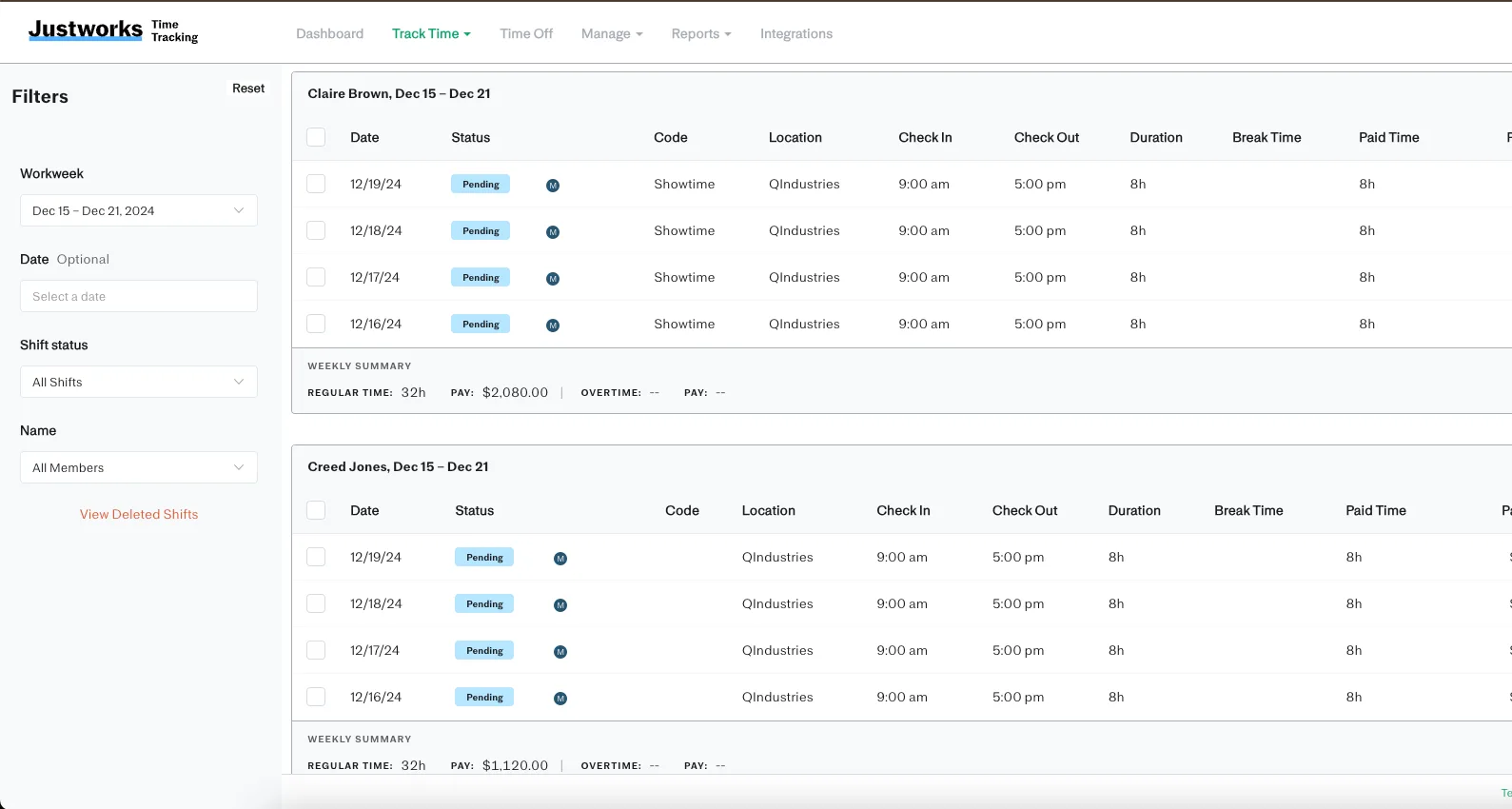
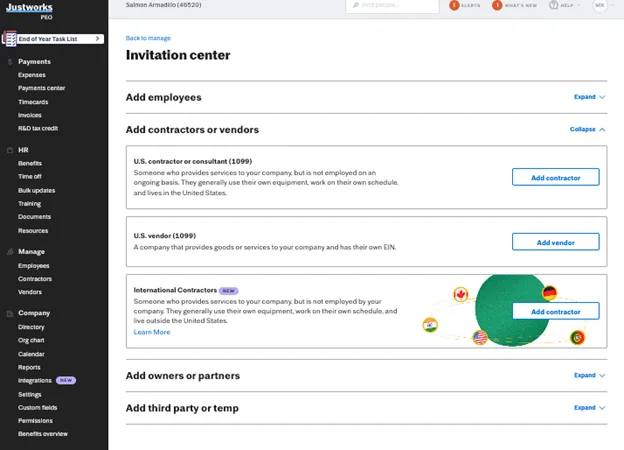
Table of contents
- 1. Justworks Payroll and PEO Services
- 2. How This Justworks Review Was Evaluated
- 3. Choosing Payroll or PEO
- 4. Payroll Processing and Tax Administration
- 5. Employee Benefits and Insurance
- 6. HR Tools and Employee Onboarding
- 7. Compliance Support and Employer Responsibilities
- 8. Time Tracking and Workforce Records
- 9. International Hiring and Contractor Payments
- 10. Integrations and Data Management
- 11. Support Quality and Service Boundaries
- 12. Justworks Pricing and Total Cost
- Frequently Asked Questions
1. Justworks Payroll and PEO Services
Justworks helps businesses manage payroll, human resources, compliance and employee benefits through a set of connected services.
Its main appeal is the combination of payroll administration with practical HR support and, through its Professional Employer Organization service, access to employee benefits that smaller companies may struggle to arrange independently.
The important buying decision is choosing between payroll software and a PEO arrangement, because the services, responsibilities and costs differ.
Justworks also offers international employment services, so companies should evaluate domestic payroll, coemployment and global hiring as separate needs rather than assuming one plan covers everything.
Justworks is designed primarily for employers that want help handling the administrative responsibilities of employing people.
Payroll involves more than transferring salaries.
Businesses must collect accurate employee information, calculate pay, process deductions, manage tax filings, maintain records and deal with questions when something goes wrong.
Benefits add another layer of work, especially when a company offers health insurance, retirement plans and other employee programs.
The platform brings several of these responsibilities into a coordinated service.
Depending on the product, customers can access payroll processing, employee onboarding, HR tools, compliance resources, reporting, benefits administration and support from HR professionals.
The PEO offering also establishes a coemployment relationship, under which Justworks assumes certain employer responsibilities described in the agreement.
That arrangement is different from simply subscribing to payroll software.
The distinction matters.
A company that mainly needs to pay employees and manage basic HR tasks may prefer the standalone Payroll plan.
A company that wants a broader service covering payroll, HR consultation, compliance support and access to employee benefits may find PEO more suitable.
An employer looking to hire full time employees abroad without setting up its own local entity may need the Employer of Record service instead.
Justworks is particularly relevant to US businesses dealing with employment across multiple states, where tax registration, insurance, benefits and local requirements can create additional administration.
Its global services may also help eligible companies pay international contractors or employ international workers through an Employer of Record arrangement.
However, availability depends on the product and supported country.
A strong buying decision begins with the work the company wants to delegate.
Identify the payroll tasks that consume the most time, the employee benefits the company wants to offer, the states where it employs people and the support its managers need.
Then compare those requirements with each Justworks plan and its full cost.
2. How This Justworks Review Was Evaluated
This review assesses Justworks using its published product descriptions, current public pricing, plan differences and official help resources.
It considers how the service may fit into payroll, employee benefits, HR administration and compliance workflows.
The goal is to help buyers understand the practical implications of each option before entering a contract.
This is a source based product review, not a claim of private account access or independently measured performance.
Public product descriptions establish what Justworks says its services provide, but they do not guarantee that every capability will be available under every contract or in every jurisdiction.
Buyers should confirm details with the provider, especially when payroll, insurance or employment law is involved.
The official pricing page is available.
It lists Payroll at $8 per employee each month plus a $50 monthly base fee, PEO Basic at $79 per employee each month, and PEO Plus at $124 per employee each month.
The published pricing page also describes separate products and optional services, so the final cost can be higher when a business adds features or benefits that are not included in its core plan.
An informed evaluation of payroll software must consider more than its advertised price.
The employer needs to understand which tax filings are handled, how employee changes are processed, what happens when payroll information is incorrect, and how quickly support responds to a time sensitive problem.
Benefits and insurance require additional checks because eligibility, coverage and costs depend on plan terms and employee circumstances.
The review also distinguishes between software features and services delivered by Justworks.
A dashboard can help a company maintain employee information, but a PEO arrangement may also involve responsibilities that extend beyond the software itself.
Buyers should understand which tasks are completed by the platform, which are handled by Justworks personnel and which remain the customer's responsibility.
Implementation requirements can affect the value of the service.
Employers need to provide accurate employee data, verify company and bank information, select relevant benefits, configure pay schedules and prepare employees for onboarding.
Moving from another provider also requires attention to historical payroll information, tax registrations, benefit enrollment and the timing of the transition.
The best evaluation method is to use the company's own circumstances.
Ask Justworks to price the expected employee count, explain the required state coverage, demonstrate a payroll run and show how an employee change is handled.
Review the benefits available to the actual workforce rather than relying on a general promise of access to competitive plans.
This approach keeps the review focused on purchase decisions.
Justworks may be a good fit when its services remove administrative work that the business would otherwise perform internally.
Its value is less clear when the company already has strong payroll operations, wants highly specialized HR software or needs employment coverage in a location the selected service does not support.
3. Choosing Payroll or PEO
Justworks offers more than one way to manage employment administration, and the differences between its products should guide the purchase.
Payroll is a software and service option for paying employees and accessing HR tools.
PEO Basic and PEO Plus provide a broader arrangement that includes payroll, HR resources, compliance support and other services.
The Payroll plan is the simpler starting point for employers that want to manage payroll without entering a coemployment relationship.
The published price is $8 per employee per month plus a $50 monthly base fee.
It includes payroll for employees, HR tools, expert support and access to time tracking.
Benefits and other capabilities may be available through separate add ons, so the headline price should not be treated as the complete cost of every possible configuration.
PEO Basic is priced at $79 per employee per month, with no base fee shown on the public pricing page.
It includes payroll, HR consulting and tools, compliance support, around the clock support, access to time tracking and selected benefits and financial services.
It is intended for businesses that want more assistance with employment administration than payroll alone provides.
PEO Plus is priced at $124 per employee per month.
It includes the Basic offering and adds access to medical, dental and vision plan administration, along with other benefits such as health savings and flexible spending accounts where available, mental health support and fertility benefits.
Companies considering Plus should compare the actual plan options, employee eligibility and employer contributions, not just the additional features listed on the pricing page.
These products should not be treated as three software editions with identical responsibilities.
The PEO arrangement involves coemployment, which changes the relationship between Justworks and the client company.
Buyers should understand the contractual allocation of responsibilities, including which employment administration tasks Justworks handles and which remain with the employer.
The right choice depends on what the business wants to outsource.
A company that already has health insurance and HR processes may prefer Payroll.
A company that wants outside guidance on HR and compliance may value PEO Basic.
A business that wants broader medical benefits and associated administration may consider PEO Plus.
Cost comparison should use the same assumptions for every plan.
Calculate the number of employees, monthly payroll fees, optional products, insurance premiums, employer contributions and any implementation or service charges.
The lowest headline price is not necessarily the lowest total cost if the company must purchase several add ons to meet its needs.
Before choosing, request a written explanation of what is included and what costs extra.
Confirm whether fees are based on active employees, how contractors are billed, whether minimum charges apply and how changes in workforce size affect the invoice.
Those details make it easier to compare Justworks with an in house payroll process or another provider.
4. Payroll Processing and Tax Administration
Payroll is the central function for many Justworks customers.
Employers need to calculate employee pay accurately, apply deductions, manage pay schedules and complete related tax administration.
A structured payroll service can reduce manual calculations and help keep employment records in one place, but the employer still needs to provide accurate information and review the results.
Payroll setup begins with the company's legal and banking details, employee records, pay schedules and compensation arrangements.
The company should verify employee names, addresses, tax withholding information, pay rates and payment details before the first live payroll.
Mistakes introduced during setup can lead to incorrect payments or additional work later.
Pay schedules need to reflect the company's employment arrangements.
A business may pay salaried staff and hourly workers on different schedules, or it may need to process bonuses, commissions and off cycle payments.
Buyers should verify the specific payroll scenarios supported by their plan and ask how corrections are handled when an approved payroll contains an error.
Tax administration is another major consideration.
Justworks describes payroll related tax filings and employment tax forms among the services associated with its products.
In the PEO offering, the service also supports state tax and unemployment insurance administration as part of its wider responsibilities.
The exact division of responsibilities depends on the product and contract, so employers should not assume every tax obligation is automatically transferred to the provider.
The employer must still communicate changes promptly.
New hires, terminations, pay adjustments, bonuses, leave and changes in employee tax information may affect payroll.
A reliable internal process should establish who submits each change, what approval is needed and the deadline for providing it before payroll is processed.
Payroll review is important even when the provider handles calculations and filings.
Employers should check the payroll summary, unusual changes, deductions and total amounts before finalizing a run.
A review process can catch a typo, duplicate payment or unexpected salary change before it affects employees.
Historical data also matters when changing providers.
Companies should identify which payroll records need to be migrated, what reports should be retained and how year to date amounts will be reconciled.
The transition plan should address the last payroll with the old provider and the first payroll with Justworks to reduce the risk of missed payments or duplicated records.
Businesses with hourly employees should examine the relationship between time records and payroll.
The company needs to know how hours are submitted, approved and transferred, how overtime is handled and how corrections are recorded.
A separate time tracking product may be needed for more advanced workflows.
Justworks can reduce the burden of payroll administration, especially when the employer also needs support with related HR and compliance tasks.
Its value depends on the fit between the plan and the company's actual payroll complexity.
Buyers should test their most common payroll scenarios and confirm the process for urgent corrections before relying on the service for live payments.
5. Employee Benefits and Insurance
Employee benefits are one of the main reasons a business might choose Justworks PEO instead of purchasing payroll software alone.
Smaller employers can find it difficult to research insurance options, manage enrollment, coordinate deductions and answer employee questions without dedicated benefits staff.
Justworks combines payroll and HR administration with access to benefit programs, although availability depends on the selected plan and employee eligibility.
PEO Plus is the more benefits focused option.
Its published offering includes medical, dental and vision plan administration, alongside access to health savings accounts, flexible spending accounts and additional wellbeing benefits.
PEO Basic includes a narrower set of services and benefits.
Employers should compare the actual plan options and eligibility rules rather than assuming that every benefit is automatically included for every employee.
Health insurance is not a single standardized product.
Available carriers, premiums, deductibles, provider networks, copayments and coverage rules can differ.
The employer should examine the options available to its workforce and compare the financial commitment with its current arrangement.
An attractive monthly platform fee does not reveal the total cost of health insurance.
Employer contributions are an important part of that calculation.
A company might pay a fixed amount toward employee premiums, contribute different amounts for dependents or offer different arrangements to different employee groups where permitted.
Those decisions affect both the employer's budget and the perceived value of the benefits package.
Enrollment administration also matters.
Employers need to know how employees select plans, when enrollment windows open, what happens when a person becomes eligible and how life events affect coverage.
The company should ask how employee elections are reflected in payroll deductions and how errors are corrected.
Retirement benefits can be another consideration.
Justworks lists access to 401(k) services among the benefits available with its PEO offering.
Buyers should clarify the provider, fees, plan responsibilities and eligibility conditions, including whether the employer has matching contributions or other plan obligations.
The platform's inclusion of a retirement service does not mean that every retirement plan expense is covered by the core subscription.
Other benefits may include disability insurance, life insurance, commuter benefits, wellness programs and employee support services.
The specific selection varies by product and agreement.
Employers should ask for a complete list of available benefits, identify any additional fees and confirm which employees can enroll.
Benefits communication is part of implementation.
Employees need understandable explanations of the available options, contribution amounts, enrollment deadlines and where to ask questions.
HR should prepare materials before enrollment begins and provide a contact for issues that require attention.
Confusing enrollment can reduce the practical value of an otherwise useful benefits package.
Businesses should also review how benefits are handled when an employee joins, leaves or changes eligibility.
Coverage dates, final deductions, continuation rights and required notices can involve time sensitive responsibilities.
The employer should understand which steps Justworks performs and which require action from the company's own administrators.
Justworks is most compelling when a business wants to combine payroll administration with a broader benefits offering.
PEO Plus may be worth evaluating when insurance access is a priority, while Payroll may be more suitable for companies that already have benefits arrangements.
The right comparison includes premiums, employer contributions, administrative fees and the actual value of the coverage available.
6. HR Tools and Employee Onboarding
Payroll is only one part of employment administration.
Companies also need to collect employee information, store documents, manage onboarding, maintain policies and respond to routine HR questions.
Justworks includes HR tools that help coordinate these activities, particularly through its PEO service.
Employee onboarding starts with accurate information.
The company needs to collect required personal details, employment documents, tax forms and relevant policy acknowledgements.
A structured digital process can help reduce paper handling and make it easier to see which tasks remain incomplete.
Employers should verify which forms, electronic signature capabilities and training steps are included in their selected product.
A good onboarding workflow defines responsibilities before the employee starts.
HR may collect documents and confirm employment details, the manager may arrange training, and IT may prepare access to business systems.
The company should establish deadlines and an escalation path for missing information.
Software can organize tasks, but someone must still own the process.
Justworks describes tools for employee onboarding, document organization, people management and reporting within its broader HR offering.
Those functions can be helpful to smaller companies that do not have a dedicated HR information system.
However, buyers should test whether the available tools support their specific workflows, particularly if they have multiple locations, different employee categories or unusual documentation requirements.
Employee records need ongoing maintenance after onboarding.
Promotions, transfers, changes to personal information and departures all affect the information held by the employer.
The company should define who can update each field, who approves sensitive changes and how other systems are informed when employee details change.
Document storage deserves particular attention.
Employers may need to retain signed agreements, policies, employment records and other documents for defined periods.
Access should be restricted according to responsibility, and the organization should understand how it can export records if it changes providers.
Buyers should confirm retention, access and export capabilities before migrating sensitive files.
Paid time off administration is another useful HR function.
Employers can establish policies, receive requests and manage approvals through the available tools.
The rules need to reflect the company's policies and applicable local requirements.
Businesses with complex accrual arrangements should test the calculations and exceptions before relying on the platform as their primary record.
The broader HR value also comes from access to guidance.
Small businesses may not have an experienced HR professional available for every question about employee processes, documentation or policy.
Justworks offers HR consulting and resources with its PEO products, providing a way to seek assistance with routine employment matters.
Buyers should clarify the scope of that guidance and recognize that general HR support is not the same as legal representation.
Employee self service can reduce repeated questions when staff can find their information and complete routine tasks themselves.
Employers should make sure employees understand how to use the platform and where to go when a request is unusual or sensitive.
Clear instructions matter more than the mere existence of a portal.
Justworks' HR tools are likely to be most useful for companies that want practical administration rather than a highly customized enterprise HR system.
Organizations with complex talent management, succession planning or advanced performance review requirements should confirm the available depth and compare specialist tools if necessary.
7. Compliance Support and Employer Responsibilities
Employment compliance can involve federal, state and local rules, tax registrations, required notices, insurance, payroll records and employment practices.
A business that hires across multiple states may face more administrative work than one operating in a single jurisdiction.
Justworks positions its services as a way to help employers manage these obligations with software, support and, under PEO, a defined allocation of responsibilities.
A PEO arrangement is different from a typical software subscription.
Justworks and the client company enter into a coemployment relationship, under which certain employer responsibilities are handled or supported by Justworks according to the contract.
The company should understand the practical consequences of that arrangement before signing, including how responsibilities are divided and which decisions remain under its control.
Justworks describes support for payroll tax filings, employment related tax forms, workers' compensation access and state unemployment insurance processes within its services.
It also provides HR consulting and compliance resources.
These can reduce the administrative burden, but the employer must still provide accurate information, respond to requests and follow the procedures that apply to its business.
Multi state employment is a common reason to consider outside support.
Hiring in a new state may require registrations, insurance arrangements and updates to payroll administration.
Employers should ask what Justworks handles when a new state is added, how long setup normally takes and which documents or approvals the company must provide.
Workers' compensation is another area where the details matter.
Coverage and costs can depend on employee roles, payroll amounts, locations and other factors.
Employers should verify which coverage is included, how premiums are calculated and what steps are required when an employee is injured.
The platform fee should not be confused with the full cost of insurance.
Compliance support should not be interpreted as a guarantee that every business decision is lawful.
Employers remain responsible for their workplace practices, manager conduct, employee classification decisions and compliance with rules that apply to their particular circumstances.
The exact division of responsibility depends on the service and agreement.
Companies should also ask how legal or complex HR questions are escalated.
Routine guidance can help an employer understand a process, but some situations require an employment lawyer, tax adviser or insurance specialist.
A clear distinction between general support and professional legal advice prevents misunderstandings.
Documentation is important for compliance.
Employers should maintain records of policies, employee changes, approvals and relevant communications according to their retention requirements.
They should also understand how Justworks stores and provides access to records and what happens when the relationship ends.
A good compliance workflow starts with an inventory of the company's locations, workforce types, benefit arrangements and existing obligations.
During the sales process, buyers should ask which requirements Justworks supports directly, which are handled through partners and which remain the company's responsibility.
The answers should be reflected in the contract and implementation plan.
Justworks can be a practical option for employers that need more support with payroll and employment administration than a standalone software product provides.
The benefit is strongest when the company understands the service boundaries and follows its own responsibilities consistently.
A PEO can help manage employment complexity, but it does not remove the need for responsible management.
8. Time Tracking and Workforce Records
Time tracking matters when employee pay depends on hours worked, overtime, shift schedules or attendance records.
It also matters for businesses that need to understand when employees are working and whether time records have been approved.
Justworks provides access to time tracking, with more advanced capabilities available as a separate product or add on depending on the plan.
The basic workflow needs to be straightforward.
Employees record their hours, managers review and approve timecards, and approved hours become available for payroll processing.
The company should test how the system handles missed clock ins, corrected timecards, overtime and employees who work at more than one location.
The official pricing page lists Justworks Time Tracking as an add on priced at $8 per employee per month.
Employers should confirm whether the fee applies to all employees or only relevant users under their configuration, and whether there are any additional charges.
For businesses with many hourly employees, these costs can materially change the total subscription.
Advanced time tracking may include clocking in and out from supported devices, geofencing and synchronization with timecards.
Geofencing can help a company restrict clock in activity to designated locations, where appropriate.
Before enabling it, employers should understand how location data is handled, what employees are told and whether the process fits their operational and privacy requirements.
Time tracking configuration should reflect actual workplace policies.
The company must define work schedules, break rules, overtime approvals and the process for correcting errors.
A system cannot resolve a disagreement about hours if the underlying policy is unclear or managers apply different rules to similar situations.
Payroll integration is particularly important.
Approved hours should flow into the payroll process with the correct employee, pay period and pay rate.
Buyers should verify how the system handles multiple pay rates, shift differentials and changes made after a timecard has been approved.
A demonstration using a real payroll scenario is more useful than a generic product tour.
Managers need a clear process for reviewing exceptions.
Missing punches, unusually long shifts and repeated edits may require attention before payroll is finalized.
The company should decide who receives alerts, how quickly issues must be resolved and how corrections are documented.
For salaried employees, detailed time tracking may be unnecessary unless the company needs it for project costing, client billing or internal policy.
For hourly employees, it can be central to accurate payroll.
Buyers should avoid paying for a more advanced tracking solution unless it addresses a real requirement.
The time tracking add on can make Justworks more useful for companies that want to connect attendance records with payroll.
However, organizations with complex workforce scheduling, advanced labour forecasting or specialist clocking requirements should test the product carefully and compare dedicated workforce management systems if needed.
9. International Hiring and Contractor Payments
Justworks has services for companies that employ people beyond the United States, but the available options should be distinguished carefully.
Paying international contractors, employing full time workers through an Employer of Record and managing US employees through PEO are different activities with different legal and administrative implications.
International contractor payments allow eligible businesses to onboard and pay contractors in supported countries.
This can help a company consolidate contractor administration rather than handling each payment through a separate bank transfer or provider.
Buyers should confirm the countries supported, the currencies and payment methods available, the required onboarding information and the fees charged per paid contractor.
A contractor relationship should be classified correctly.
Using a platform to pay someone does not automatically make that person an independent contractor under applicable law.
The employer must assess the nature of the working relationship and comply with the relevant local requirements.
Misclassification can lead to tax, employment and financial consequences.
The Employer of Record service is intended for companies that want to hire full time international employees without establishing their own legal entity in the hiring country.
In this arrangement, the EOR acts as the formal employer through its local entity and manages defined employment responsibilities.
Justworks describes its EOR service as supporting hiring, payroll, benefits administration and compliance in supported countries.
The official help documentation describes EOR availability in 37 supported countries as of its May 2026 update.
Country coverage can change, so companies should verify the current list and the services available in each location before making a hiring commitment.
A country being supported does not necessarily mean every role, benefit or employment arrangement is available.
EOR pricing is substantially different from domestic payroll.
Justworks lists its Global EOR product at $599 per employee per month on its public pricing page.
That fee should be assessed against the cost and complexity of setting up a local entity, engaging local advisers and administering employment independently.
The final proposal may also depend on the country and the services required.
International hiring requires attention to employment contracts, payroll currency, local benefits, paid leave, termination rules and required notices.
The employer should ask which party handles each responsibility, how employee changes are approved and how issues are escalated.
The exact terms need to be confirmed for the hiring country.
Contractor payment and EOR services should not be treated as interchangeable.
A contractor arrangement may suit a genuinely independent service provider, while an EOR arrangement is intended for a full time employee relationship in a country where the company does not have its own entity.
The correct choice depends on the working relationship and local rules, not simply on which service is cheaper.
Companies should also consider the employee experience.
International hires need clear information about payroll dates, benefits, holidays, support contacts and employment policies.
A platform can consolidate administration, but local context and timely communication remain important.
Justworks can be useful for businesses expanding beyond the United States, particularly when they want one provider for selected domestic and international employment tasks.
However, buyers should verify country coverage, worker classification, currency handling, fees and the division of legal responsibilities before using the service for an international hire.
10. Integrations and Data Management
Justworks needs to fit into the company's existing technology environment.
Employers may already use accounting software, recruiting tools, expense management applications, retirement providers and time tracking systems.
Integrations can reduce duplicate data entry, but their practical value depends on which systems are supported and how information moves between them.
The published PEO offering identifies software integrations across accounting, hiring, expenses and performance management.
Buyers should check the current integrations catalogue for their specific applications and confirm which plan or add on is required.
A broad claim about integration support does not establish that every field or workflow synchronizes automatically.
Accounting integration is especially relevant for businesses that need payroll expenses reflected in their financial records.
The company should understand how payroll totals, taxes, deductions and employer costs are represented in the accounting system.
It should also verify how corrections and adjustments are transferred and whether the integration produces the detail needed by its finance team.
Recruiting connections can reduce repetitive work when a candidate becomes an employee.
The employer should confirm which employee details transfer, whether they need review and how the process handles a changed start date.
If the company uses a specialist applicant tracking system, it should test the connection rather than assume that all candidate information will be carried across.
Expense workflows can also intersect with payroll.
Some reimbursements may be processed through payroll, while others may be handled through an accounting or expense management application.
The company needs a clear policy for which system records the expense, who approves it and how the payment is reconciled.
Retirement and benefits providers require their own checks.
Buyers should understand whether contributions and deductions are synchronized, which records must be maintained manually and how the company identifies errors.
A connection that moves employee data but not contribution details may still leave administrators with substantial manual work.
Integration security should be part of the review.
The company needs to know what employee information is shared, who can authorize the connection and how access can be revoked.
Connected applications may receive sensitive payroll or employee information, so access should be limited to the data needed for the task.
Data quality affects every connected system.
Inconsistent employee names, duplicate records, incorrect identifiers and outdated bank details can create downstream problems.
The company should define which system owns each field and establish a process for correcting mistakes without introducing conflicting values.
A sensible implementation begins with the most important connections.
Identify the systems that payroll and HR depend on, map the required data fields and test normal and exceptional cases.
For each integration, record the responsible owner, the expected synchronization schedule and the process for investigating failures.
Buyers should ask how integration errors become visible.
A failed transfer should not remain unnoticed until an employee receives an incorrect payment or a finance report no longer reconciles.
The company needs to understand what alerts are available and whether it must monitor the connection through a separate system.
Justworks can fit into a company's technology stack when the required integrations are supported and the data flows are well defined.
Organizations with complex accounting structures or specialized HR applications should make integration testing a formal part of vendor evaluation.
It is easier to identify limitations before implementation than to build manual workarounds after launch.
11. Support Quality and Service Boundaries
Support can make a significant difference in payroll and HR software because problems are often time sensitive.
An employee who receives an incorrect payment needs a clear response, while a company opening payroll in a new state may need help understanding the setup process.
Justworks offers customer support and, with its PEO plans, HR consulting resources.
The public PEO information lists around the clock support for Basic and Plus.
The Plus service also includes access to HR consulting and compliance resources as part of the broader PEO offering.
Buyers should confirm the available contact channels, expected response times and the kinds of questions each team can handle.
Support should be evaluated through practical scenarios.
Ask how the provider handles a payroll correction before a payment deadline, a tax registration issue, a benefits enrollment problem and an employee who cannot access the platform.
The answers should explain both the response process and the customer's responsibilities.
HR consulting can be valuable to businesses without an internal HR specialist.
It may help employers understand routine employee processes, policy questions and administrative best practices.
However, the scope of the service needs to be clear.
General HR guidance should not be confused with legal representation, tax advice or a guarantee that a proposed action complies with every applicable rule.
Onboarding support is another important factor.
A provider may help the company prepare its account, enter employee information, choose benefits and configure payroll.
The employer should ask what is included in implementation, which tasks it must complete itself and whether additional services carry extra charges.
The quality of support also depends on the information the company provides.
Incomplete employee records, unclear pay policies or late changes can make even a capable provider less effective.
Assigning an internal owner to payroll and maintaining a reliable change approval process will help the relationship work better.
Companies should establish an escalation path for urgent problems.
Payroll errors, suspected unauthorized access and time sensitive benefits issues should not be treated like ordinary product questions.
Buyers should understand how these cases are classified and who is responsible for coordinating a resolution.
Support should also be evaluated after implementation.
The company may need help when it adds a state, changes its benefits arrangement, hires internationally or updates its payroll procedures.
The provider should explain which services are included throughout the relationship and which require separate fees.
A PEO can offer more than a software interface because it combines technology with operational assistance.
That is one of Justworks' main advantages for businesses with limited internal HR resources.
The benefit is strongest when the support scope matches the company's needs and the service boundaries are documented clearly.
12. Justworks Pricing and Total Cost
Justworks publishes prices for its principal US offerings, which makes an initial comparison easier than with providers that require a quote for every plan.
The current published prices distinguish standalone Payroll from PEO Basic and PEO Plus.
Each has a different combination of software, support and benefits, so the per employee fee should be assessed alongside the services the business actually needs.
The Payroll plan costs $8 per employee per month plus a $50 monthly base fee.
For a business with ten employees, the published recurring fee would be $130 per month before optional products and other charges, assuming all ten employees are billed at that rate.
The calculation illustrates the importance of including the base fee rather than comparing only the per employee amount.
PEO Basic costs $79 per employee per month with no base fee shown on the public pricing page.
PEO Plus costs $124 per employee per month.
Both are billed according to the number of active employees covered by the plan, but buyers should confirm the provider's current billing rules and how changes in employee count affect invoices.
The price difference between the plans reflects the scope of the service.
Payroll is aimed at businesses that primarily need payroll and HR tools.
PEO Basic adds a broader PEO relationship, compliance support, HR consulting and access to selected benefits.
PEO Plus adds more extensive health insurance administration and related benefits.
Optional services can change the total.
Justworks lists Time Tracking at $8 per employee per month, international contractor payments at $39 per paid contractor per month and Global EOR at $599 per employee per month.
Other options, including dedicated HR consulting or benefits related services, may also carry separate fees.
Buyers should verify availability and current prices before finalizing a budget.
Insurance costs need separate treatment.
A platform subscription is not necessarily the same as the premium paid for medical, dental, vision, disability or workers' compensation coverage.
Premiums may depend on the selected plan, workforce details and applicable rates.
The employer should ask for a complete cost breakdown rather than assuming the advertised monthly fee covers all insurance costs.
The company should calculate annual cost using a realistic employee count.
Consider expected hiring, departures, contractor payments, benefits enrollment and the time tracking needs of hourly staff.
If headcount changes during the year, ask how fees are adjusted and whether minimums or other billing rules apply.
Implementation costs should also be clarified.
Moving payroll requires preparation of employee records, bank details, tax information and pay schedules.
A company changing PEO providers may also need to coordinate benefits enrollment and employment records.
Even when the vendor does not charge a separate setup fee, internal staff time has a cost.
Compare Justworks against the full cost of the alternative.
An in house payroll process may require staff time, separate software, tax support, insurance administration and external HR advice.
Another payroll provider may have a lower subscription but fewer services.
The relevant question is what the company receives for the total amount paid.
Before signing, request a written quote that includes the selected plan, the number of employees, optional services, benefit premiums and any additional charges.
Confirm the billing cycle, cancellation terms and what happens to records and benefits when the relationship ends.
A clear quote is more useful than a comparison based on a single advertised price.
Key features
- Payroll processing for employees
- Payroll tax filing support
- Multi state payroll administration
- Employee onboarding and documentation
- Digital employment forms and signatures
- HR consulting and compliance resources
- Employee self service dashboard
- Paid time off administration
- Benefits enrollment and administration
- Medical dental vision plan access
- Retirement benefits and 401k access
- Workers compensation coverage coordination
- Employment tax forms and filings
- Payroll reporting and analytics
- Time tracking add on
- Employee timecard approval workflows
- Accounting software integrations
- Hiring and expense integrations
- Contractor payment administration
- International contractor payment support
- Employer of Record services
- Multi country employment administration
- HR resource and policy guidance
- Around the clock PEO support
- Employee benefits contribution management
- Workforce records and document storage
Pricing
- Payroll processing for all employees
- HR tools and expert support
- Access to time tracking
- Payroll reporting and tax support
- Optional benefits and contractor services
- Payroll and compliance support
- HR consulting and practical tools
- Around the clock customer support
- 401k and disability insurance access
- Time tracking access and reporting
- Everything included with PEO Basic
- Medical dental vision plan administration
- Health savings account access
- Flexible spending account administration
- Mental health and fertility benefits
Pros & cons
Pros
- Published pricing for core plans
- Payroll and HR in one
- PEO compliance support available
- Employee benefits administration options
- Access to HR consultants
- Multi state employment support
- Around the clock PEO support
- Digital onboarding and documentation
- Payroll tax filing assistance
- International hiring options available
- Contractor payments in supported countries
- Optional time tracking integration
- Employee self service tools
- Clear distinction between Payroll and PEO
Cons
- Payroll plan has base fee
- Benefits premiums increase total costs
- PEO creates coemployment relationship
- Plan features differ substantially
- Advanced time tracking costs extra
- International coverage varies by country
- Some services require additional fees
- Employer duties still remain
- Insurance options require careful comparison
- Complex needs may require other tools
- Integrations need specific verification
- Contractor classification remains employer responsibility
- Total cost depends on workforce
- Not a full enterprise HR suite
Justworks specs
- Platforms: Web browser, iOS and Android app
- Free plan: No permanent free plan listed
- Starting price: $8 per employee monthly plus $50 base fee
- Integrations: Accounting, hiring, expenses, performance and payroll related tools
- Support: Expert support, PEO HR consulting and 24/7 support
- Best for: US small and midsize employers needing payroll and HR support
Our verdict
Justworks is a compelling choice for US employers that want payroll processing supported by HR resources, compliance assistance and employee benefits. Its clearest advantage is the ability to choose between straightforward payroll and a more involved PEO service, with published pricing that helps businesses start their comparison. PEO Plus is particularly relevant when access to health insurance and benefits administration is a priority. However, employers must understand the coemployment arrangement, verify insurance costs and identify which responsibilities remain theirs. Companies that need only basic payroll should compare the standalone plan against alternatives, while international employers should confirm local availability before relying on EOR services. The best purchase decision comes from a written quote and a clear review of the company's actual employment needs.
Contact SalesFrequently Asked Questions
How much does Justworks cost?
What is the difference between Payroll and PEO?
Does Justworks provide health insurance?
Can Justworks pay international workers?
Is Justworks suitable for small businesses?
Reader reviews
Be the first to review