

Jensen Huang Nvidia affair scandal and what comes next
By Eva Elekcha · November 17, 2026
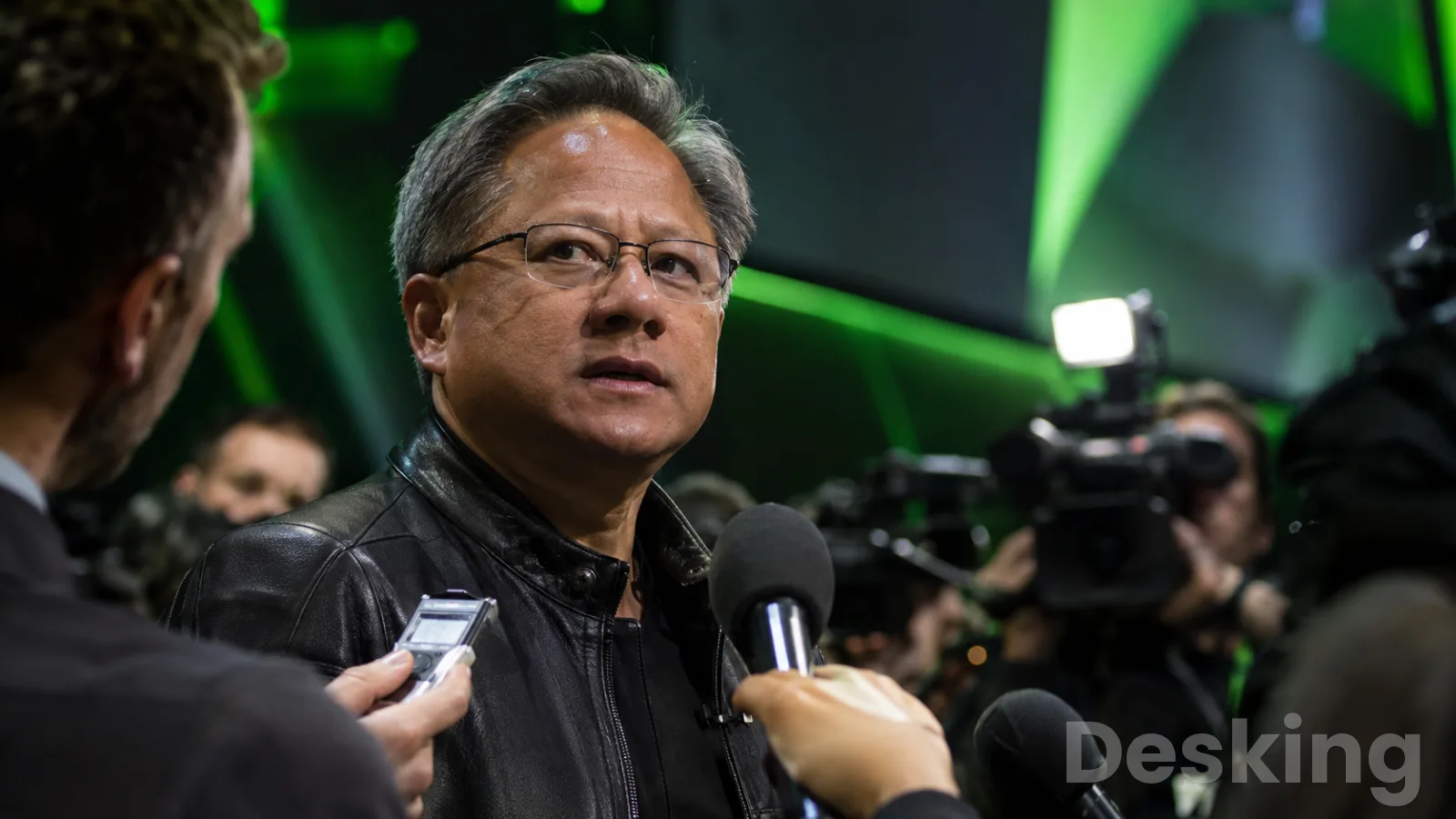
Table of contents
- Jensen Huang’s Nvidia scandal: Facts, allegations and unanswered questions
- The confirmed admission
- How the story developed
- Who is Alice Huang?
- What Singapore confirmed
- The espionage allegations
- Nvidia’s China exposure
- The Nvidia investigation
- The other reported relationships
- Huang’s resignation
- Market and investor reaction
- What remains unknown
- Why the scandal matters
- Frequently Asked Questions
Jensen Huang’s Nvidia scandal: Facts, allegations and unanswered questions
The central distinction is between three separate matters: Huang’s admitted infidelity, allegations that a business associate was linked to Chinese intelligence, and questions about Nvidia’s corporate oversight.
The first is confirmed by Huang himself.
The second remains disputed and has not been established publicly by a completed investigation.
Singapore’s government has also made an important clarification: its own investigation into Alice Huang and Megaspeed was not an espionage investigation.
The confirmed admission
Jensen Huang publicly acknowledged that he had been unfaithful to his wife in a statement dated November 8, 2026.
He apologized to his family, including his children, and accepted responsibility for the harm caused by his actions.
He also apologized to Nvidia colleagues, directors, partners and shareholders, saying they deserved better from him.
The statement did not identify the person or people involved, describe the duration of any relationship, or provide details about the circumstances.
The admission matters because it establishes a fact that had previously been the subject of press reports and company questions.
Huang did not confirm every reported detail, and his statement did not name Alice Huang or any Nvidia employee.
He did, however, refer directly to national security concerns raised in news reports and said Nvidia’s board had begun an independent investigation.
He pledged to cooperate with that review and said he remained committed to protecting the company and supporting US national security.
His apology was published as Nvidia faced questions about his relationship with Alice Huang, a former executive at Singapore based technology company Megaspeed International.
The relationship had attracted attention because Megaspeed was a business partner in Nvidia’s regional ecosystem and had faced scrutiny over the movement of servers and advanced processors.
The personal relationship and the national security allegations became connected in public reporting, although they are distinct issues requiring different evidence.
Huang’s statement did not establish that he knowingly associated with an intelligence operative.
It did not establish that he passed company information to a foreign government, helped evade export restrictions, or committed a crime.
Those claims require evidence beyond an admission of infidelity.
Treating the apology as confirmation of espionage would go further than the available record supports.
How the story developed

The reporting developed over several weeks, with separate revelations about Huang’s personal relationships, Megaspeed’s business activities and the possibility of foreign intelligence involvement.
The sequence matters because the allegations did not emerge as one verified account.
Different publications reported different elements, and some of the early claims were subsequently challenged or clarified by official statements.
The New York Times reported in October 2025 that Huang had been seen socializing with Alice Huang in Taiwan.
The story drew attention to her position at Megaspeed and the company’s commercial relationship with Nvidia.
Further reporting in October 2026 raised allegations that Alice Huang had links to Chinese intelligence and that US authorities believed she was gathering information for Beijing.
Huang’s relationship with her became a central focus after those reports appeared.
On October 29, TechCrunch summarized the intelligence allegations while noting Nvidia’s denial that the relationship was unusual.
The company said Huang’s interactions with Alice Huang were consistent with normal customer contact and that regional cloud customers received ordinary business information, not sensitive trade secrets or information relevant to national security.
That response is important because it records Nvidia’s position before Huang’s public admission.
On November 8, Huang acknowledged infidelity and Nvidia’s board announced an independent investigation into whether he had been the target of a foreign intelligence effort.
On November 10, the company’s independent directors retained the law firm Wachtell, Lipton, Rosen & Katz to assist with the inquiry.
Reporting then expanded to include an alleged relationship with an Nvidia executive, the board’s deliberations about Huang’s future and a shareholder lawsuit.
By November 12, Huang had resigned as Nvidia’s president, chief executive and a member of its board.
Reuters subsequently reported that another Nvidia employee had also been involved in an intimate relationship with him, citing two people familiar with the matter.
The sequence shows how the issue widened from a personal admission to a corporate leadership crisis and a review of national security and governance controls.
Who is Alice Huang?

Alice Huang, also known as Huang Le, is a Chinese businesswoman who held senior roles at Megaspeed International, a Singapore incorporated technology company.
She is not related to Jensen Huang, despite sharing his surname.
Reuters reported that she had a career in Chinese finance before becoming involved in the international artificial intelligence infrastructure business.
Her position at Megaspeed brought her into contact with Nvidia through the company’s regional commercial activities.
Megaspeed operated in the cloud computing and data center market, where companies acquire servers and computing capacity to provide services to customers.
Nvidia’s processors are central to many AI systems, and access to them has become commercially and geopolitically sensitive.
A customer that buys large volumes of Nvidia hardware may operate infrastructure for other organizations, which makes the identity of end users and the destination of equipment important to export compliance.
The relationship between Alice Huang and Jensen Huang became a public issue because of the overlap between their personal association and the commercial relationship involving Megaspeed.
Reporting described them together at business events and dinners over a period of time.
Reuters said it verified photographs showing them together in several locations, with the earliest dating to December 2023.
Those photographs establish that they met; by themselves, they do not establish when an intimate relationship began or what information was discussed.
The distinction between a business contact and an intimate relationship is relevant to corporate governance.
Executives regularly meet customers, suppliers, investors and government officials.
Those interactions can be legitimate and necessary.

Archie
Archie helps employees find desks, coordinate office days and book rooms while giving workplace managers clearer visibility into attendance, space availability…
- Visual maps simplify desk discovery
- Resource based pricing supports shared seating
- Minimum monthly charges affect small offices
- Enterprise pricing requires a custom quotation
However, a personal relationship involving a senior executive and a person connected to a customer may create conflicts that require disclosure, independent review or restrictions on access to sensitive information.
Whether Nvidia had adequate safeguards in this case is one of the questions its board must examine.
Alice Huang’s role should also be described accurately.
Public reporting has identified her as a former senior Megaspeed executive and a person investigated by authorities in relation to the company.
That does not mean she has been convicted of espionage or that every allegation made about her is established.
The available official statement from Singapore makes a particularly important distinction about the scope of its investigation.
What Singapore confirmed
Singapore’s Ministry of Home Affairs published a statement on November 12, 2026, explaining its investigation into Alice Huang and Megaspeed.
The statement provides an official account that should be read alongside reports about US intelligence suspicions.
Singapore said its police force and customs authorities began an independent investigation in February 2025 into several companies and their key officers, including Megaspeed and its controllers.
The suspected domestic offences concerned possible false declarations related to the purchase of servers and other matters.
The ministry explicitly stated that Alice Huang was not investigated for espionage by Singapore.
She was examined because of her position as Megaspeed’s chief executive, chairperson and one of its key controllers at the time.
Singapore said the investigation was not initiated at the request of another country or government.
This is a material clarification because some coverage has combined the Singapore investigation and the separate US intelligence allegations into a single narrative.
Singapore also described a June 24, 2025 inspection by the US Bureau of Industry and Security.
The inspection was a voluntary post shipment verification at Megaspeed, with Alice Huang present.
Singapore said this was the first time it became aware of US interest in the company and Huang.
On the same day, Singapore police interviewed her as part of their own investigation and impounded her passport to secure her attendance because she was not based in Singapore.
The investigation concerned physical servers purchased by companies under scrutiny and exported through Singapore to Malaysia without entering the Singapore market.
Authorities were examining whether the equipment had later been routed to another destination contrary to declarations made in Singapore.
The ministry said investigators needed information from other jurisdictions to establish the servers’ origins and eventual destinations.
It also said Singapore had sought information about US server supplier Supermicro and had received limited cooperation from the company and US authorities.
The outcome concerning Alice Huang was not a criminal conviction.
In February 2026, Singapore’s police and Attorney General’s Chambers concluded that there was insufficient evidence to establish that she had committed offences relating to the possible inaccurate declarations under investigation.
However, authorities assessed that she had provided information she knew to be inaccurate during questioning, in an attempt to downplay her role at Megaspeed.
She received a stern warning and was barred from re entering Singapore.
Her passport was returned on February 26, 2026, and she left the country that day.
Singapore said its investigation into Megaspeed and six other individuals remained open.
That means the official statement does not clear every person or company connected to the server transactions.
It does, however, prevent a misleading conclusion: Singapore did not identify Alice Huang as a spy, and it did not say that she had been convicted of violating export controls.
The separate US intelligence allegations remain a distinct matter.
The espionage allegations
The espionage claim is the most serious and least settled part of the story.
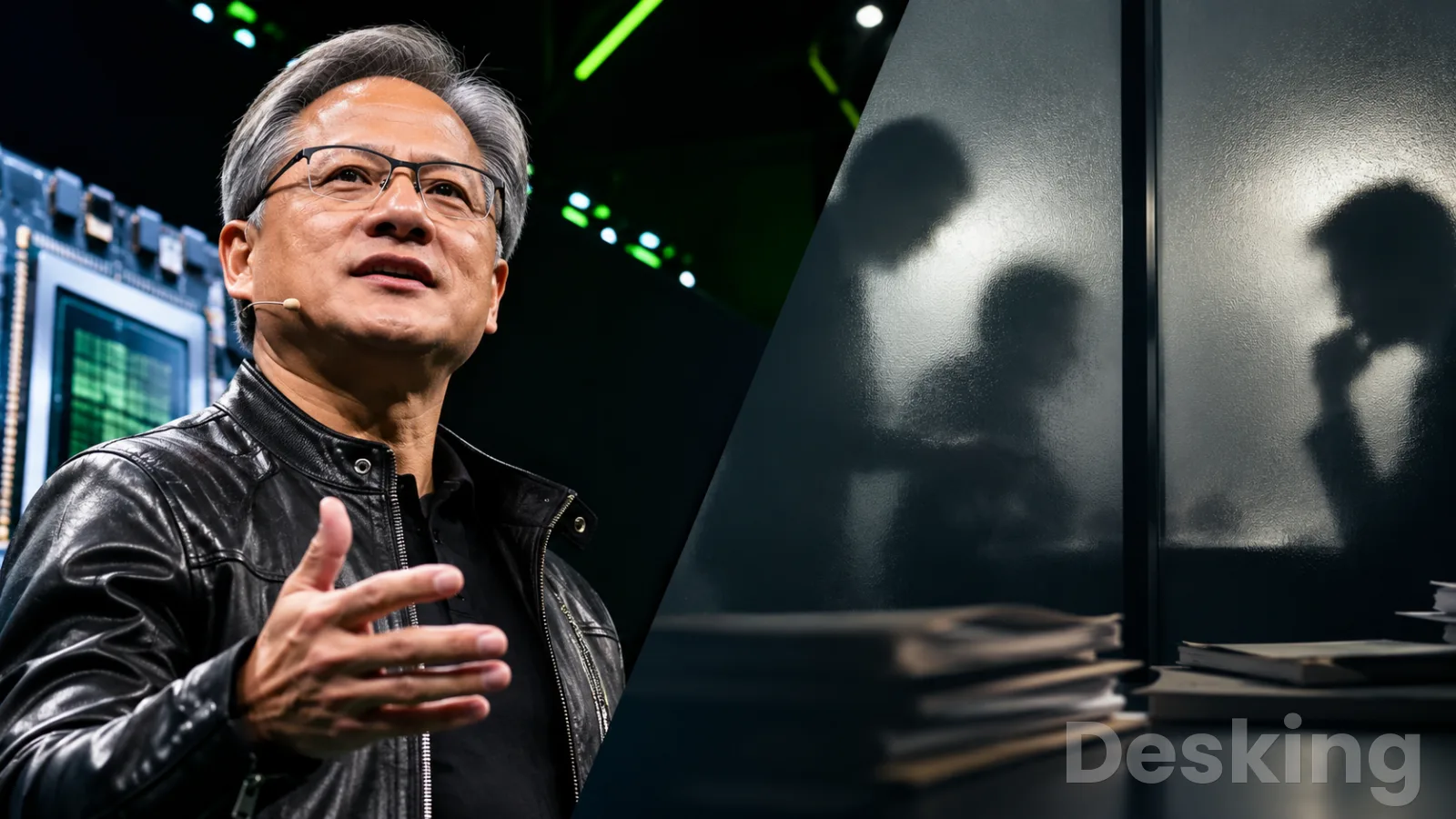
US intelligence officials were reported to believe that Alice Huang had been recruited by China’s Ministry of State Security and was gathering information about Jensen Huang and Nvidia.
The reported concern was that her relationship with the Nvidia chief could provide access to information about the company’s plans, its dealings with Washington and its efforts to influence restrictions on chip sales to China.
The allegations have been attributed to intelligence assessments and unnamed officials in media reports.
Reuters said it could not independently verify whether Alice Huang was working on behalf of the Chinese government.
The Chinese government rejected the accusations, describing them as groundless.
Alice Huang has not publicly confirmed the allegations, and the available reporting does not establish that a court or public inquiry has found her guilty of espionage.
There is also a difference between being an intelligence asset and being a trained spy.
Reuters reported on November 16 that US intelligence agencies were still assessing the extent of Alice Huang’s relationship with China’s Ministry of State Security and what information she may have passed to Beijing.
Sources familiar with the matter told Reuters that evidence gathered so far indicated she may have been an intelligence asset who shared information, rather than a fully trained spy.
That characterization remains attributed to sources, not a final public finding.
The alleged objective is also not fully established.
Reports have described concerns that information about Nvidia’s strategy, its executive leadership and its lobbying over chip exports could have been useful to Beijing.
But the public record has not identified a complete list of information allegedly obtained, the dates on which it was obtained, the recipients, or the precise method of transmission.
Without those details, it is not possible to assess the extent of any compromise.
The board’s investigation is therefore wider than determining whether Huang had an affair.
It must examine whether confidential company information was exposed, whether any access controls were bypassed, whether decisions involving Megaspeed were handled appropriately and whether the company’s internal reporting systems detected potential conflicts.
The board has said it had no reason to believe that Nvidia secrets or US national security had been compromised, while also committing to examine the available information.
That statement is an initial position, not the final result of the investigation.
Nvidia’s China exposure
Nvidia’s commercial position in China has made the allegations especially sensitive.
The United States has restricted exports of advanced AI chips to China since 2022, citing national security concerns and the potential military and strategic uses of high performance computing.
Nvidia has repeatedly argued that allowing US companies to sell products in China is important for maintaining American competitiveness.
Jensen Huang was a prominent advocate of a more permissive export policy.
The company’s chips are used to train and operate advanced AI models, power cloud infrastructure and support high performance computing.
Their value is not limited to the hardware itself.
Access to large numbers of processors, high speed networking and data center capacity can determine which organizations are able to develop and deploy advanced AI systems.
That makes the movement of restricted chips a matter of national policy as well as commercial compliance.
Megaspeed attracted scrutiny because of concerns that servers containing Nvidia processors might have been routed to unauthorized destinations.
The Singapore government’s account describes an investigation into the purchase and routing of physical servers, including whether declarations about their destinations were accurate.
Separate US reporting has described concerns about possible efforts to move restricted Nvidia technology into China.
The two accounts overlap in subject matter, but they do not establish that Megaspeed or Alice Huang was convicted of illegal chip diversion.
The distinction between a company’s direct customer and the final user of its equipment is central to export compliance.
A data center operator may buy servers, install them in a facility and rent computing capacity to other organizations.
If the final user or destination is concealed, authorities may have difficulty determining whether the transaction complies with export restrictions.
The investigation into Megaspeed reflects those concerns, although the precise transactions and any violations remain matters for the relevant authorities.
The affair also raises questions about the information available to Nvidia’s chief executive while he was advocating for changes to US chip policy.
If an executive has a close personal relationship with someone connected to a customer under scrutiny, the company needs to establish whether that relationship created a conflict or exposed sensitive information.
The existence of a relationship alone does not prove that lobbying decisions were influenced or that confidential information was shared.
Those conclusions depend on evidence about communications, access, decisions and disclosures.
The Nvidia investigation
Nvidia’s independent directors hired Wachtell, Lipton, Rosen & Katz to conduct an investigation after the reports about Huang and Alice Huang intensified.
The firm is a prominent US law firm with experience in corporate governance and complex investigations.
Reuters reported that the inquiry was to examine the relationship and the possibility that Huang had been the target of a foreign intelligence effort.
The review is being conducted by independent directors with external legal support.
A credible investigation will need to establish a chronology of the relationship, identify relevant communications and determine what information was available to the people responsible for Nvidia’s security and compliance functions.
It will also need to examine whether the company’s procedures for customer due diligence, executive conflicts and export control compliance were followed.
If the relationship began before internal concerns were raised, investigators will need to establish what Huang told colleagues and whether those statements were accurate.
Reuters reported on November 14 that Huang had described his interactions with Alice Huang to Nvidia leaders as routine business dealings.
The news agency said it reviewed October messages in which he characterized the contacts as standard customer interactions.
Two people familiar with the matter also told Reuters that Huang had given similar descriptions in response to questions in 2025.
Reuters reported that the messages it reviewed did not describe the relationship as an affair.
The same report said Huang discussed possible legal action against The New York Times after its October 2025 coverage of his public meetings with Alice Huang.
No lawsuit was filed by Nvidia or Huang, and the newspaper said it received no legal demand.
The issue is relevant to the board’s review because it concerns how the executive responded to early reporting and what information was shared internally.
It does not, by itself, prove that Huang committed a legal offence.
The company’s board initially said it had no reason to believe national security or Nvidia secrets had been compromised.
That position should be read carefully.
It means the board did not identify evidence of a compromise at the time of its statement.
Archie
Archie helps employees find desks, coordinate office days and book rooms while giving workplace managers clearer visibility into attendance, space availability…
- Visual maps simplify desk discovery
- Resource based pricing supports shared seating
- Minimum monthly charges affect small offices
- Enterprise pricing requires a custom quotation
It does not mean that investigators have completed their work or that every possible channel of information exposure has been ruled out.
On November 17, Nvidia announced a board level National Security and Export Control Oversight Committee.
Reuters reported that director Suzanne Nora Johnson would chair the committee, with director Stephen Neal and Caltech professor John Dabiri as members.
The committee will oversee national security and global trade compliance programs, work with independent experts and receive reports from Nvidia’s existing security and trade compliance teams.
It plans to meet at least quarterly.
The creation of this committee is a concrete governance response, but Reuters noted that it was not immediately clear whether it had been established directly because of the revelations about Huang.
The company’s 2026 proxy statement did not list a chief compliance officer.
That detail raises a wider question about whether Nvidia’s internal structure had kept pace with its growing importance to national security and global trade.
The board will need to show that the new oversight arrangement has authority, access to information and independence from the executives whose conduct it may review.
The other reported relationships
The affair story expanded after reports that Huang had relationships with Nvidia employees.
The BBC reported that one of the women was Kimberly Powell, Nvidia’s vice president of healthcare, who reportedly reported directly to Huang.
The New York Times also reported on the relationship.
Powell did not respond to the BBC’s request for comment, according to its report.
Huang’s public apology did not identify her or confirm the specific reporting.
Reuters reported on November 12 that Huang had an intimate relationship with a second employee, citing two people familiar with the matter.
The agency did not name that employee and said it had been unable to reach her.
Nvidia declined to comment, while Huang and Powell did not respond to Reuters’ requests.
The report described this as an additional relationship beyond the reported relationships with Alice Huang and Powell.
The distinction between the reports matters.
Huang admitted to being unfaithful, but did not publicly confirm the identities, number or duration of the relationships described by news organizations.
The reporting about employees relies on sources familiar with the matters, and the individuals involved have not all made public statements.
A responsible account should attribute those details rather than present every report as a fact personally confirmed by Huang.
The workplace dimension raises questions beyond personal conduct.
A relationship between a chief executive and a direct report can create a potential conflict of interest, particularly where the executive has authority over compensation, promotion, performance reviews and career opportunities.
Even if a relationship is consensual, the difference in power can affect the workplace and create concerns about favoritism or pressure.
Companies generally need clear policies for disclosure, reporting lines and independent oversight in such situations.
Nvidia’s board will need to establish whether any of its policies were breached, whether the relationships were disclosed and whether employees had access to appropriate reporting channels.
It should also consider whether management decisions involving the employees were reviewed independently.
The public reporting does not establish that any employee received preferential treatment or that workplace rules were violated.
Those are questions for the company’s investigation, not conclusions that can be drawn from the existence of reported relationships alone.
Huang’s resignation
Jensen Huang resigned on November 12 as Nvidia’s president, chief executive and board member.
The company announced that chief financial officer Colette Kress would serve as interim CEO while the board searched for a permanent replacement.
The BBC reported that the board had met to consider Huang’s future but that he ultimately resigned rather than being removed through a formal board vote.
Nvidia’s announcement thanked him for his contributions but did not discuss the affair allegations.
Huang had led Nvidia since co founding the company in 1993 with Chris Malachowsky and Curtis Priem.
His leadership spanned the company’s development from graphics processors for personal computers and gaming into a major supplier of AI computing infrastructure.
He became a public representative of the AI boom and a significant figure in discussions about semiconductor supply, US technology policy and competition with China.
His departure therefore has implications for the company’s leadership and its relationships across the technology industry.
The board now faces a succession decision at a company whose strategy and public profile have been closely associated with its founder.
Reuters reported that the board was considering internal and external candidates.
Colette Kress is responsible for day to day leadership as interim CEO, while the search process continues.
The transition also places greater responsibility on other senior executives and directors to reassure employees, customers, suppliers and investors that Nvidia can operate without disruption.
On November 16, Reuters reported that Nvidia’s board was not considering bringing Huang back as CEO, despite a public campaign calling for his return.
More than 180,000 people had signed a petition, and the campaign listed prominent technology figures among its supporters.
Reuters also reported that thousands of people identifying themselves as Nvidia employees and shareholders had joined the effort, although the affiliations were self reported and not independently verified.
The reaction shows the difficulty of separating founder loyalty from corporate accountability.
Huang’s relationships with customers, suppliers and employees are valuable to Nvidia, and some investors have argued that the company should not rush to replace him before the facts are known.
Other investors and governance specialists have warned that reinstating him before the investigations are complete could expose the company to additional legal and reputational risks.
The board has to weigh continuity against the credibility of its oversight process.
Market and investor reaction
Nvidia’s share price fell as the reports intensified, although market movements cannot be attributed to a single cause without further analysis.
Reuters reported on November 14 that the stock had fallen more than 30 percent from its October 6 closing high, erasing more than $1.8 trillion in market capitalization.
On November 17, Reuters reported that the crisis had removed more than $400 billion from Nvidia’s market value by Monday’s close, a figure reflecting a different point in the sequence.
These figures describe changes over different periods and should not be treated as interchangeable estimates of the same daily loss.
The market reaction reflects several overlapping risks.
Investors must assess whether the leadership transition could affect customer confidence, strategic decisions or the company’s ability to execute its product roadmap.
They also have to consider the potential effect of export restrictions, the results of the internal investigation and the possibility of legal claims.
Nvidia’s position in the AI market remains significant, but its scale does not insulate it from governance concerns or policy changes.
A shareholder lawsuit filed in California on November 9 accused Nvidia and Huang of misleading investors about the relationship with Alice Huang and the company’s exposure to the related national security concerns.
The complaint alleged that Nvidia’s statements about Megaspeed and its compliance review were misleading because the company had not disclosed the personal relationship.
The plaintiff sought to represent investors who bought Nvidia shares during a specified period and requested unspecified damages.
The lawsuit contains allegations, not findings of liability.
Reuters explained that a securities fraud claim would need to establish that the defendants knowingly or recklessly made misleading statements, that investors relied on those statements and that the alleged misrepresentations affected the share price.
The company and Huang have not been found liable in the case.
A fall in the stock price does not, by itself, prove that earlier statements were fraudulent.
The board’s investigation may also create questions about directors’ responsibilities.
If investigators find that the board ignored warning signs, failed to supervise key risks or lacked adequate systems for monitoring export compliance, shareholders could pursue further claims.
Reuters reported that directors may face scrutiny over the quality of the company’s internal controls and the independence of board oversight.
Whether any director breached a legal duty depends on the facts and the applicable law.
What remains unknown
Several central questions remain unanswered as of November 17, 2026.
The first is the full timeline of Huang’s relationship with Alice Huang.
Photographs verified by Reuters place them together as far back as December 2023, but public reporting has not established when the relationship became intimate, how long it lasted or when it ended.
Huang’s apology confirms infidelity but does not supply those details.
The second question is whether Alice Huang passed information to Chinese officials.
Media reports have described US intelligence suspicions and assessments, but the public has not seen the underlying intelligence material.
Reuters has said it could not independently verify that she worked for the Chinese government.
China denies the allegation, and Singapore has explicitly said that it did not investigate her for espionage.
The third question is what information, if any, may have been exposed.
The public record does not establish that Nvidia source code, chip designs, customer data, export plans, internal forecasts or government related information reached a foreign government.
Nor does it establish that Huang knowingly shared sensitive material.
The board’s review and any government investigation will need to identify specific information, recipients and transmission paths before such claims can be substantiated.
The fourth question concerns Megaspeed’s server transactions.
Singapore has confirmed an investigation into possible inaccurate declarations and the routing of servers through Malaysia.
It has also said there was insufficient evidence to establish that Alice Huang committed the offences under consideration, while stating that she provided inaccurate information to investigators.
The investigation into Megaspeed and six other individuals remains open.
The final outcome may clarify whether any export related laws were breached.
The fifth question is whether Nvidia’s internal controls were adequate.
The board must determine what executives knew, what was disclosed, whether customer due diligence was properly conducted and whether the company’s compliance structure was sufficiently independent.
Archie
Archie helps employees find desks, coordinate office days and book rooms while giving workplace managers clearer visibility into attendance, space availability…
- Visual maps simplify desk discovery
- Resource based pricing supports shared seating
- Minimum monthly charges affect small offices
- Enterprise pricing requires a custom quotation
The new board committee is a response to the scrutiny, but its effectiveness will depend on what it uncovers and what changes it requires.
A committee announcement is not a substitute for a completed investigation or public accountability.
The sixth question concerns the long term leadership structure.
Colette Kress is interim CEO, and the board has begun considering candidates.
Reuters reported that the board was not weighing Huang’s return as of November 16, despite public support for him.
A permanent appointment will determine whether Nvidia maintains its founder led structure or distributes more authority among a broader executive team.
Why the scandal matters
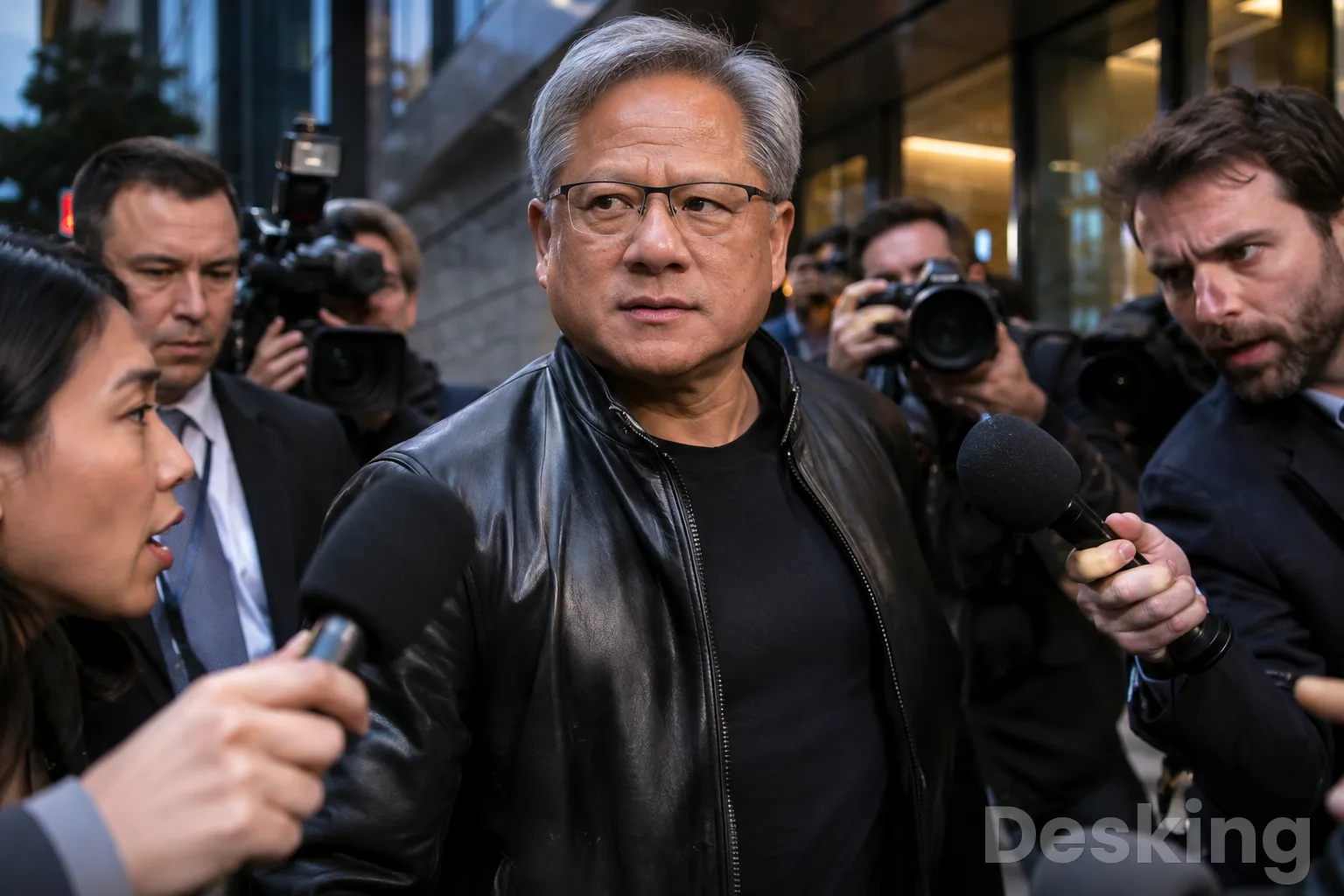
The affair has consequences beyond the private lives of the people involved because Nvidia occupies an unusual position in the global economy.
Its processors support AI development across cloud computing, enterprise software, scientific research and government projects.
Its supply chain involves manufacturers, data center operators and customers across multiple countries.
Decisions about who can buy and use advanced processors are increasingly tied to national security policy.
The allegations also illustrate the risks that arise when commercial relationships, executive influence and geopolitical competition overlap.
A CEO can have legitimate contact with customers and government officials while also carrying responsibilities to shareholders, employees and national regulators.
When a personal relationship intersects with a customer relationship under scrutiny, the company must be able to demonstrate that business decisions remain properly controlled and that sensitive information is protected.
The governance question is not limited to whether Huang broke a written rule.
It includes whether Nvidia had procedures capable of identifying conflicts involving its most senior executive, whether directors received accurate information and whether compliance staff could challenge decisions made by the CEO.
These issues are especially relevant at a company whose products are subject to export restrictions and whose leadership has direct access to policymakers.
The episode also exposes a tension in founder led technology companies.
A founder can be central to strategy, culture, customer relationships and investor confidence.
That concentration of influence can accelerate decisions and strengthen the company’s identity, but it can also make oversight more difficult if the board depends heavily on the founder’s judgment.
Nvidia’s succession process and new committee will test whether the company can preserve its operating strengths while strengthening independent control.
For now, the evidence supports a limited but significant conclusion.
Huang admitted to infidelity and resigned.
Nvidia has opened an independent investigation and created a board committee focused on national security and export controls.
Singapore has clarified the scope and outcome of its own inquiry into Alice Huang, while US intelligence allegations remain unresolved.
The facts that emerge from those investigations, rather than speculation about the people involved, will determine the full corporate and legal consequences.
Frequently Asked Questions
Did Jensen Huang admit to an affair with Alice Huang?
Is Alice Huang related to Jensen Huang?
Has Jensen Huang been charged with a crime?
Did Singapore confirm that Alice Huang was a Chinese spy?
Who is running Nvidia after Huang’s resignation?
Could Nvidia shareholders recover losses from the lawsuit?
Will Jensen Huang return as Nvidia CEO?
Sources5
- Reuters on Nvidia’s new security committee
- Singapore on Alice Huang and Megaspeed
- BBC on Jensen Huang’s resignation
- Washington Post on the shareholder lawsuit
- Bloomberg Law on Nvidia’s shareholder lawsuit
External pages are independent third-party sources. Desking App does not control or endorse their content and accepts no responsibility for it. Visiting them is at your own responsibility and risk.