

NVIDIA Board Reinstates Jensen Huang as CEO After Reversing Resignation
 Published byEvander ThorneSoftware ReviewerEvander ThorneSoftware Reviewer Verified authorEvander Thorne is a Software Reviewer and IT Management Specialist at Desking, specializing in enterprise software, IT service management, project management, and busine…Author Profile
Ad disclaimer For links on this page, DESKING APP may earn a commission from the provider. This supports our work and has no influence on our editorial rating.
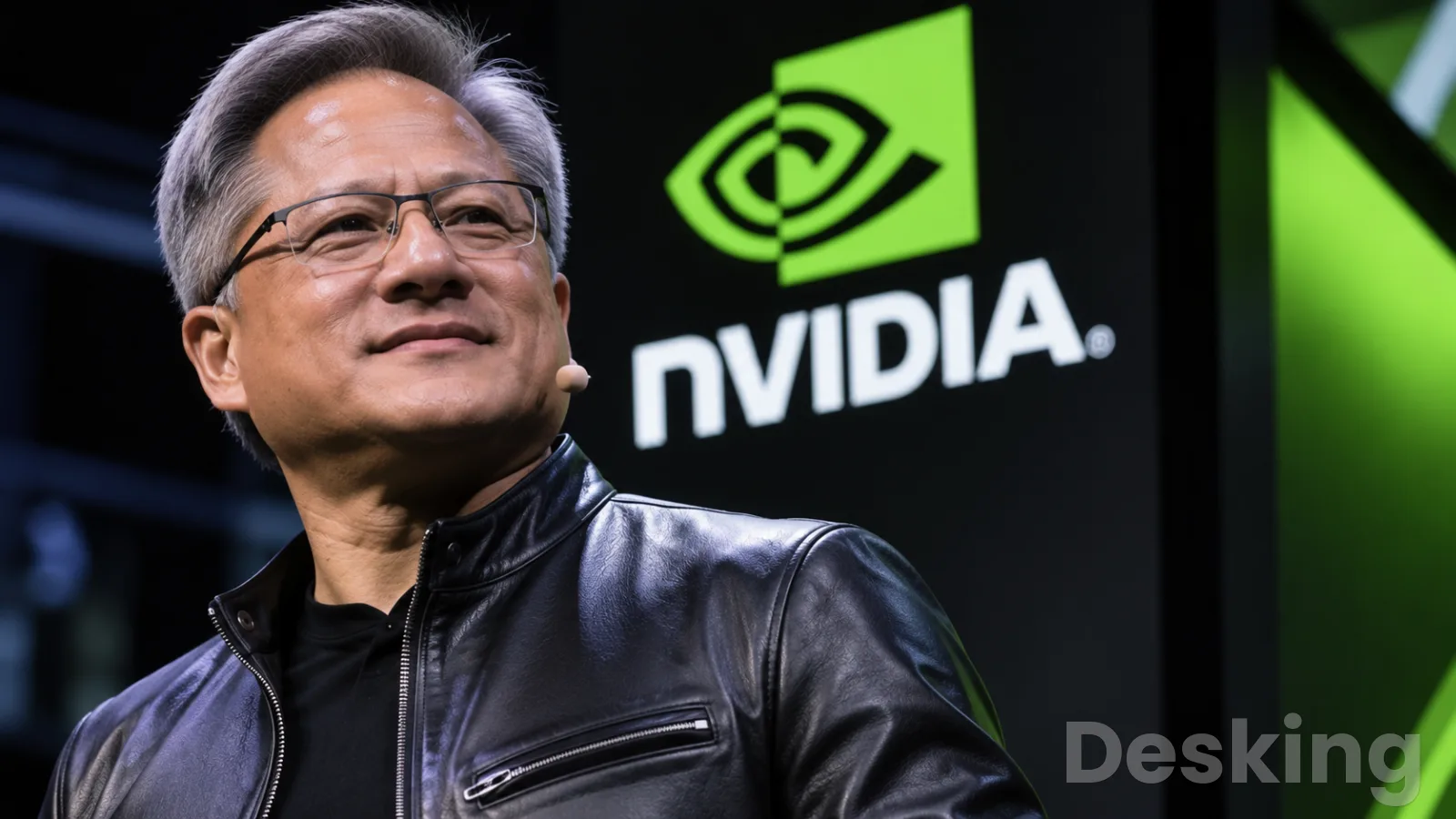
Table of contents
NVIDIA reinstated co-founder Jensen Huang as president and chief executive officer on Monday, November 23, 2026, reversing its decision to accept his resignation less than two weeks earlier.
The company said its board voted unanimously after discussions with Huang and consultation with senior US government officials, concluding that his return posed no national security risk.
The reinstatement took effect immediately and also restored Huang’s position on NVIDIA’s board of directors, according to a company announcement.
Colette Kress, who had served as interim CEO while retaining her position as chief financial officer, will continue as executive vice president and CFO.
Harvey C.
Jones remains chairman of the board.
The decision reversed the leadership transition announced on November 12, when NVIDIA said Huang had resigned from his executive and board positions with immediate effect.
The board had appointed Kress interim CEO and said it would search for a permanent successor.
The company’s announcement followed a reversal of its position six days after the board had publicly rejected Huang’s attempt to return.
On November 17, chairman Harvey Jones said the board had unanimously accepted the resignation and did not intend to reinstate him, according to the Associated Press.
The decision announced on November 23 therefore reversed an explicit position taken less than a week earlier.
Why the board changed its decision

NVIDIA said its directors held a series of discussions and meetings with Huang before voting to restore him to the top position.
The company described the board as satisfied with his candor and ability to lead, but did not publish details of the discussions or disclose the conditions considered during the decision.
The national security question was central to the announcement.
NVIDIA said the board received input from senior levels of the US government and relied on that input when concluding that Huang's reinstatement posed no national security risk.
The company did not identify the government officials who provided the input or describe the advice in detail.
It also did not publish a separate assessment explaining how the board reached its conclusion.
President Donald Trump had publicly supported Huang's return and continued pressing for it after the board initially rejected the idea.

Deskbird
Deskbird helps hybrid teams coordinate office days, reserve desks and meeting rooms, and understand workplace occupancy through one connected platform.
- Intuitive desk booking interface
- Visual floor plan reservations
- Mobile experience needs refinement
- Advanced plans require custom pricing
Reuters reported that Trump said his intervention was important in bringing Huang back.
The Associated Press also reported that Trump claimed the board had acted in accordance with what his administration wanted.
The White House's involvement added a political dimension to a corporate leadership decision at a company whose products are central to the US technology industry and the international competition over advanced artificial intelligence infrastructure.
Reuters reported that Trump had urged NVIDIA to reinstate Huang and that the president welcomed the decision.
The report also said Trump held between $11 million and $55 million in NVIDIA stock, based on Reuters' review of his financial disclosures and trading disclosures.
A White House spokesperson told Reuters that Trump's portfolio was independently managed by third-party financial institutions and that neither the president nor his family could direct its investments.
NVIDIA's announcement did not discuss Trump's personal financial holdings or address potential conflicts of interest.
The board presented its decision as the outcome of its discussions with Huang and its consideration of government input.
The resignation and reversal
Huang's departure was announced on November 12.
NVIDIA said he had resigned as president, CEO and a member of the board, effective immediately.
The company appointed Kress, its executive vice president and chief financial officer, as interim CEO while beginning a search for a permanent successor.
The original announcement did not identify a permanent replacement or provide a timetable for completing the search.
Kress was expected to continue running the company during the transition while retaining her finance responsibilities.
The Associated Press reported that Huang's resignation followed scrutiny over allegations involving his personal relationships, including reports concerning a Chinese businesswoman suspected of having links to Beijing.
Huang had acknowledged being unfaithful to his wife and apologized publicly.
On November 17, Huang said he would be honored to return if the board believed that doing so was in NVIDIA's best interests.
The Associated Press reported that he also acknowledged making serious mistakes in his personal life.
The board rejected that offer on the same day.
Jones said NVIDIA had unanimously accepted Huang's resignation and did not intend to reinstate him as CEO.
That position changed on November 23, when the company announced that Huang would resume leadership immediately.
The sequence left NVIDIA with three distinct leadership decisions in 11 days: Huang's resignation, Kress's appointment as interim CEO, and the board's unanimous vote to restore Huang.
Investigations will continue

Huang's return does not close the investigations involving the company and its leadership.
NVIDIA said its independent directors had established a committee to investigate reports that Huang had been targeted by a foreign intelligence effort.
The committee retained independent legal counsel to assist with the investigation.
NVIDIA said the inquiry would continue to its conclusion and that Huang supported the process and was committed to cooperating.
The company did not publish a completion date or disclose the committee's findings.
The reinstatement announcement also did not say that the investigation had cleared Huang or that the allegations had been resolved.
A separate National Security and Export Control Committee has been established by the board.
NVIDIA said the committee consists solely of independent directors and will oversee trade compliance and national security risks.
The company said the committee was engaging legal counsel with national security experience.
That counsel would, in turn, retain advisers with relevant expertise.
NVIDIA also announced that it was beginning a search for a chief compliance officer.
The new executive will oversee compliance across the company and report to the board's Nominating and Corporate Governance Committee.
Deskbird
Deskbird helps hybrid teams coordinate office days, reserve desks and meeting rooms, and understand workplace occupancy through one connected platform.
- Intuitive desk booking interface
- Visual floor plan reservations
- Mobile experience needs refinement
- Advanced plans require custom pricing
The additional oversight measures are significant because NVIDIA's business involves the sale of advanced processors subject to US export restrictions.
The company has faced scrutiny over whether restricted chips have reached prohibited customers or markets, particularly in China.
Reuters reported that Huang's departure had raised concerns among some Chinese customers and that some had delayed or reconsidered orders.
The news agency also reported that US authorities were examining suspected diversion of restricted chips and other matters involving NVIDIA's international business.
NVIDIA said it would continue cooperating with government investigations and inquiries.
The November 23 announcement did not provide further details about the scope or timetable of those proceedings.
Pressure over exports to China
The leadership reversal came as US officials and lawmakers continued examining the international distribution of advanced AI processors.
NVIDIA's products are widely used in data centers that train and operate artificial intelligence systems, making export restrictions a significant issue for the company.
Huang has previously advocated greater access to the Chinese market.
Reuters reported that US lawmakers were preparing to question him about export controls and the movement of advanced chips to China.
The political debate involves whether US companies should be permitted to sell certain advanced processors to Chinese customers under licensing arrangements, or whether tighter restrictions are necessary to protect national security.
Reuters reported that lawmakers from both major US political parties criticized Huang's reinstatement and renewed calls for legislation intended to prevent restricted chips from being diverted to China.
The report also said Huang had agreed to testify at a public US Senate hearing on December 3, according to the Senate Banking Committee.
The reinstatement does not remove those congressional questions.
Huang's return means that NVIDIA's co-founder will again lead the company while the investigations and discussions over export controls continue.
The company did not say that his return would change its export policy, licensing arrangements or cooperation with US authorities.
It also did not announce changes to its product roadmap or customer commitments as part of the leadership decision.
Market reaction to Huang's return
Investors reacted strongly to the announcement.
NVIDIA shares closed 31.5% higher on November 23, according to Reuters, adding nearly $1 trillion in market value during the session.
The gain restored NVIDIA's position as the world's second most valuable publicly traded company, behind Apple, Reuters reported.
However, the share price remained below its level before Huang's resignation on November 12.
The market reaction reflected the importance investors attach to Huang's leadership and the uncertainty created by his sudden departure.
As NVIDIA's co-founder and long-serving chief executive, he has been closely associated with the company's strategy and its expansion into accelerated computing and AI infrastructure.
The Associated Press reported that the company had received support for Huang's return from employees, investors and technology industry figures.
A petition calling for his reinstatement attracted signatures from current and former NVIDIA staff and other supporters, including Elon Musk.
The board's decision also followed public statements from Trump in support of Huang.
Reuters reported that the president said he had spoken with Huang about his return and had encouraged the company to reconsider its position.
The rise in NVIDIA's shares did not resolve the corporate governance questions raised by the reversal.
Reuters cited governance experts who questioned the board's independence after it changed its position so soon after publicly rejecting Huang's return.
The company did not provide a separate explanation of how its directors reconciled the November 17 decision with the November 23 reinstatement.
Its official statement focused on the discussions with Huang, the board's confidence in his leadership and the government input concerning national security.
What happens next

Huang resumes his responsibilities as NVIDIA's president and CEO immediately, while Kress continues as executive vice president and CFO.
Deskbird
Deskbird helps hybrid teams coordinate office days, reserve desks and meeting rooms, and understand workplace occupancy through one connected platform.
- Intuitive desk booking interface
- Visual floor plan reservations
- Mobile experience needs refinement
- Advanced plans require custom pricing
Jones remains chairman, and the company has not announced another executive leadership change as part of the reinstatement.
The independent investigation into the reported foreign intelligence effort targeting Huang will continue.
The National Security and Export Control Committee will oversee related compliance and national security risks, while NVIDIA searches for a chief compliance officer.
The December 3 Senate hearing is another important date for the company.
Huang is expected to face questions about NVIDIA's business in China and the controls governing the export of advanced processors.
NVIDIA has not announced when its internal investigation will conclude or when the new chief compliance officer will be appointed.
It has also not disclosed whether the board intends to publish the findings of its investigation.
The immediate leadership question has been settled, but the company's broader regulatory and governance challenges remain active.
Huang is back in charge of NVIDIA, while the board's investigations and the scrutiny surrounding the company's international chip business continue.
Sources3
- Axios on NVIDIA CEO reinstatement
- SEC on NVIDIA CEO reinstatement filing
- NVIDIA on Jensen Huang reinstatement
External pages are independent third-party sources. Desking App does not control or endorse their content and accepts no responsibility for it. Visiting them is at your own responsibility and risk.