Breathe HR Review: Practical HR Management Made Simpler

By Afonso Macosso & Nathan Cole · Reviewed by Zari M'Bale
Breathe HR helps UK businesses organise employee records, leave, documents and performance reviews, with optional tools for recruitment, training and workforce scheduling.
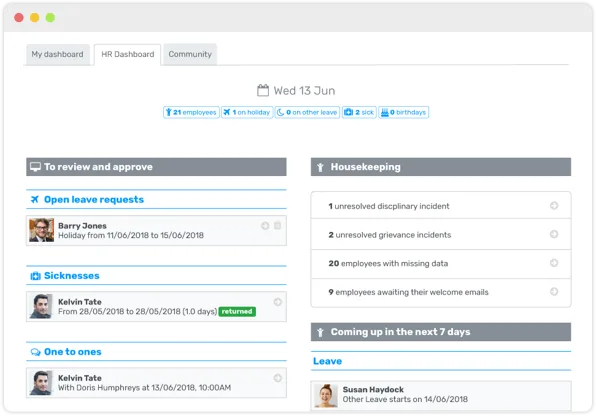
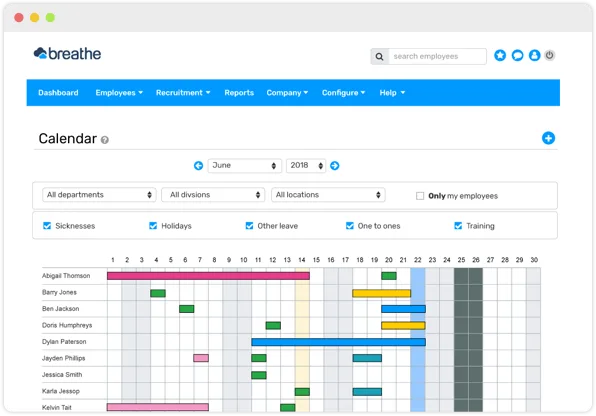
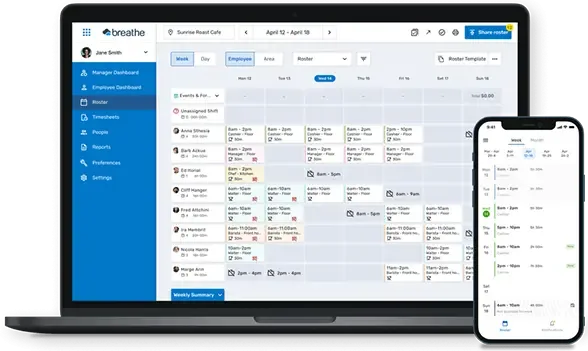
Table of contents
- 1. Breathe HR Employee Management
- 2. Employee Records and Documents
- 3. Holiday and Absence Tracking
- 4. Performance Reviews and Goals
- 5. Recruitment and Employee Onboarding
- 6. Reporting and Workforce Visibility
- 7. Integrations and Data Security
- 8. Breathe HR Pricing and Plans
- 9. Employment Hero as an Alternative
- 10. Justworks HiBob and Paycor
- 11. Review Method and Trust
- 12. Breathe HR Final Verdict
- Frequently Asked Questions
1. Breathe HR Employee Management
Breathe HR gives small and medium sized businesses a practical way to manage employee records, holiday requests, documents, policies and performance reviews without relying on scattered spreadsheets and email conversations.
Its main strength is keeping routine HR administration accessible, while optional modules extend the platform into recruitment, learning, expenses, health and safety, and workforce scheduling.
The pricing model is based on the size of the business rather than a simple per employee fee, so buyers should check the correct team size and the cost of any add ons before choosing a plan.
The platform is especially relevant to UK organisations that need a dedicated HR system but do not want to begin with a complex enterprise suite.
A small company may use Breathe HR to maintain staff records, track annual leave, organise employee documents and provide managers with a clearer view of team availability.
As processes mature, the company can consider whether additional functionality is worth paying for.
This focus makes Breathe HR different from broader human capital management platforms that combine HR with extensive payroll, benefits administration, workforce analytics or international employment services.
Breathe is primarily a people management platform.
Its value comes from making core HR tasks easier to organise, while its optional products address more specialised needs.
That distinction matters when evaluating the software.
A business looking for a better way to administer leave and employee records has a different buying requirement from a multinational company seeking complex workforce planning, or a US employer looking for a professional employer organisation that combines payroll, benefits and compliance support.
The right comparison begins with the work the organisation needs to complete, not the number of features displayed on a product page.
Breathe HR offers a 14 day free trial, allowing prospective customers to explore the core system and optional add ons before subscribing.
This is useful because HR software is best evaluated through ordinary tasks, not just a vendor presentation.
Add a few employee profiles, submit a leave request, locate a policy, review a report and test the mobile experience.
These simple exercises reveal whether the system suits the people who will use it every week.
The following review looks at the platform's core capabilities, setup requirements, integrations, pricing, limitations and alternatives.
It also considers where Employment Hero, Justworks, HiBob and Paycor may be stronger choices, because each serves a somewhat different combination of HR, payroll and workforce management needs.
2. Employee Records and Documents
Employee records are the starting point for reliable HR administration.
Breathe HR provides a central place to maintain employee information and relevant documents, helping HR staff reduce dependence on separate folders, local spreadsheets and email attachments.
A structured employee record also makes it easier to locate information when a manager needs to confirm a detail or prepare for a conversation with a team member.
The value of centralisation depends on how the organisation structures its records.
Before importing data, decide which fields must be maintained, who is responsible for updating them and which information should only be visible to authorised people.
Job titles, reporting relationships, work locations, emergency contacts and employment documents should be handled consistently.
A platform cannot compensate for inaccurate source data or unclear ownership.
Document management is especially useful when a business has accumulated policies, contracts, forms and guidance across different storage locations.
A central repository gives staff a more predictable place to find approved information.
HR can also establish a clearer approach to version control, reducing the risk that employees rely on an old policy after a revision has been made.
However, a document repository is not automatically a complete records retention system.
Buyers should check how the platform handles document permissions, employee access, historical versions, retention periods and deletion.
Some records must be kept for a defined period, while others should not be retained indefinitely.
These requirements depend on local law, company policy and the type of information involved.
Breathe HR is likely to be most useful when the business has a manageable set of HR documents and wants to establish consistent handling.
Companies with complicated legal hold requirements, extensive records classification or advanced document approval needs should ask for a detailed demonstration of those workflows rather than assuming that general document storage will cover them.
The implementation process should include a clean up of existing records.
Remove duplicate entries, confirm employee details, identify outdated documents and establish a naming convention before migration.
It is usually easier to maintain a well organised system from the beginning than to repair years of inconsistent records after the platform has been adopted.
3. Holiday and Absence Tracking
Holiday and absence management is one of Breathe HR's core capabilities.
Employees can submit leave requests through a defined process, while managers can review requests and monitor team availability.
This replaces informal arrangements in which requests may be buried in inboxes or recorded differently by different supervisors.
A reliable setup starts with the organisation's actual leave rules.
HR should confirm annual leave entitlements, carry over arrangements, part time calculations, approval responsibilities and how public holidays affect each employee group.
Different contracts may require different treatment.
Before relying on automated calculations, test them against real examples that have already been checked manually.
Consider a part time employee whose working pattern differs from the standard five day week.
A leave system must reflect the employee's working schedule and entitlement correctly.
The same applies to employees who join part way through a holiday year, change their hours or leave the organisation before the year ends.
These scenarios are worth testing before the system becomes the official record.
Absence records can also support workforce planning.
Managers need to understand when several people are away at once, whether coverage is sufficient and whether a planned absence affects a deadline or shift.
The system should help make availability visible without exposing private medical details to people who do not need them.
Breathe HR's core offering includes holiday and absence management, but buyers should distinguish absence administration from advanced workforce scheduling.
Tracking a day off does not necessarily provide the rostering, shift swapping, clock in records or overtime analysis required by a business with hourly workers.
Breathe offers a separate rota, time and attendance add on for organisations with these requirements.
During the trial, ask managers to approve and reject requests, inspect the team calendar and verify that balances update as expected.
Check what happens when an employee cancels a request or when a manager is unavailable.
A leave workflow should be understandable to employees and reliable enough for HR to audit when a disagreement arises.
The practical benefit is consistency.
When requests, approvals and balances are handled in one place, the business can reduce avoidable administration and give employees a clearer view of their leave.
That benefit depends on accurate configuration and clear internal rules, not simply activating the software.
4. Performance Reviews and Goals
Performance management is another important part of Breathe HR.
The platform supports appraisals, one to one meetings, objective setting and ongoing feedback, helping businesses move away from annual reviews that exist mainly as a paperwork exercise.
These tools are most useful when managers have a consistent process for discussing progress, documenting agreed actions and revisiting goals throughout the year.
A company does not need an elaborate performance framework to benefit.
It may begin with quarterly conversations, a small set of measurable objectives and a record of agreed development actions.
The software can help schedule reviews, keep notes organised and make follow up work easier to track.
The quality of the conversations still depends on managers being prepared and employees understanding how performance is assessed.
Before configuring review forms, decide what the process is meant to achieve.
A review intended to support professional development should not necessarily use the same questions as a formal capability assessment.
If the organisation combines performance discussions with pay decisions, it should explain how ratings and evidence influence those decisions.
Unclear criteria can undermine trust, even when every review is completed on time.
Goal setting should be equally practical.
Objectives need a clear outcome, an owner, a time frame and a way to assess progress.
A vague goal such as improving communication is difficult to evaluate.
A goal tied to a specific deliverable, customer response time or training milestone gives both the employee and manager a more useful basis for discussion.
Breathe HR also promotes reporting that can help organisations review absence patterns and remaining leave, including a burnout monitor.
Such reports can be useful as prompts for a supportive conversation, but they should not be treated as clinical assessments or proof that an individual is experiencing burnout.
Managers should interpret patterns carefully and respect privacy.
The platform is not necessarily a substitute for a specialist talent management system.
Companies that need complex succession planning, sophisticated compensation modelling, calibrated performance ratings across large departments or advanced talent analytics should examine those workflows directly.
A system that handles regular reviews well may still lack the depth needed for enterprise wide talent programmes.
For small and medium sized businesses, however, structured reviews can make an immediate difference.
Breathe HR helps put recurring conversations, objectives and follow up actions into a more consistent process, provided the organisation avoids turning the system into a form filling exercise.
5. Recruitment and Employee Onboarding
Recruitment and onboarding involve many small tasks that are easy to overlook when responsibilities are split between managers, HR staff and external recruiters.
Breathe HR offers recruitment tracking as an optional add on, while its core HR functions help businesses organise employee information and onboarding documents.
This can make it easier to move from a successful candidate to a properly prepared new starter.
The recruitment add on should be evaluated against the company's actual hiring process.
A business hiring a few people each year may only need to track applicants, monitor progress and keep interview decisions organised.
An employer with frequent recruitment may need more advanced candidate sourcing, automated communications, assessment tools, recruitment marketing and detailed source effectiveness reports.
Ask which stages can be configured, whether different vacancies can use different processes, and how candidate information is retained.
Check how the system handles access for hiring managers and what happens when an applicant becomes an employee.
These details determine whether the recruitment process connects smoothly with the employee record or creates another data entry task.
Onboarding needs a similarly clear structure.
Before a new employee starts, the organisation may need to issue documents, collect personal information, explain policies, arrange equipment and communicate training requirements.
Breathe HR can help organise employee documents and onboarding activities, but buyers should confirm the precise document signing and workflow capabilities included in the selected plan.
A useful onboarding checklist should distinguish mandatory tasks from optional introductions.
Employment documentation and access setup may need to be completed before the first working day, while team introductions and early development goals can happen during the first weeks.
Giving each task an owner and a deadline makes it easier to see what remains outstanding.
The company should also consider the experience from the new employee's perspective.
Instructions should be clear, forms should request only necessary information, and employees should know where to ask questions.
A digital process can feel efficient to HR but confusing to a new starter if the sequence is poorly designed.
Breathe HR is a sensible option for smaller employers that want recruitment administration and employee records to sit close together.
Businesses with complex applicant tracking needs should compare the recruitment add on with a dedicated applicant tracking system before assuming it can replace the existing hiring stack.
6. Reporting and Workforce Visibility
HR reports are useful when they help managers answer a specific question.
Breathe HR includes reporting tools for employee data, leave and absence, and other HR activity.
Its reporting library can help organisations review workforce information without assembling every report manually from separate spreadsheets.
The first step is to identify which decisions depend on HR data.
A business might need to monitor headcount, absence patterns, leave balances, employee changes, completion of reviews or recruitment activity.
Each report should have a clear audience and purpose.
If nobody uses a report to make a decision or meet an obligation, its maintenance may be unnecessary.
Breathe's reporting capabilities include demographic reporting and a burnout monitor, alongside standard reporting tools.
These can help HR teams identify patterns that deserve further attention.
However, reporting should be interpreted with care.
A change in absence figures may reflect seasonality, a change in headcount or a policy change, rather than a single underlying problem.
Buyers should also distinguish standard reports from custom reporting.
A standard report is useful when its fields and filters match the business requirement.
Custom fields and API access may help organisations extend how employee information is captured or connected to other systems, but the availability of these capabilities and integration options should be verified for the selected plan.
During a product trial, test a report using a real management question.
For example, can HR identify employees with outstanding reviews, check leave balances for a particular team, or export payroll ready information?
Check whether the result can be filtered, exported and shared with authorised stakeholders without manual reconstruction.
Payroll exports deserve particular attention.
Exporting payroll ready data is not the same as running a full payroll service.
The business should confirm which fields are included, whether data can be transferred to its payroll provider and what validation is required before figures are used.
An export can reduce duplicated entry, but it does not remove the need to check payroll accuracy.
The goal should be reliable, proportionate reporting.
Smaller businesses may not need a complex analytics suite, but they do need dependable answers to routine questions.
Breathe HR is most compelling when its built in reports cover those needs without requiring a separate business intelligence project.
7. Integrations and Data Security
Breathe HR can connect with other business systems through its integration library and API options.
The company's published materials mention integrations such as Xero Payroll, Hireful ATS and Microsoft Outlook, along with connections for calendars, expenses and workforce tools.
Its official feature directory is available.
The number of listed integrations matters less than whether the connections support the data flows the business needs.
Before purchase, confirm which integration is available for the relevant plan, whether it requires an additional subscription, which fields synchronise and how often updates occur.
Also establish whether the connection is one way or two way and who is responsible for investigating failed transfers.
For example, a company using separate HR and payroll systems should identify which system owns employee names, employment dates, pay related fields and bank details.
If the same information is edited in two places without clear rules, inconsistencies can develop.
Decide which application is authoritative for each data category and document how changes move between systems.
Security is particularly important because HR platforms hold personal and employment information.
Breathe states that it holds ISO 27001 information security certification and ISO 42001 certification for AI management.
It also describes UK based infrastructure, access controls, two factor authentication options and backup arrangements in its security documentation.
Buyers should review the current certificates and contractual terms directly rather than treating a certification as a guarantee against every possible incident.
Ask how permissions are assigned to administrators, managers and employees.
A line manager may need access to team leave information but not confidential records belonging to another department.
The company should verify how sensitive fields and documents are protected, whether audit information is available, and how administrator access can be reviewed when employees change roles.
Data location and privacy terms also deserve attention.
Breathe's published security information describes UK based data hosting for UK and Irish customers.
Businesses operating in other regions should confirm the applicable data location, contractual data processing terms, subprocessors and any relevant cross border transfer arrangements.
The legal position depends on where the employer and employees are located, what information is processed and which rules apply.
Finally, prepare for the possibility of leaving the platform.
Confirm how employee data and documents can be exported, which formats are supported and whether there are restrictions or charges.
A clear exit process reduces the risk of becoming dependent on a system simply because moving the records later would be difficult.
8. Breathe HR Pricing and Plans
Breathe HR's public UK pricing is based on business size, rather than charging a simple fee for every individual employee.
The company's pricing page lists monthly business prices beginning at £24 for a business with one to ten people, with higher price bands as the organisation grows.
Prices are shown excluding VAT, and the provider offers a 14 day free trial without requiring a credit card.
The exact fee should be confirmed on the current pricing page before purchase.
This pricing structure can be attractive to small organisations because the monthly subscription is easier to forecast than a per user charge.
It can also make comparisons less straightforward.
A competing platform might advertise a lower per employee rate but charge for each active user, while Breathe HR charges by business size and sells some functions as optional add ons.
The right comparison uses the total cost for the same number of employees and the same required capabilities.
Core HR functionality includes holiday and absence management, dashboards and reporting, document and policy management, and performance management.
The public page lists optional services such as recruitment tracking, learning, expenses management, health and safety, and rota, time and attendance.
These extras can add meaningful value, but they should be included in the budget only when the organisation actually needs them.
The published pricing page currently shows several monthly price bands, including £24, £44, £99 and £175, with larger configurations requiring contact with sales.
Buyers should confirm the exact employee ranges attached to each band and whether any annual billing discount applies.
Do not assume that a displayed price includes every optional module.
Add on costs need careful attention.
The current page lists rota, time and attendance from £11 per month per business, learning from £15, recruitment tracking from £16, expenses management from £14, and health and safety from £12.
The page also lists a business essentials bundle with health and safety, learning, expenses and recruitment.
Check whether the bundle is more economical than buying modules separately and whether it includes every function required.
A proper quote should include the selected employee band, core subscription, required add ons, billing frequency, VAT, any implementation support and the process for moving to a larger tier.
The business should also ask whether add on prices are fixed or can change at renewal.
These details matter more than a headline starting price.
The free trial is useful for confirming whether the interface suits the team.
Use it to test leave approvals, employee document access, reports, mobile use and any integration that is essential to the business.
If recruitment or workforce scheduling is a deciding factor, include those add ons in the evaluation rather than assuming the core product covers them.
For a small employer that mainly needs core HR administration, Breathe HR's pricing model is straightforward to understand.
For organisations that need payroll processing, complex workforce management or international employment services, the full cost and product scope should be compared with alternatives before making a final decision.
9. Employment Hero as an Alternative
Best for businesses seeking broader HR coverage
Employment Hero is worth considering when a company wants a wider set of HR and workforce functions than Breathe HR's core administration tools.
Its UK offering includes employee onboarding, leave management, recruitment, performance management, learning, expenses, payroll options and additional workforce services, with availability depending on the chosen package.
The practical distinction is breadth.
Breathe HR concentrates on core HR administration and lets customers add selected modules.
Employment Hero offers a broader combination of HR, payroll and employment related services.
That can reduce the need to coordinate several vendors, although it also makes it important to confirm which functions are included and which require an extra subscription.
Employment Hero's published UK pricing lists HR Essentials from £4 per employee per month and HR Engage from £7 per employee per month, subject to conditions.
Its plans have a minimum subscription of ten users, and higher tiers require a customised quote.
Payroll, time and attendance and advisory services may incur additional charges depending on the package.
For a business that mainly needs leave requests, employee records and documents, Breathe HR may be easier to evaluate and budget for.
For a company that wants recruitment, learning, payroll and broader workforce management in a more expansive package, Employment Hero deserves a direct comparison.
Compare the total configured cost rather than the entry price alone.
10. Justworks HiBob and Paycor
Three alternatives for different operating models
Justworks is most relevant to eligible US employers that want payroll, HR support, compliance assistance and employee benefits through a professional employer organisation, or PEO.
Its Payroll product is listed at $8 per employee per month plus a $50 monthly base fee.
PEO Basic is listed at $79 per employee per month, while PEO Plus is $124 per employee per month.
Those services address a different need from Breathe HR's UK focused HR administration, so Justworks makes sense when the employer specifically wants its US payroll and PEO model.
HiBob, often called Bob, is a strong candidate for organisations that prioritise employee lifecycle workflows, people analytics and a more extensive HR information system.
Its core platform includes an employee database, document management, time off, lifecycle workflows, integrations, analytics and a mobile app.
Pricing is customised according to employee numbers and selected modules.
HiBob is worth evaluating when the organisation needs broader people management and planning capabilities, but buyers should verify local payroll coverage separately from core HR functionality.
Paycor is particularly relevant to US employers comparing payroll and broader human capital management software.
Its offering extends into payroll tax services, employee onboarding, time off, recruiting, talent management, workforce scheduling, benefits administration and analytics.
Published small business prices include Basic at $99 per month plus $5 per employee per month, Essential at $149 plus $6 per employee per month, and Complete at $199 plus $7 per employee per month.
These prices apply to the published small business packages and should be verified against the current quote and eligibility conditions.
These four alternatives should not be ranked as if they solve precisely the same problem.
Employment Hero is a broader HR and payroll option in supported markets.
Justworks is particularly relevant when US PEO services and benefits matter.
HiBob is attractive for more extensive HR workflows and people insights.
Paycor deserves consideration when US payroll and workforce management are central requirements.
11. Review Method and Trust
This review uses publicly available product information, feature descriptions, pricing pages and security documentation to assess Breathe HR's capabilities and purchasing considerations.
It does not claim private access to the platform, independently conducted penetration testing or hands on testing that has not taken place.
Product capabilities, pricing and regional availability can change, so prospective buyers should confirm the details of their intended configuration with the vendor.
The evaluation focuses on practical buying questions rather than treating every advertised feature as equally important.
Core HR administration, leave management, document handling, performance reviews, reporting, integrations, security and total cost are assessed in terms of the tasks an organisation needs to complete.
The comparison with Employment Hero, Justworks, HiBob and Paycor also takes account of differences in geography and service model.
In particular, a UK HR system, a US PEO service and a broader HCM platform are not interchangeable just because each includes employee management features.
For an independent procurement decision, use the free trial to test realistic employee workflows, request a written quote, confirm security terms and ask the vendor to demonstrate any feature that is essential to your business.
Those checks are more reliable than relying on headline feature counts or promotional claims.
12. Breathe HR Final Verdict
Breathe HR is a practical option for small and medium sized businesses that want to organise employee records, leave, documents, performance reviews and routine HR administration in one accessible system.
Its business based pricing can be appealing to smaller employers, and optional modules allow organisations to extend the platform when they need recruitment, learning, expenses or workforce scheduling.
The main limitation is scope.
Businesses requiring extensive payroll processing, complex international employment services or advanced workforce planning should compare the platform with broader alternatives before committing.
Employment Hero, Justworks, HiBob and Paycor each address different needs, and the best fit depends on geography, service requirements and total cost.
Breathe HR earns consideration when simplicity and core HR administration are the priorities.
Buyers should test the real workflows, confirm the cost of optional modules and check the integration requirements before purchase.
If those checks show that the platform covers the organisation's daily HR needs without unnecessary complexity, it is a sensible candidate for the shortlist.
Key features
- Centralised employee records management
- Employee document and policy storage
- Holiday and absence request tracking
- Leave balances and team calendars
- Employee onboarding and offboarding workflows
- Performance reviews and appraisal scheduling
- One to one meeting records
- Employee goals and objective tracking
- Continuous feedback and development conversations
- HR dashboards and reporting library
- Demographic reporting and workforce insights
- Burnout monitor and absence patterns
- Payroll ready data exports
- Xero Payroll integration support
- API access and custom fields
- Recruitment tracking add on
- Learning management and training courses
- Expenses management add on
- Health and safety records
- Rota and shift scheduling tools
- Timesheets and overtime tracking
- Shift swapping and cover management
- Employee self service access
- Mobile access through supported devices
- Two factor authentication security options
Pricing
- Employee records and document management
- Holiday and absence management
- Dashboard and standard HR reporting
- Performance management and appraisals
- Optional modules available for purchase
- Employee records and document management
- Holiday and absence management
- Dashboard and standard HR reporting
- Performance management and appraisals
- Fourteen day free trial access
- Employee records and document management
- Holiday and absence management
- Dashboard and standard HR reporting
- Performance management and appraisals
- Optional modules available for purchase
Pros & cons
Pros
- Straightforward core HR administration
- Centralises employee records and documents
- Clear holiday approval workflows
- Supports performance reviews and objectives
- Includes employee self service
- Business based subscription pricing
- Optional modules expand functionality
- Provides useful standard HR reports
- Payroll ready data export
- Connects with Xero Payroll
- Offers API and custom fields
- Includes two factor authentication options
- Supports UK data hosting arrangements
- Free trial without credit card
Cons
- Payroll processing is not the core offering
- Advanced modules increase subscription costs
- Pricing rises with business size
- Some integrations require separate subscriptions
- International payroll needs careful verification
- Advanced analytics may be limited
- Recruitment tools require an add on
- Rota tools cost extra
- Complex workflows need vendor confirmation
- Data quality depends on setup
- Not a complete US PEO service
- Custom quotes needed for larger teams
Breathe HR specs
- Platforms: Web browser and mobile access
- Free plan: No permanent free plan, 14 day trial
- Starting price: £24 per business per month, UK pricing
- Integrations: Xero Payroll, Hireful ATS, Outlook and API
- Support: Knowledge base, chat and getting started webinars
- Best for: UK small and medium sized businesses
Our verdict
Breathe HR is a strong candidate for UK small and medium sized businesses that need dependable employee records, holiday management, document storage, performance reviews and reporting without adopting a complex enterprise platform. Its business based pricing and optional modules make it approachable for companies building more consistent HR processes. However, buyers should account for add on costs and confirm whether payroll and advanced workforce requirements need separate tools. Employment Hero offers broader HR and payroll coverage in supported markets, Justworks is more relevant to US employers seeking PEO services, HiBob suits businesses prioritising advanced HR workflows, and Paycor is a useful comparison for US payroll and HCM. Breathe HR is best when core HR simplicity matters more than extensive enterprise functionality.
View PlansFrequently Asked Questions
What is Breathe HR used for?
How much does Breathe HR cost?
Does Breathe HR include payroll?
Is Breathe HR suitable for small businesses?
What are the best Breathe HR alternatives?
Reader reviews
Be the first to review