Greenhouse ATS Review 2026: Powerful Hiring Tools

By Noura Mint Ely & Eva Elekcha · Reviewed by Evander Thorne
Greenhouse ATS, Greenhouse recruiting software, Greenhouse pricing, Greenhouse applicant tracking system, Greenhouse ATS features, Greenhouse review 2026, structured hiring software, recruitment management software, applicant tracking software
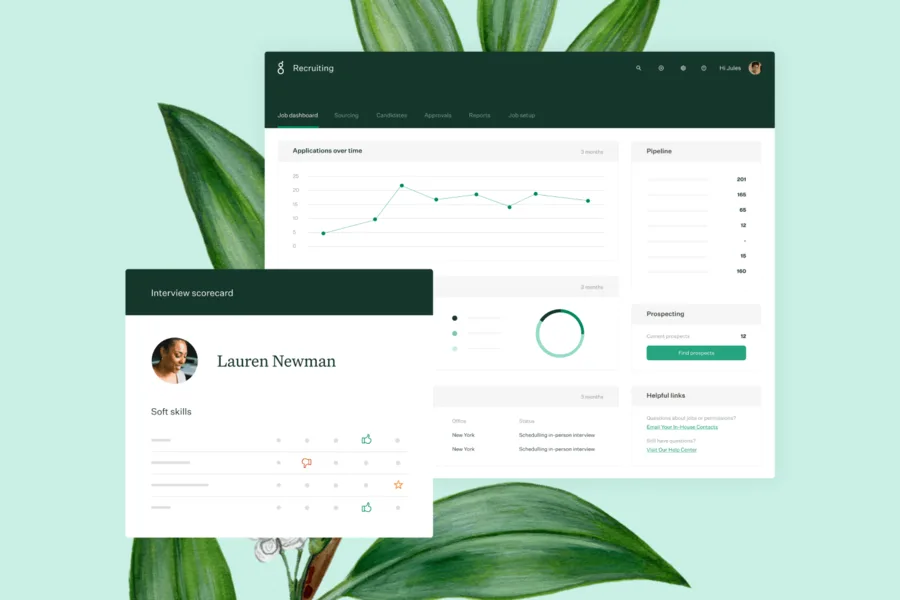
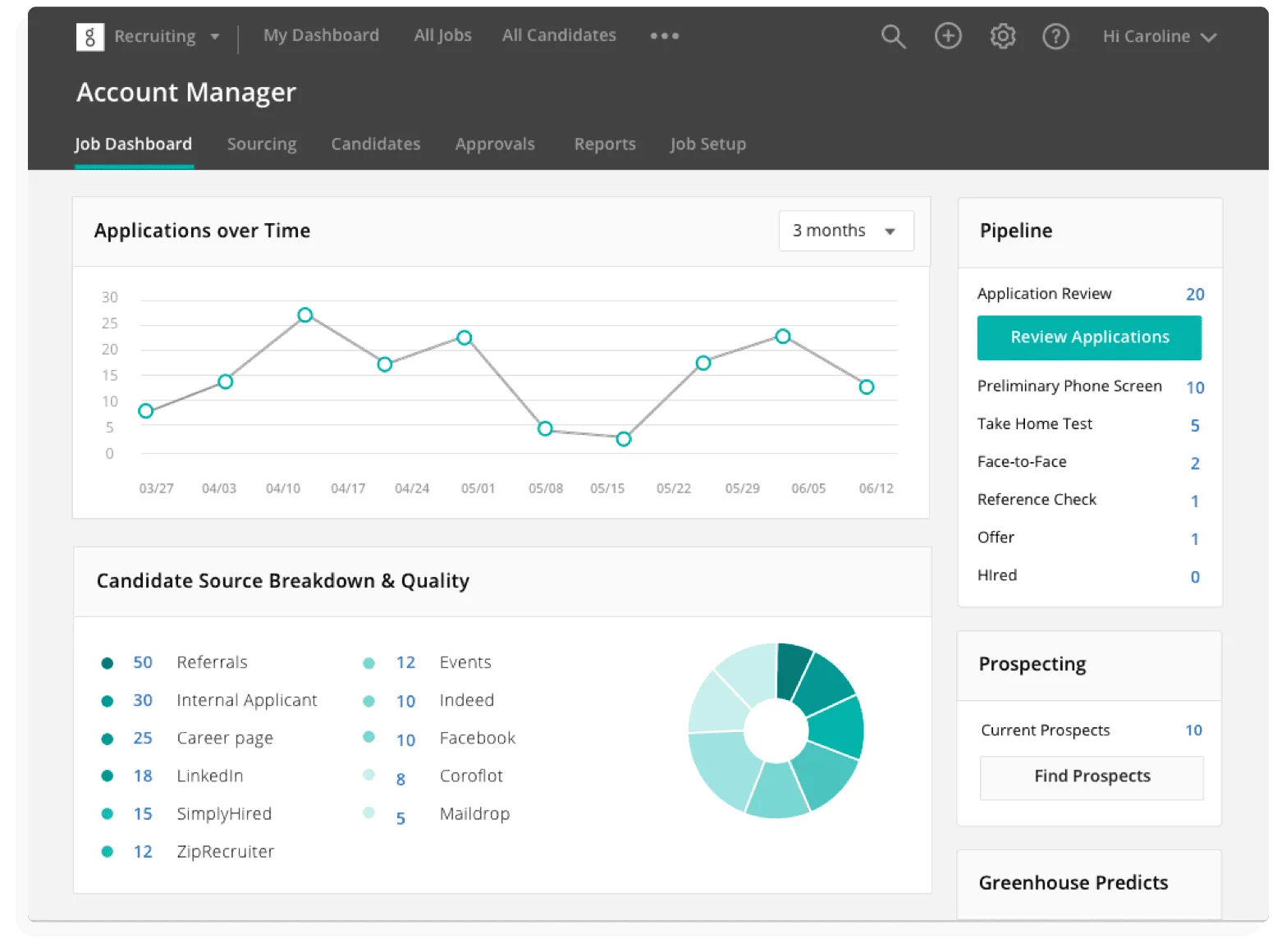
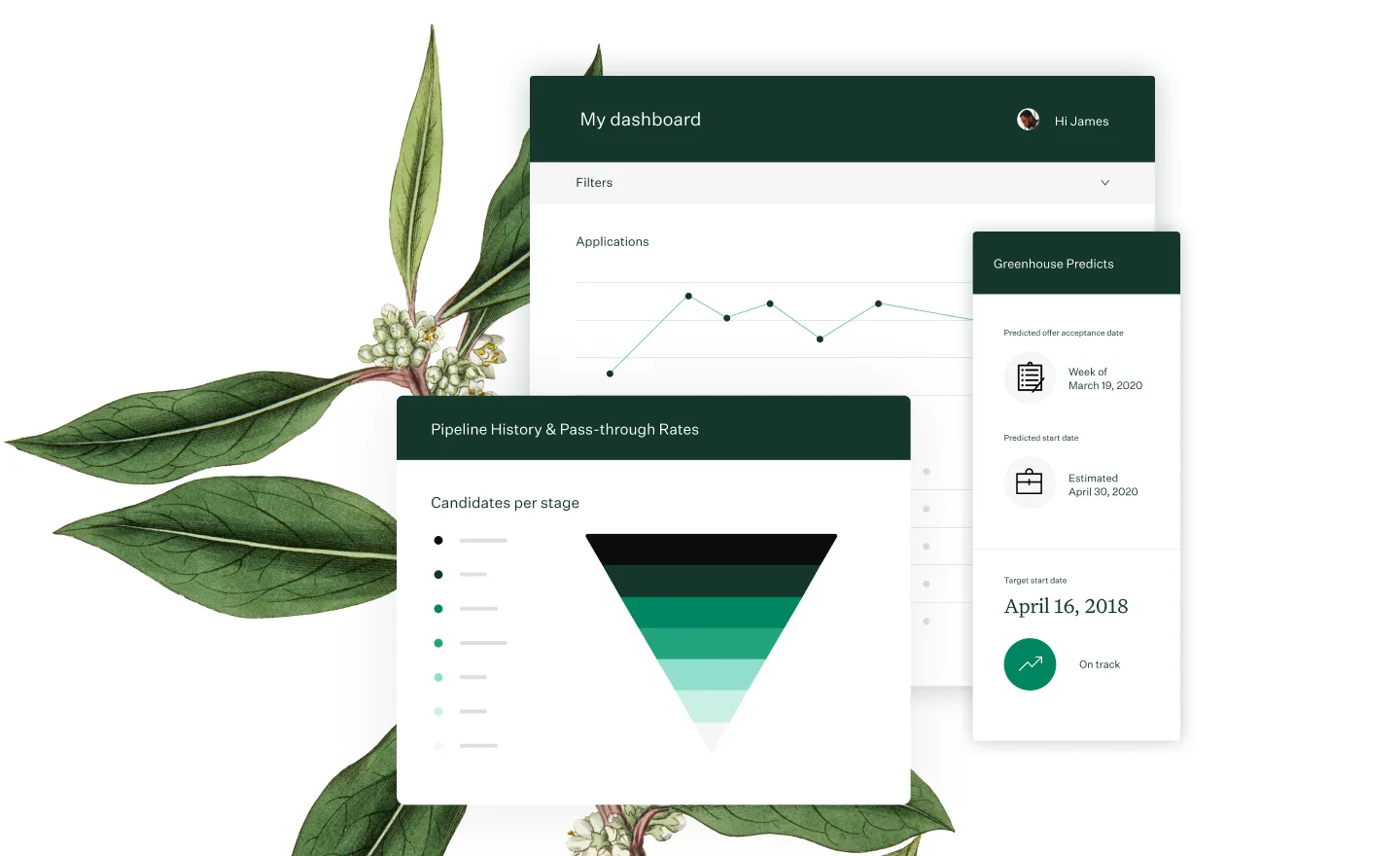
Table of contents
- 1. Greenhouse ATS Review: What Buyers Need to Know
- 2. How This Greenhouse Review Was Evaluated
- 3. Greenhouse Interview Plans and Scorecards
- 4. Candidate Tracking and Pipeline Control
- 5. Greenhouse Sourcing and Talent CRM
- 6. Interview Scheduling and Hiring Coordination
- 7. Greenhouse Reporting and Hiring Analytics
- 8. Greenhouse Integrations and Recruitment Technology
- 9. Permissions, Candidate Privacy and Governance
- 10. Greenhouse AI Features and Automation
- 11. Greenhouse Pricing, Implementation and Support
- 12. Greenhouse ATS Verdict and Alternatives
- Frequently Asked Questions
1. Greenhouse ATS Review: What Buyers Need to Know
Greenhouse ATS review: Greenhouse is an applicant tracking system designed to help recruiting teams manage candidates, coordinate interviews, and make hiring decisions through a consistent, documented process.
Its strongest advantage is the way it combines structured hiring, interview scorecards, recruitment workflows, reporting, and integrations in one system.
Recruiters can organize applications, hiring managers can evaluate candidates against agreed criteria, and recruitment leaders can monitor how vacancies progress.
The platform is particularly relevant to companies that need more consistency across departments or locations.
However, its custom pricing, configuration requirements, and feature differences between plans deserve careful consideration before committing.
Greenhouse is built for organizations that treat recruiting as a coordinated business process rather than a collection of individual recruiter tasks.
It provides a shared environment in which recruiters, hiring managers, interviewers, coordinators, and other stakeholders can contribute to a candidate's progress without relying entirely on email threads and separate spreadsheets.
That distinction matters when a company is hiring for several roles simultaneously.
A small business recruiting for one vacancy may be able to manage applications with a lightweight tool.
A business handling dozens of open positions, multiple interview panels, internal approvals, and recurring recruitment campaigns faces a different problem.
It needs to know where each candidate stands, who must act next, which feedback has been submitted, and whether the hiring process is following the intended structure.
Greenhouse addresses these operational demands through configurable interview plans, candidate profiles, scorecards, scheduling capabilities, sourcing tools, and reporting.
Its newer plan structure also includes AI related capabilities, although the specific functionality available depends on the subscription.
The important buying question is whether this breadth solves a real problem for your organization.
Greenhouse is most compelling when recruitment involves several people and the company wants a repeatable way to evaluate candidates.
Its value is less obvious when hiring is occasional, the team has few process requirements, or a lower cost system can already handle the workload.
The platform should also be evaluated as part of a wider recruitment technology stack.
A recruiting team may need a separate HR information system, background screening service, assessment provider, electronic signature application, or onboarding product.
Greenhouse can connect with many external tools, but the practical value of those connections depends on the systems already used by the company and the configuration required to make them work together.
This review examines Greenhouse from a buyer's perspective.
It considers the hiring workflow, candidate management, interview structure, sourcing, reporting, integrations, security controls, pricing model, implementation effort, and the organizations most likely to benefit.
The goal is to establish what Greenhouse does well, where its complexity may become a burden, and what prospective customers should confirm before purchasing.
2. How This Greenhouse Review Was Evaluated
A useful software review needs to distinguish documented capabilities from assumptions about performance.
Greenhouse offers a broad set of recruitment functions, but a feature list alone does not establish whether a particular organization will find the platform easy to administer, affordable to maintain, or effective for its hiring process.
This assessment is based on publicly available product information, the vendor's published plan descriptions, official support documentation, integration guidance, and user review patterns.
It is a feature and buying analysis, not a claim that a private Greenhouse account was accessed or that controlled hands on testing was conducted.
The official product and pricing information is available through the Greenhouse website.
Its published plan comparison describes three principal tiers, Core, Plus, and Pro.
Each tier targets a different level of hiring complexity, with higher plans adding capabilities related to automation, reporting, sourcing, governance, and technical extensibility.
Official support documentation is especially useful for understanding how the system works beyond its marketing descriptions.
For example, Greenhouse explains how interview plans are assembled from stages and interviews, how scorecards support candidate evaluation, and how standardized milestones help organizations compare hiring activity across different jobs.
These details help establish the operational model behind the product.
User reviews provide another perspective.
Reviews published on Capterra describe strengths such as customizable workflows, structured interviews, integrations, candidate organization, and customer support.
Criticism includes pricing concerns, reporting limitations, interface complexity, and a desire for more flexible automation.
These reports are individual experiences rather than universal findings, so they should be treated as signals to investigate rather than proof that every customer will encounter the same issues.
The evaluation focuses on several practical questions.
First, can Greenhouse make a complicated recruitment process easier to coordinate?
Second, does it help hiring teams assess candidates consistently rather than simply collect resumes?
Third, can recruitment leaders obtain useful information from the resulting data?
Fourth, will the integrations and administrative controls fit the company's existing environment?
Finally, does the expected operational benefit justify a price that is not publicly standardized?
These questions are more useful than a generic checklist because recruitment systems are highly dependent on organizational behavior.
A platform may have excellent features but deliver disappointing results if interviewers do not submit scorecards, recruiters use inconsistent job stages, or managers delay decisions.
The same principle applies to implementation.
Software configuration can create the conditions for better recruitment, but it cannot independently define a good job description, agree on evaluation criteria, train interviewers, or ensure that decision makers follow the process.
Greenhouse should therefore be judged on both its documented capabilities and the organizational discipline required to use them effectively.
3. Greenhouse Interview Plans and Scorecards
Structured hiring is one of Greenhouse's most important capabilities.
Rather than treating each interview as an informal conversation, the platform allows recruitment teams to define a sequence of stages, specify the interviews that belong to each stage, and establish criteria for evaluating candidates.
An interview plan describes the intended path from application review to the final hiring decision.
A company might create an initial application review, a recruiter conversation, a technical assessment, a hiring manager interview, a panel discussion, and an offer stage.
The exact sequence can be adapted to the position and the organization's hiring policy.
The advantage is consistency.
When a team agrees on the process before interviewing begins, candidates applying for the same role can be evaluated against a more comparable set of expectations.
Recruiters can also see where an application sits in the process and which activities remain outstanding.
Greenhouse supports reusable stages and interview configurations, helping organizations avoid rebuilding every workflow from scratch.
Administrators can create a new stage, select one from an existing library, or reuse an arrangement from another interview plan.
This can reduce repetitive setup work when a company recruits for similar roles across different departments.
Scorecards add an evaluation layer to that structure.
Instead of leaving interview feedback entirely to free form comments, a scorecard can present defined attributes that interviewers are expected to assess.
A software engineering interview might examine technical problem solving, code quality, collaboration, and communication.
A sales interview might evaluate discovery skills, objection handling, commercial judgment, and customer communication.
The criteria should be relevant to the role, observable during the assessment, and clear enough that different interviewers can apply them consistently.
Greenhouse provides the framework, but the employer remains responsible for designing useful criteria.
This is an important distinction.
A badly designed scorecard can standardize weak judgment just as easily as a well designed scorecard can improve consistency.
If the criteria are vague, unrelated to job performance, or excessively numerous, the system may collect more data without producing better decisions.
Hiring teams should therefore agree on what each scorecard attribute means and what evidence supports a rating.
Interviewers should understand the difference between an observation, an interpretation, and a personal impression.
These practices make the resulting feedback more useful when the hiring team compares candidates.
Greenhouse also allows organizations to configure whether scorecards are required for particular interviews.
This can support a disciplined process in which interviewers submit feedback before the team makes a decision.
The precise configuration depends on permissions and job settings.
A practical implementation begins with a simple rule: every interview should have a defined purpose.
One interviewer might assess role specific skills, while another evaluates collaboration or leadership.
Assigning distinct responsibilities reduces unnecessary duplication and gives candidates a more focused experience.
The hiring team should also determine when interviewers can see one another's feedback.
Seeing earlier opinions can help interviewers understand context, but it can also influence independent judgment.
Greenhouse provides permission settings that can govern access to scorecards.
The employer should choose a policy that matches its interview design and decision making standards.
Another benefit is the ability to improve the process over time.
If a particular interview repeatedly produces feedback that does not help distinguish suitable candidates, the company can review its questions, criteria, or place in the hiring sequence.
If a stage creates delays without providing meaningful information, the team can investigate whether it is necessary.
For hiring managers, the key benefit is clarity.
They know what they are being asked to assess and where their feedback fits into the overall decision.
For recruiters, the benefit is coordination.
For talent acquisition leaders, it is a more standardized process that can be reviewed across jobs.
Greenhouse's structured hiring tools are most valuable when an organization is prepared to use them consistently.
They are less transformative when hiring managers ignore the scorecards, interview plans are created without clear objectives, or recruiters allow every department to use incompatible criteria.
4. Candidate Tracking and Pipeline Control
An applicant tracking system must do more than store resumes.
It needs to maintain a reliable record of each candidate's relationship with a particular vacancy, the actions already completed, and the steps still required.
Greenhouse organizes recruitment around jobs, candidates, applications, and workflow stages.
Recruiters can review incoming applications, move candidates through the configured process, record feedback, and manage the information required to coordinate the hiring team.
This structure becomes particularly useful when several recruiters or hiring managers work on the same vacancy.
Without a shared system, one person may believe a candidate is awaiting an interview while another assumes that the application has been rejected.
The result can be duplicated outreach, delayed decisions, or an inconsistent candidate experience.
A centralized candidate profile provides a place to follow progress and review relevant activity.
Greenhouse's redesigned candidate profile brings together stage information, planned interviews, scorecards, offer details, and an activity feed.
The aim is to help users understand a candidate's current status without searching through several disconnected screens.
The quality of this information still depends on how the team uses the system.
Recruiters must move candidates to the correct stages, record outcomes, and keep job records current.
If a team conducts interviews outside its intended workflow and fails to update the candidate record, the platform cannot provide an accurate picture of the recruitment pipeline.
This makes data discipline a practical requirement rather than an administrative detail.
Greenhouse can support a defined application review process, where recruiters screen new applicants and advance or reject candidates according to their permissions.
Rejection workflows can capture a reason and support an associated communication process.
The exact options depend on the organization's configuration.
Rejection reasons are particularly useful when they are recorded consistently.
A company may discover that candidates frequently fail to meet a required qualification, that an assessment stage eliminates an unusually large proportion of applicants, or that a role attracts applicants whose experience does not match the job description.
Those patterns can inform improvements to sourcing, job advertising, and screening.
However, the data is only as useful as the categories behind it.
If recruiters select inconsistent rejection reasons or leave them blank, subsequent analysis becomes less reliable.
Pipeline visibility also supports workload management.
Recruitment coordinators can identify upcoming interviews, recruiters can monitor pending decisions, and managers can see where their input is needed.
Notification settings can alert relevant users about selected events, including new applications, referrals, scorecards, stage transitions, and hiring activity.
The operational benefit is not simply that information exists in one location.
It is that team members can use the same information to decide what to do next.
Buyers should evaluate this capability against their current process.
If recruiters spend considerable time asking colleagues for updates, manually maintaining candidate spreadsheets, or reconciling competing status reports, a shared applicant tracking workflow may remove meaningful friction.
If the company already has a simple and well maintained recruitment system, the improvement may be smaller.
The most relevant demonstration is a complete vacancy rather than an isolated candidate profile.
Ask the vendor to show how an application enters the system, who reviews it, how interviews are arranged, where feedback is recorded, how a decision is documented, and what happens when the candidate is hired or rejected.
That sequence reveals whether the system can support the team's actual workflow, including exceptions and approval steps.
5. Greenhouse Sourcing and Talent CRM
Recruitment does not begin when a candidate submits an application.
Many organizations need to identify prospective candidates, maintain relationships with people who may be suitable for future roles, and engage talent before a vacancy becomes urgent.
Greenhouse includes sourcing and customer relationship management capabilities intended to help teams build and manage prospect pools.
A prospect is someone the company is considering for a possible role who has not necessarily applied to a specific job.
Keeping prospects organized allows recruiters to develop a pipeline beyond the applicants responding to a current vacancy.
This matters most when hiring requires specialist skills or when the available talent market is limited.
A company recruiting experienced cybersecurity professionals, senior engineers, or niche commercial leaders may need to maintain relationships over a longer period.
Waiting until a role opens can leave the team starting from zero.
Prospect pools provide a way to group potential candidates by relevant characteristics or recruiting priorities.
Recruiters can revisit these groups when a suitable vacancy appears, reducing the need to reconstruct searches and contact lists from scratch.
Greenhouse also provides a prospecting browser extension and sourcing related functions.
Additional capabilities vary by subscription tier.
Its published pricing comparison identifies basic prospect creation and prospect pools across the Core, Plus, and Pro plans, while more advanced sourcing capabilities are included in higher tiers.
The difference between basic prospect management and advanced sourcing automation should be investigated carefully.
Buyers should not assume that every sourcing feature, contact lookup, or automated outreach capability is included in the entry tier simply because the platform has a sourcing section.
Greenhouse Plus adds sourcing automation and other tools intended to help recruiters identify, reach, and engage prospective candidates.
The plan also lists additional functionality such as texting and enhanced talent discovery.
The practical value depends on the channels the team uses and the rules governing candidate outreach.
Recruiters should establish a sourcing process before adopting these capabilities.
That process should define where candidate information comes from, how relevance is assessed, when a person should be contacted, how outreach is recorded, and when the information should be reviewed or removed.
A large prospect database is not inherently valuable.
Its usefulness depends on whether profiles are current, whether the people remain relevant to the organization's hiring needs, and whether recruiters can identify an appropriate reason to contact them.
Talent CRM functions are especially useful when recruiting is recurring.
A business that hires the same types of professionals throughout the year can gradually build a pool of relevant contacts.
The team can then revisit that pool when a new position opens, rather than relying exclusively on fresh applications.
There are also important operational limits.
Candidate sourcing can involve external platforms, contact data providers, recruitment agencies, and specialized search tools.
Integrations may require separate subscriptions or additional permissions.
Buyers should confirm the exact functionality, licensing requirements, and data flow for every sourcing tool they plan to use.
The recruitment team should also consider candidate expectations.
People who have not applied for a particular vacancy may have different communication preferences from active applicants.
Outreach should be relevant, transparent, and respectful, with a clear process for handling requests not to be contacted.
For organizations with mature sourcing operations, Greenhouse's CRM capabilities can bring prospect management closer to the wider hiring workflow.
For a small team that hires only occasionally, a dedicated CRM may provide more capability than it needs.
The deciding factor is whether the organization has a sustained need to develop talent relationships, not simply whether sourcing tools look impressive in a product demonstration.
6. Interview Scheduling and Hiring Coordination
Interview scheduling is one of the most operationally demanding parts of recruitment.
Coordinators must reconcile candidate availability, interviewer calendars, time zones, meeting formats, and changing schedules while ensuring that every participant understands what is expected.
Greenhouse includes scheduling capabilities and supports integrations with calendar and productivity tools.
Its official integration guidance identifies Google Calendar, Outlook 365, Calendly, and Microsoft Teams among the options used to support scheduling workflows.
Availability and configuration should be confirmed for the specific subscription and environment.
The main advantage of integrated scheduling is continuity.
Interview information can remain associated with the candidate and the relevant stage, helping the team keep the recruitment record aligned with the actual interview process.
This does not mean scheduling becomes completely automatic in every situation.
Complex panels, executive interviews, cross regional hiring, and last minute changes can still require coordination.
Integration quality also depends on calendar permissions, meeting policies, user configuration, and the behavior of the connected applications.
Before buying Greenhouse, a recruitment operations team should map its scheduling requirements.
It should identify whether interviews are usually individual or panel based, whether candidates need to provide availability, how rescheduling is handled, and which calendar applications the company uses.
It should also check how the system handles time zones.
A scheduling error can damage candidate confidence and waste the time of several interviewers.
For distributed organizations, time zone handling should be demonstrated using a realistic example rather than assumed from a general feature description.
The next issue is interviewer accountability.
Greenhouse can support a workflow in which scorecards are assigned and feedback is collected as part of the interview process.
Users can also be assigned a scorecard without necessarily scheduling them to conduct the interview.
This can be useful when an additional stakeholder needs to review a candidate's qualifications.
For example, a hiring manager may want a senior specialist to assess a candidate's technical portfolio even though that specialist is not participating in the live interview.
Assigning a scorecard gives the team a defined way to collect that feedback.
The organization should decide how much feedback it genuinely needs.
Adding too many interviewers can lengthen the process and make decisions harder.
More participants do not automatically produce better hiring outcomes.
A well designed interview plan gives each person a clear responsibility and limits unnecessary duplication.
Notifications can also reduce coordination gaps.
Greenhouse allows job related notifications to be configured for certain events, helping users remain informed about applications, stage changes, and submitted scorecards.
The team should decide which notifications are useful and avoid overwhelming users with messages that do not require action.
Scheduling performance should be assessed in a vendor demonstration using a complete scenario.
Ask the representative to arrange a multi interviewer meeting, change one participant, reschedule the candidate, record the completed interview, and confirm that the next workflow action is clear.
This reveals more than a basic calendar integration demonstration.
It shows how the system behaves when the process becomes less tidy than the ideal example.
For high volume recruitment teams, even modest reductions in scheduling administration may matter because the savings recur across many candidates.
For teams conducting only a few interviews each month, the benefit may be less significant.
Greenhouse should therefore be evaluated against the volume and complexity of actual scheduling work, not just the presence of calendar related features.
7. Greenhouse Reporting and Hiring Analytics
Recruitment reporting is only useful when it helps people make better decisions.
A dashboard full of numbers may look sophisticated, but it has limited value if the data is inconsistent, difficult to interpret, or disconnected from the decisions leaders need to make.
Greenhouse provides reporting and analytics, including ways to review recruitment activity across jobs and stages.
Its use of standardized hiring milestones is particularly relevant because different jobs may have different interview plans.
One position may involve a technical exercise, while another may require a portfolio review or a sales presentation.
If every job uses completely different stage names, comparing recruitment performance across departments can become difficult.
Greenhouse milestones provide a common framework for examining key points in the hiring process.
The documented milestones include Application, Assessment, Face to Face, Offer, and Hired.
This approach helps leaders compare pipelines without requiring every vacancy to use exactly the same interview stages.
It can support analysis of pass through rates, candidate sources, recruiter activity, and the movement of applicants through the process.
For example, a talent acquisition leader may want to understand whether candidates from employee referrals progress further than candidates from a particular job board.
Another may investigate why candidates frequently withdraw before the final interview.
A recruitment operations manager may need to identify vacancies that consistently take longer to fill.
These questions require more than a total number of applications.
The team needs reliable stage history, correctly attributed candidate sources, consistent job records, and clear definitions for each metric.
Greenhouse's own reporting guidance emphasizes the importance of maintaining clean recruitment data.
It recommends recording candidates under the correct jobs, assigning source information, moving candidates through stages in a timely manner, submitting scorecards, recording rejection reasons, and closing completed vacancies.
This is a critical point for buyers.
Analytics cannot repair poor record keeping automatically.
If a team forgets to mark candidates as hired, leaves vacancies open after recruitment ends, or records sources inconsistently, the resulting reports may give leaders an inaccurate picture of performance.
Reporting should therefore be assessed in two stages.
First, determine whether the available reports answer the organization's questions.
Second, determine whether the team can consistently produce the data those reports require.
Common recruitment measures include time to hire, time in stage, offer acceptance, source effectiveness, candidate conversion, and hiring activity by recruiter or department.
Organizations should agree on the precise definition of each metric before comparing results.
For instance, time to hire can be measured from different starting points, so comparisons are misleading when teams use different definitions.
Greenhouse Plus adds AI powered report filters and a Business Intelligence Connector according to the published plan comparison.
These capabilities may be relevant to organizations that need more flexible analysis or want recruitment data to support wider business intelligence processes.
Access should be confirmed for the intended subscription.
The Business Intelligence Connector deserves particular attention from organizations that already maintain enterprise reporting systems.
A company may want to combine recruitment data with headcount planning, departmental budgets, workforce forecasts, or broader people analytics.
Before assuming that this integration meets the requirement, buyers should verify the available data, technical constraints, permissions, and any associated fees.
User reviews indicate that reporting can be a point of frustration for some customers, particularly where customization or data extraction is concerned.
This does not establish that every organization will struggle, but it makes reporting a priority for the purchasing demonstration.
Do not accept a generic presentation of attractive dashboards.
Bring three real business questions and ask the vendor to demonstrate how each would be answered.
Confirm whether the report is available in the proposed tier, whether filters can be changed, how the data is exported, and whether the output can be used without extensive manual cleanup.
A reporting feature is valuable when it turns accurate data into a decision.
If the team must repeatedly export records, reconcile fields, and rebuild the same analysis outside the platform, that extra work should be included in the total cost of ownership.
8. Greenhouse Integrations and Recruitment Technology
Greenhouse is designed to work within a wider recruitment technology environment.
Most organizations already use several systems for calendars, collaboration, job advertising, candidate assessments, background checks, electronic signatures, identity management, HR administration, and onboarding.
The value of an applicant tracking system depends partly on how well it connects those activities.
If candidate information has to be copied manually between tools, the recruitment team may still face the same administrative burden it hoped to eliminate.
Greenhouse states that it offers hundreds of prebuilt integrations and an open API for custom workflows.
Its integration guidance covers categories including scheduling, sourcing, electronic signatures, background checks, candidate testing, HR information systems, job distribution, productivity, collaboration, and analytics.
Examples of relevant connected tools include Google Calendar and Outlook 365 for scheduling, Microsoft Teams for collaboration, DocuSign for electronic signatures, Checkr and GoodHire for background checks, and HackerRank for candidate testing.
The actual availability and configuration of each integration should be checked with Greenhouse and the relevant provider.
This breadth can be valuable because it gives companies flexibility in choosing specialist tools rather than forcing every recruitment activity into a single application.
A technical hiring team, for example, may prefer a particular coding assessment platform, while a regulated employer may have an established background screening provider.
However, a large integration catalog should not be mistaken for effortless interoperability.
Two products may be listed as compatible while still requiring configuration, account permissions, paid subscriptions, data mapping, or implementation work.
The first step is to document the current technology stack.
List each application used during recruitment, the information it stores, the people responsible for it, and the actions that must pass between systems.
Next, identify which integrations are essential on launch day.
Calendar synchronization, job distribution, background checks, or HRIS handoff may be more important than optional connections that can wait until later.
Then verify the data flow.
If Greenhouse sends a candidate's details to another system, determine which fields are transferred, whether updates return to Greenhouse, and what happens when information changes.
Confirm whether the connection is automatic or requires a recruiter to trigger an action.
Security and access deserve the same attention.
An integration may transfer personal information to an external provider, so the organization needs to understand who can access that information and how the connection is authorized.
Technical compatibility alone does not establish that a workflow meets internal security requirements.
Greenhouse also supports custom integrations through its APIs and webhooks.
These options can help organizations connect systems that are not fully covered by a standard integration.
Custom development, however, introduces work that must be estimated, tested, maintained, and supported.
The presence of an API is not a substitute for confirming that the required endpoints and events are available.
For companies with an internal engineering team, API access may offer valuable flexibility.
Smaller organizations without technical resources may prefer prebuilt integrations that are supported and easier to maintain.
A useful procurement exercise is to select the five most important integrations and ask the vendor to demonstrate each one.
Confirm whether they are included in the proposed plan, whether third party charges apply, what configuration is required, and who is responsible for troubleshooting.
The team should also identify integrations that can be postponed.
Trying to connect every tool before the core hiring workflow is stable can complicate implementation and make it harder to diagnose problems.
Greenhouse's integration ecosystem is a meaningful strength, but its practical value comes from the specific connections the organization needs, not from the total number of integrations advertised.
9. Permissions, Candidate Privacy and Governance
Recruitment systems store sensitive personal information.
Candidate records may include contact details, employment history, interview notes, assessment results, compensation information, references, and other data that should not be visible to every employee.
Greenhouse provides configurable permission structures that allow organizations to control what different users can see and do.
Permissions can govern activities such as editing interview plans, viewing scorecards, managing hiring teams, advancing candidates, accessing private fields, and handling offers.
These controls matter because recruitment involves people with different responsibilities.
A hiring manager may need access to candidates for a specific vacancy, while a recruiter may need broader access across several jobs.
A coordinator may need to arrange interviews without receiving unrestricted access to private compensation details.
The principle is to provide each user with the access required for their role, while limiting access to information that is not necessary for their work.
Before implementation, the organization should define its user groups and responsibilities.
Typical groups include system administrators, recruiters, recruiting coordinators, hiring managers, interviewers, agency recruiters, and other business stakeholders.
Each group should have an explicit reason for accessing candidate information.
Permission design should also account for organizational changes.
Employees change departments, recruiters leave, and hiring managers become involved in different vacancies.
Access should be reviewed regularly rather than treated as a one time setup task.
Greenhouse's documentation also describes controls for scorecard visibility and editing.
For example, an organization can determine whether interviewers see feedback submitted by other interviewers before submitting their own assessment.
This is relevant to both information access and the independence of candidate evaluations.
For larger organizations, governance requirements may extend beyond basic permissions.
Companies may need detailed audit records, more advanced data configuration, developer environments, and controls appropriate for multiple business units or regions.
Greenhouse lists enterprise oriented governance and extensibility capabilities in its Pro plan, but buyers should verify the precise scope of the controls available for their contract.
Privacy requirements also depend on where the employer operates and where candidates are located.
Different jurisdictions can impose obligations concerning personal data, retention, access requests, international transfers, and the use of automated decision systems.
A software purchase does not automatically make an employer compliant with those obligations.
The organization should establish its own retention policy, determine the lawful basis for processing candidate information where applicable, and confirm how the platform supports its obligations.
Legal and privacy specialists should be involved when the company operates across multiple jurisdictions or handles particularly sensitive recruitment data.
AI related capabilities require additional scrutiny.
Greenhouse's product offering includes AI related features, and its broader platform messaging refers to governed AI.
Buyers should ask what information is processed, how the feature operates, which users can access its outputs, whether information is retained, and what controls are available.
The answers should be documented for the actual products being purchased rather than inferred from general AI policy statements.
Recruiters and hiring managers should remain accountable for employment decisions.
An AI generated summary or recommendation should not be treated as proof that a candidate is suitable, nor should it replace a properly designed assessment process.
The most important procurement questions are concrete.
Which security and governance features are included in the proposed tier?
What audit information is available?
How are user permissions configured?
What data can be exported?
What happens to candidate records when retention periods end?
Which integrations receive personal information?
Greenhouse provides relevant administrative and governance capabilities, but each buyer needs to confirm that the selected plan and configuration meet its own requirements.
10. Greenhouse AI Features and Automation
Greenhouse has expanded its product offering to include AI related recruitment capabilities.
The published Core plan includes an AI Notetaker, while Plus adds AI powered report filters and sourcing automation.
Higher tier features include additional governance and extensibility options.
The exact scope of each capability should be confirmed during procurement because product packaging can change.
The most useful way to evaluate AI in recruitment is to examine the specific task it is expected to improve.
A feature may help organize interview notes, make report filtering more convenient, identify possible candidates, or reduce repetitive sourcing work.
Those benefits are different from automatically making a hiring decision.
An AI Notetaker may be useful when interviewers need help capturing and organizing information from conversations.
Before adopting it, the employer should understand whether recording or transcription is involved, what participants are told, how the resulting information is stored, and who can access it.
The vendor should explain the actual workflow for the subscribed product.
Interview notes should remain tied to the agreed assessment criteria.
If a tool generates a summary, interviewers should check that it accurately represents the conversation and does not omit important context.
A concise summary can save time, but an inaccurate one may distort the hiring team's understanding of a candidate.
AI powered report filters may help users explore recruitment data without relying entirely on fixed reporting views.
Their value depends on the quality of the underlying data and the clarity of the questions being asked.
An organization with inconsistent job stages and incomplete candidate records should fix those problems before expecting AI assisted reporting to provide reliable insights.
Sourcing automation addresses another type of repetitive work.
Recruiters may need to identify potential candidates, find contact information, and manage outreach.
Automation can help organize these tasks, but its effectiveness depends on the relevance of the candidate pool, the accuracy of available data, and the rules governing outreach.
Companies should evaluate whether these features are included in the intended plan or require additional licensing.
The existence of an AI feature in the product family does not guarantee that every subscription includes it.
A responsible assessment should also cover error handling and human review.
Ask the vendor to demonstrate what happens when the AI produces an incomplete summary, an irrelevant result, or a recommendation that conflicts with the recruiter's judgment.
Find out whether the user can inspect the underlying information and correct the result.
The organization should define acceptable and unacceptable uses before rollout.
For example, it may allow AI assistance with administrative summaries while requiring a human decision maker to evaluate job related evidence and approve hiring outcomes.
It is also important to assess fairness.
Recruitment data can reflect historical biases, inconsistent hiring practices, or unequal access to opportunities.
AI features should be evaluated for their intended use, limitations, and potential impact on candidates.
The employer should not assume that an automated tool is neutral simply because it processes information consistently.
Greenhouse's AI capabilities may improve efficiency when they address a specific, recurring task.
They are less compelling when introduced without a clear objective or when the organization cannot explain how the feature affects candidate information and decision making.
The right question is not whether a recruitment platform uses AI.
It is whether a particular capability saves meaningful time, improves the quality of information, and operates within controls the organization understands and accepts.
11. Greenhouse Pricing, Implementation and Support
Greenhouse does not publish a single standard price for its recruiting plans.
Its official pricing page presents Core, Plus, and Pro and directs prospective customers to request a personalized quote.
The company explains that pricing depends on hiring needs, organizational complexity, and the capabilities required.
This means buyers cannot reliably calculate the total subscription cost from a public per user price alone.
They need a quote that reflects their organization and the specific products being purchased.
Core is intended for organizations that want to establish a consistent hiring process and replace manual recruitment administration.
Its listed capabilities include sourcing and CRM, structured interview kits and scorecards, scheduling, reporting and analytics, single sign on, and an AI Notetaker.
Plus builds on Core with capabilities designed to support more complex recruitment operations.
The published plan comparison includes AI powered report filters, a Business Intelligence Connector, sourcing automation, texting, and additional talent discovery capabilities.
Pro adds features aimed at organizations with more advanced governance and technical requirements.
The published list includes unlimited CRM events, enterprise level data configuration and security, an audit log, and developer sandbox and synchronization capabilities.
These descriptions provide a useful starting point, but they are not a substitute for reviewing the contractual offer.
A buyer should ask for a written breakdown of the features included, any optional modules, implementation charges, renewal terms, support arrangements, and conditions that could affect future costs.
The three plans should be compared against actual requirements rather than treated as a simple progression where the most expensive option is automatically best.
A company may not need advanced developer tools or enterprise level configuration.
Another may require those features from the beginning because it operates across regions or has strict governance requirements.
The best purchasing approach is to build a requirements list before the sales demonstration.
Separate essential capabilities from desirable additions.
Identify the integrations required on day one, the reporting questions the platform must answer, the user groups that need access, and the administrative tasks that must be automated.
Then request a quote for the relevant plan and ask the vendor to confirm each requirement in writing.
If a feature is demonstrated but excluded from the proposed subscription, it should be treated as unavailable for the purposes of the buying decision until the cost and conditions are clear.
Implementation is another part of the investment.
Even when a vendor provides onboarding assistance, the customer needs to define workflows, configure job templates, set up permissions, establish interview plans, connect external tools, and train users.
The amount of work depends on the complexity of the organization's current process.
A company with standardized recruitment procedures and clean data may be able to move more efficiently than one with many legacy spreadsheets, inconsistent job structures, and several disconnected applications.
Migration should receive particular attention.
Buyers should determine which candidate records will be imported, which fields will be retained, how duplicate profiles will be handled, and whether historical recruitment activity must remain accessible.
They should also test the quality of migrated data before relying on reports.
Training should be role specific.
Recruiters need to understand candidate management and job workflows.
Hiring managers need to review applications and submit feedback.
Interviewers need to know how to use scorecards.
Administrators need to understand permissions, configuration, and reporting.
A single general training session is unlikely to cover every responsibility equally well.
Support should also be evaluated before the contract is signed.
Ask what channels are available, what response commitments apply, whether a dedicated account contact is included, and how implementation questions are handled.
Confirm whether service arrangements vary by plan or contract.
Finally, consider the cost of maintaining the process after launch.
Someone must own configuration changes, monitor data quality, review user access, maintain integrations, and ensure that recruitment reports remain consistent.
These activities are part of the total cost of ownership even when they are performed by existing employees.
Greenhouse can justify a substantial investment when it replaces fragmented processes and supports hiring at scale.
It is harder to justify when the organization needs only basic applicant storage and simple interview coordination.
The right decision depends on the operational value delivered relative to the full subscription and implementation cost.
12. Greenhouse ATS Verdict and Alternatives
Greenhouse is best suited to organizations that need a structured approach to recruitment, particularly when multiple people participate in candidate evaluation and the company wants better visibility across vacancies.
Its combination of interview plans, scorecards, candidate tracking, sourcing tools, integrations, and reporting makes it a serious option for teams that have outgrown informal hiring processes.
Its strongest feature is the relationship between workflow design and candidate evaluation.
A well configured hiring process gives recruiters a clearer way to move candidates forward, gives interviewers a defined purpose, and gives hiring managers a more consistent basis for discussing applicants.
Reporting can then help leaders understand where the process works and where it needs attention.
The platform's integration ecosystem is another advantage.
Organizations can connect recruitment activity with scheduling, assessment, background screening, electronic signature, and HR systems, provided the required integrations are supported and configured correctly.
Greenhouse is not automatically the right choice for every employer.
Smaller businesses with occasional hiring may find that its breadth introduces unnecessary cost and administrative work.
Organizations with very specialized reporting requirements should test those needs carefully, particularly because some users report limitations around reporting flexibility and data extraction.
Custom pricing also makes it harder to compare the platform with competitors without completing a formal sales process.
Buyers should compare Greenhouse with alternatives such as Lever, Ashby, Workable, and SmartRecruiters according to their actual requirements.
The relevant differences include pricing, workflow flexibility, reporting, sourcing, integrations, implementation, and the level of governance required.
No alternative should be selected solely because it appears simpler or less expensive on a marketing page.
A good decision process includes a realistic demonstration, a written quote, a review of contract terms, and a short list of measurable success criteria.
Those criteria might include reducing manual coordination, improving scorecard completion, maintaining more reliable candidate records, or making recruitment reporting easier to produce.
Greenhouse deserves consideration when structured hiring and cross team coordination are priorities.
It is less attractive when the company wants only a basic database of applicants or cannot commit to maintaining consistent recruitment practices.
Its value comes from helping a disciplined hiring process operate more reliably, not from replacing the judgment and accountability of the people making hiring decisions.
Key features
- Structured interview plans for vacancies
- Customizable candidate stages and workflows
- Standardized interview kits and scorecards
- Centralized candidate profiles and activity
- Collaborative hiring team coordination tools
- Application review and screening workflows
- Candidate rejection reasons and communications
- Recruitment notifications for key events
- Prospect pools for future hiring
- Candidate sourcing and CRM capabilities
- Browser based prospecting support tools
- Automated candidate sourcing in Plus
- Interview scheduling and calendar integrations
- Recruitment reporting and analytics dashboards
- Standardized milestones across different vacancies
- AI Notetaker for interview documentation
- AI powered reporting filters in Plus
- Business Intelligence Connector in Plus
- Candidate testing and assessment integrations
- Background screening provider integrations
- Electronic signature workflow integrations
- HRIS and onboarding system integrations
- Custom integrations through available APIs
- Webhook support for event driven workflows
- Configurable user roles and permissions
- Scorecard visibility and editing controls
- Job approval and offer workflows
- Advanced governance features in Pro
- Audit log capabilities in Pro
- Developer sandbox and synchronization in Pro
- Candidate privacy and access controls
Pricing
- Structured interview kits and scorecards
- Candidate sourcing and CRM tools
- Interview scheduling and coordination
- Recruitment reporting and analytics
- AI Notetaker and single sign on
- Everything included in the Core plan
- AI powered report filtering capabilities
- Greenhouse sourcing automation tools
- Candidate texting and engagement features
- Business Intelligence Connector access
- Everything included in the Plus plan
- Unlimited CRM events for recruitment
- Enterprise data configuration and security
- Audit log for administrative oversight
- Developer sandbox and synchronization tools
Pros & cons
Pros
- Structured interviews support consistent evaluation
- Scorecards clarify candidate assessment criteria
- Centralized profiles improve hiring visibility
- Configurable workflows suit varied vacancies
- Candidate activity remains organized centrally
- Prospect pools support ongoing recruitment
- Broad integrations connect recruitment systems
- Calendar integrations support interview coordination
- Milestones improve cross job reporting
- Permission controls support role separation
- Sourcing tools extend talent discovery
- Advanced plans support enterprise governance
- AI features assist selected workflows
- Reusable stages reduce repeated configuration
Cons
- Pricing requires a customized vendor quote
- No publicly listed standard subscription price
- No free recruiting plan is listed
- Advanced features depend on subscription tier
- Reporting flexibility needs careful evaluation
- Data quality affects analytics reliability
- Implementation requires internal process ownership
- Complex workflows may increase setup effort
- Integration setup can require technical work
- External integrations may add separate costs
- Small hiring teams may overspend
- Recruiters must maintain accurate records
- AI outputs require human review
- Feature availability needs contractual confirmation
Greenhouse specs
- Platforms: Web based application
- Free plan: No
- Starting price: Custom quote, contact sales
- Integrations: Hundreds of prebuilt integrations
- Support: Vendor support and help resources
- Best for: Structured hiring and recruitment teams
Our verdict
Greenhouse is a strong applicant tracking system for organizations that need structured interviews, coordinated hiring workflows, and reliable visibility across multiple vacancies. Its combination of interview plans, scorecards, candidate tracking, sourcing, integrations, and analytics is most valuable when recruiters and hiring managers follow a consistent process. The main reservations are customized pricing, implementation effort, and the need to verify reporting requirements and plan specific features before signing. Smaller employers with occasional hiring may prefer a simpler system. For teams where recruitment coordination and structured evaluation are business priorities, Greenhouse merits serious consideration.
See ItFrequently Asked Questions
What is Greenhouse ATS used for?
How much does Greenhouse cost?
Does Greenhouse offer a free plan?
Is Greenhouse good for small businesses?
Does Greenhouse integrate with other tools?
Reader reviews
Be the first to review