BambooHR® Review: Smarter HR Decisions From Better Data

By Nathan Cole & Zari M'Bale · Reviewed by Afonso Macosso
BambooHR gives HR teams employee records, hiring workflows, performance reviews and workforce insights, helping businesses replace scattered admin with clearer people decisions.
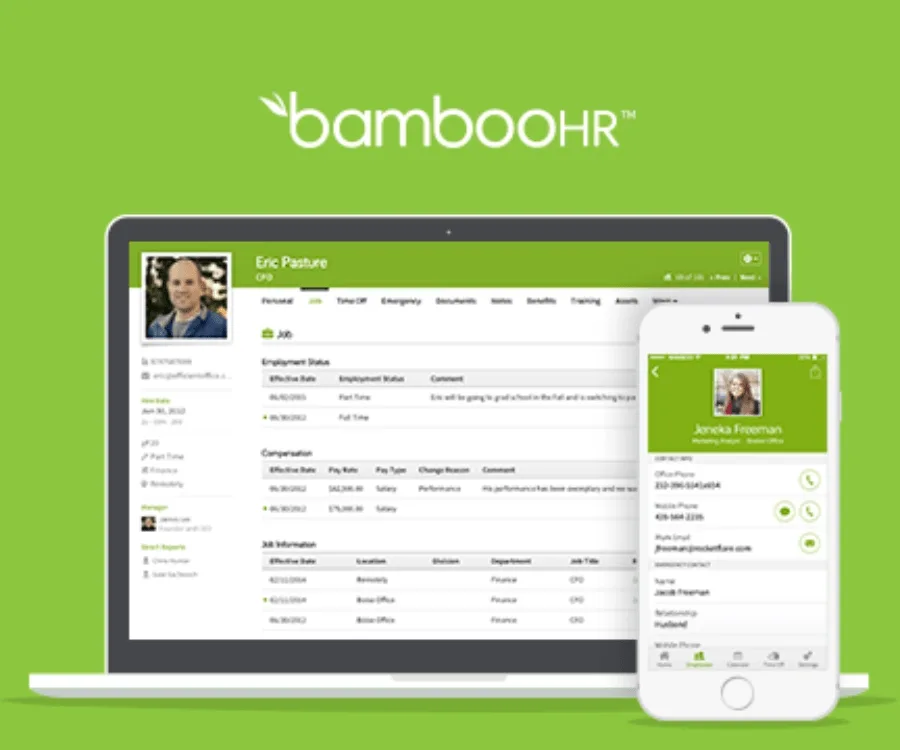
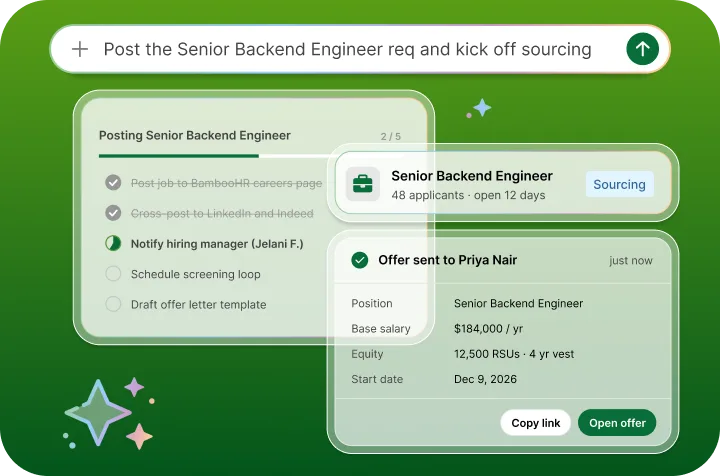
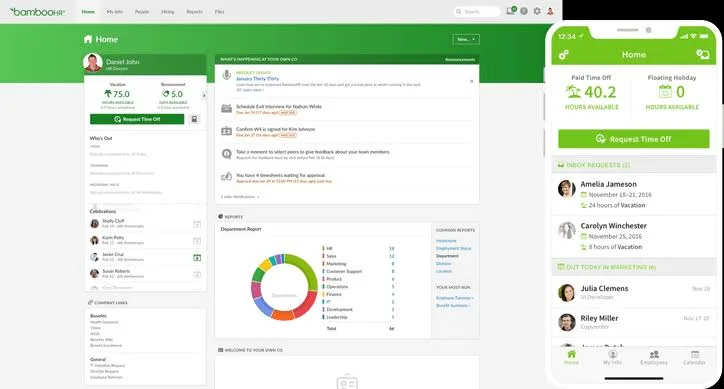
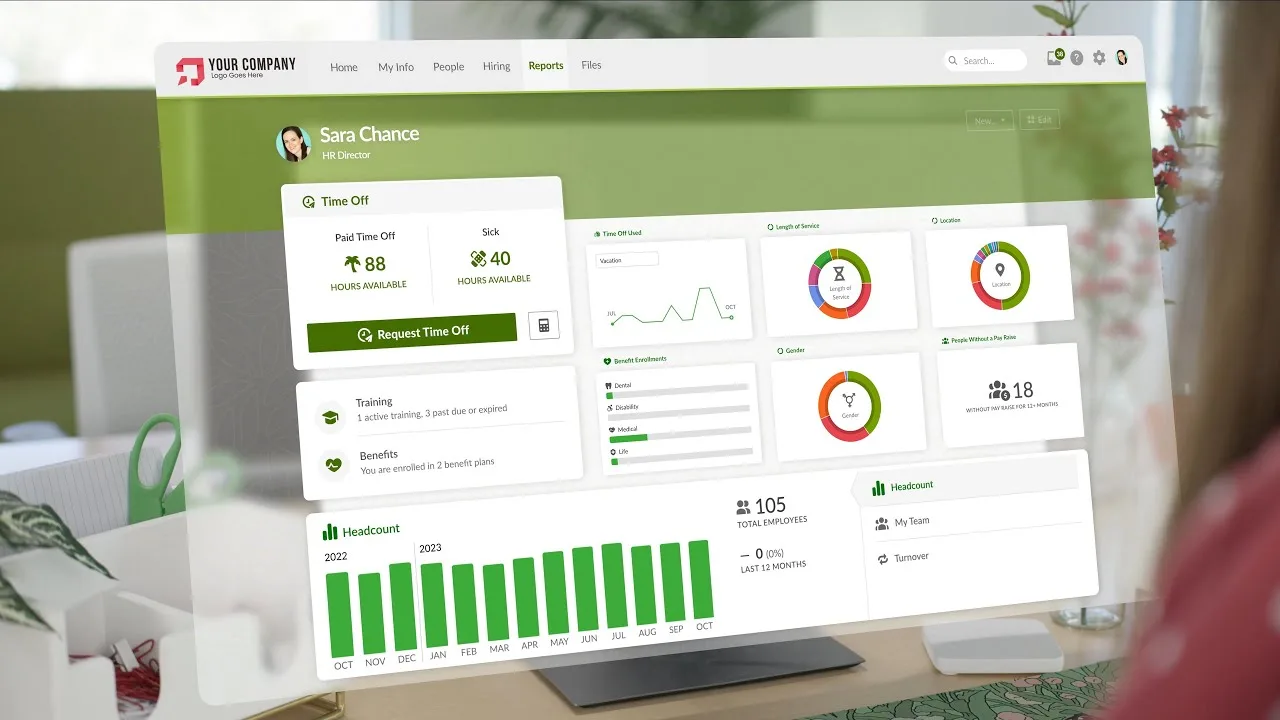
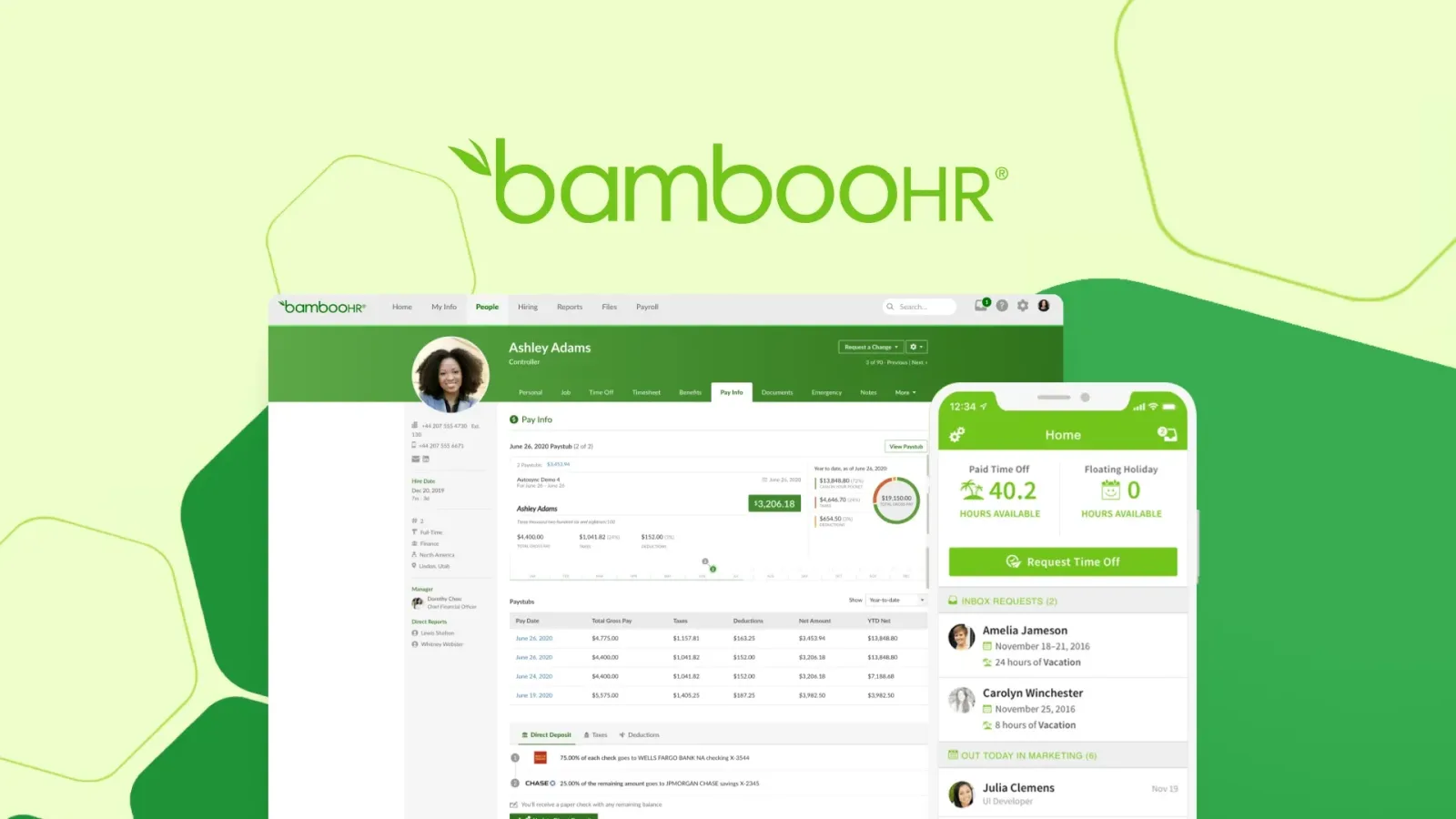
Table of contents
- 1. BambooHR® Turns Employee Records Into Better Decisions
- 2. What This Review Evaluates
- 3. Employee Records and HR Data Management
- 4. Recruitment and Applicant Tracking
- 5. Onboarding and Employee Lifecycle Workflows
- 6. Time Off, Attendance and Payroll
- 7. Performance Reviews and Employee Development
- 8. Compensation Planning and Salary Decisions
- 9. Reporting, Dashboards and Workforce Analytics
- 10. Employee Experience, Recognition and AI
- 11. Integrations, Security and Administration
- 12. BambooHR Pricing and Subscription Value
- 13. BambooHR Alternatives and Final Buying Verdict
- Related Reviews:
- Frequently Asked Questions
1. BambooHR® Turns Employee Records Into Better Decisions
BambooHR® is a human resources platform built to help organizations manage employee information, recruitment, onboarding, time off, performance, compensation and workforce reporting without relying on disconnected administrative processes.
Its strongest appeal is the way it makes everyday HR tasks accessible while giving people teams a more organized view of the workforce.
Hiring records can support onboarding, employee profiles can inform reporting, and performance processes can give managers a structured way to discuss goals and development.
For small and midsized businesses that have outgrown spreadsheets, BambooHR offers a practical path toward more consistent HR operations.
The product is best understood as an HR management system with additional capabilities available for payroll, benefits administration and time tracking.
That distinction matters when assessing cost and suitability.
The standard subscription tiers focus on core HR capabilities, while some operational requirements depend on separate paid add ons.
A business comparing the headline subscription price with a competing platform's complete payroll and workforce management package may therefore reach the wrong conclusion unless it compares the same set of services.
BambooHR has developed a recognizable position in the HR software market by emphasizing usability, employee experience and the practical needs of smaller organizations.
Its platform supports several stages of employment, from applicant tracking and onboarding to performance management, compensation and employee records.
The company also offers Bamboo AI, a layer designed to help users ask questions about people data, generate insights and complete selected administrative work.
The available capabilities depend on the product configuration and subscription level, so buyers should validate them in a live demonstration rather than assume every advertised feature is included in the base plan.
For an HR manager, the attraction is tangible.
Employee details can be maintained in structured profiles instead of scattered files.
Hiring tasks can follow a consistent process.
Managers can receive requests and complete approvals.
HR staff can produce routine reports without rebuilding the same spreadsheet each month.
Performance reviews can give conversations a defined format, while compensation tools can help organizations formalize salary decisions.
These improvements are most valuable when a company has reached the point where informal processes are creating real friction.
Perhaps employee details are maintained in several spreadsheets, new hires receive inconsistent onboarding, leave balances require manual checking, or managers approach performance reviews differently across departments.
BambooHR can help standardize those workflows and make responsibilities easier to track.
However, software cannot compensate for unclear policies or unreliable employee data.
If managers disagree about performance criteria, job titles are inconsistent, reporting lines are outdated or approval responsibilities are poorly defined, the platform will reflect those weaknesses until the organization resolves them.
A successful implementation therefore requires more than importing employee records.
It requires deciding how HR work should operate, who owns each process and what the company expects to measure.
BambooHR is worth considering for organizations that want a more structured approach to HR without automatically committing to a highly complex enterprise suite.
Its suitability becomes less certain when advanced reporting, extensive customization, complicated international employment arrangements or specialist workforce scheduling dominate the requirements.
The buying decision should begin with the company's actual operating needs, not the number of features shown in a product presentation.
2. What This Review Evaluates
This review assesses BambooHR through its published product information, pricing details and recurring themes in customer feedback.
It does not claim a private hands on test or access to a live customer account.
That distinction is important because product documentation explains intended functionality, while public reviews describe individual customer experiences that may depend on configuration, company size and implementation quality.
The evaluation concentrates on the questions that influence a purchasing decision.
Can the platform handle the company's HR processes?
Are its recruitment and onboarding workflows appropriate for the hiring volume?
Will its reporting answer questions that executives and people managers actually ask?
Which capabilities are included in each subscription tier?
What extra costs may arise from payroll, benefits and time tracking?
How much flexibility does the organization need, and what happens when its policies become more complicated?
The evidence suggests a clear pattern.
BambooHR is frequently praised for its accessible interface, organized employee information and support for routine HR tasks.
Reviewers also identify limits around advanced reporting, customization and the cost of adding capabilities.
Capterra's published reviews describe the platform as easy to navigate while highlighting that complex reports and highly specific workflows can be harder to accommodate.
Gartner Peer Insights includes similar feedback from users who value the employee experience but want greater analytical and administrative flexibility.
Those findings should not be interpreted as proof that every customer will encounter the same limitations.
A company with straightforward employee records, leave policies and onboarding requirements may find the reporting adequate.
An organization that needs highly customized cross departmental analysis, complex approval paths or detailed enterprise workforce planning may reach a different conclusion.
The review also distinguishes between a product capability and a commercial entitlement.
BambooHR may advertise payroll, benefits administration, time and attendance, compensation management and advanced analytics as part of its wider platform, but the subscription tier and add on structure affect what a customer receives.
The exact proposal, implementation scope and terms should be checked before signing.
A useful evaluation should therefore involve realistic examples.
The company should demonstrate how a new employee is created, how a manager approves leave, how HR changes an employee's department, how a performance review is completed and how a report is built from the resulting data.
If payroll or benefits are required, those workflows should be demonstrated separately.
The aim is to establish whether the product supports the company's real operating model, not simply whether the relevant feature exists.
3. Employee Records and HR Data Management
Employee records are the foundation of BambooHR's core offering.
The platform gives HR teams a structured place to maintain employee details, employment information, organizational relationships and relevant documents.
For a company moving away from spreadsheets and shared folders, this can improve consistency and reduce the time spent searching for the latest version of a record.
The benefit becomes more apparent when employee information changes regularly.
Someone may move departments, receive a promotion, change managers, take leave or update personal details.
Without a structured system, these changes can be recorded in one document but missed in another.
That creates inconsistencies that affect reporting, approvals and administrative decisions.
A central employee record can reduce duplication, provided the organization defines which fields are authoritative and who is allowed to update them.
BambooHR's employee data capabilities also support reporting and organizational visibility.
HR leaders may need to understand headcount by department, track changes in employment status, review reporting relationships or produce a list of employees who meet a particular criterion.
A structured system makes these tasks easier than searching through several unrelated files.
Still, centralized data needs governance.
An employee profile is only useful when its information is current, accurate and appropriately protected.
Organizations should decide who owns fields such as job title, manager, location, employment status and compensation.
They should also define whether employees can edit particular personal details directly or whether changes require HR approval.
Access permissions deserve particular attention.
A manager may need to see information about direct reports without having unrestricted access to salary details or sensitive documents belonging to other employees.
Payroll and benefits administrators may require broader access to specific data, but that does not mean every HR user should have identical privileges.
Before implementation, the organization should map its roles and test how permissions behave in everyday situations.
Historical records matter as well.
Employers may need to establish when a promotion took effect, who approved a change or which job title applied during a previous period.
Buyers should confirm the audit and historical reporting capabilities available in their proposed package.
A system that stores current information without preserving the history required for internal review may not satisfy the needs of every organization.
Document handling should be evaluated in the same way.
Ask how offer letters, policy acknowledgments, employment documents and other records are stored, accessed and retained.
Check whether electronic signatures are included in the intended plan, how employees receive documents and what happens when a person leaves the company.
For organizations with a small HR department, the practical advantage is less administrative searching and more consistent recordkeeping.
For a large organization with multiple legal entities, intricate reporting lines or strict data governance requirements, the evaluation should go further.
Confirm how the product handles organizational complexity, restricted information, historical changes and the export of records.
These details determine whether a convenient HR database can also satisfy the company's longer term control requirements.
4. Recruitment and Applicant Tracking
BambooHR includes applicant tracking capabilities designed to help employers manage job openings, applications and candidate progression.
Recruitment can become difficult to coordinate when job descriptions live in separate documents, applications arrive through several channels and managers use different methods to assess candidates.
A structured hiring workflow gives the organization a clearer view of each vacancy and the next action required.
For companies with moderate hiring needs, this may be enough to replace a patchwork of spreadsheets and email threads.
Recruiters can manage job openings, track candidates through the hiring process and coordinate information with the people responsible for interviews or hiring decisions.
The benefit is not simply that applications are stored digitally.
It is that the organization can establish a repeatable process and understand where candidates are waiting.
The number of job openings supported by each subscription tier is an important commercial detail.
BambooHR's published plan comparison lists different job opening limits across Core, Pro and Elite.
The current product page should be checked before purchase because subscription packaging can change.
Recruitment teams should test the complete candidate journey.
Start with a new vacancy, publish it through the intended channels, receive an application, move the candidate through the relevant stages and prepare an offer.
Ask how interview feedback is recorded, how hiring managers are notified and whether the organization can report on time to hire or candidate progression.
If recruiters frequently manage many vacancies simultaneously, also test how easily they can search, filter and compare applicants.
A built in applicant tracking system is not necessarily a substitute for a specialist recruitment platform.
Employers with high volume recruitment, complex approval structures, extensive agency relationships or advanced candidate sourcing requirements should assess the depth of the recruitment features carefully.
Ask whether the product supports the screening rules, interview coordination and recruitment analytics the team expects.
If those functions are limited, the organization may need an external applicant tracking tool, which creates additional cost and integration work.
The handoff from candidate to employee is especially valuable.
When a candidate accepts an offer, recruitment information may become part of the employee record and onboarding process.
That transition can reduce repeated entry and help HR prepare documents and tasks before the start date.
Buyers should test which fields transfer automatically, which documents must be completed separately and how missing information is flagged.
Recruitment reporting should also be tested against the company's real questions.
A hiring manager may want to know how many candidates are at each stage, where applications are delayed and which roles take longest to fill.
A people leader may want to compare hiring patterns across departments.
If the required reports cannot be built easily, the apparent convenience of a single platform may be offset by manual analysis.
BambooHR's recruitment tools are most compelling when the organization needs a well organized hiring process connected to employee records and onboarding.
Businesses with specialized recruitment operations should compare the available functionality against their existing workflow before replacing a dedicated applicant tracking system.
5. Onboarding and Employee Lifecycle Workflows
Onboarding determines how an accepted candidate becomes a functioning employee.
The process may include forms, policy acknowledgments, employment documents, equipment requests, training, manager tasks and preparation for payroll.
When those activities are handled through informal email exchanges, HR can struggle to see what remains incomplete.
BambooHR's onboarding tools provide a structured way to assign and monitor tasks around a new hire.
A consistent onboarding process helps prevent avoidable omissions.
Employees can be asked to complete required forms, managers can receive tasks related to the first week, and HR can monitor outstanding steps.
The company can also establish different onboarding checklists for different roles or locations, subject to the configuration available in its plan.
The most useful test is not a standard demonstration in which every task is completed on time.
Ask what happens when a new hire does not submit a required form, a manager forgets an assignment or the start date changes.
Determine who receives reminders, whether overdue tasks are visible and whether the process can be adjusted without creating a separate checklist outside the system.
Onboarding is also an opportunity to improve the employee experience.
A new employee should know what to complete, where to find relevant information and whom to contact when a task is unclear.
Too many disconnected requests can make the first week confusing.
A clear digital process can help, but only if the instructions are understandable and the assigned tasks match the employee's role.
The wider employee lifecycle matters after the first day.
Promotions, transfers, changes in reporting relationships, leave, performance reviews and departures all require information to be updated.
BambooHR can support several of these processes through employee records, workflows, performance management and related modules.
Organizations should decide which events need formal approval, which documents must be retained and which teams need to be notified.
Offboarding deserves particular attention because it involves access, property, final administrative tasks and record retention.
Buyers should verify which offboarding workflows are available and whether the organization can adapt them to its policies.
A checklist is useful only when it reflects the real responsibilities of HR, IT, finance and the departing employee.
The best implementation begins with the actual lifecycle events the company needs to manage.
Map each event, identify its owner, define required information and establish what happens when a task is late or rejected.
Then configure BambooHR to reflect those rules.
Without that preparation, the platform may digitize existing confusion instead of eliminating it.
6. Time Off, Attendance and Payroll
BambooHR provides time off management as part of its core HR offering, while time and attendance and payroll are separate add on capabilities.
That distinction has practical consequences for both budgeting and implementation.
A company may be able to manage leave requests and balances within its HR subscription but still need an additional service to capture working hours, calculate payroll or handle payroll tax obligations.
Time off management is valuable because leave affects staffing, employee experience and operational planning.
Employees need a straightforward way to request time away, managers need to approve or decline requests, and HR needs reliable balances and visibility into absences.
A shared calendar can help managers identify overlapping leave and plan coverage before it becomes a problem.
However, leave policies can vary considerably.
Organizations may have different accrual rates, carryover rules, probation requirements, public holiday arrangements and eligibility conditions.
Buyers should confirm how the proposed configuration handles each policy and whether the relevant reports can distinguish between employee groups.
If a business operates in several jurisdictions, it should verify that the system supports the rules applicable to those employees.
Time and attendance introduces additional complexity.
Hourly workers, rotating shifts, overtime, breaks and multiple pay rates create requirements that simple leave tracking does not address.
BambooHR's time and attendance offering advertises capabilities such as shift scheduling, meal and rest break tracking, project hours, approval workflows and overtime calculations.
The buyer should confirm which functions are included in the quoted package and how they behave under the organization's actual rules.
Payroll requires an equally careful review.
The payroll add on advertises direct deposit, flexible pay schedules and federal and state tax filing for eligible United States employees.
It should not be assumed to provide the same native payroll coverage for every country in which a business operates.
Companies with international employees should ask how local payroll is handled and whether external partners or separate employment services are required.
The relationship between HR data, approved hours and payroll is a major factor in the evaluation.
Employee changes, leave balances and time records may affect pay, but the company needs to understand which information flows automatically and where a manual review remains necessary.
A connected workflow can reduce repeated data entry, yet incorrect source data or poorly configured rules can still create payroll problems.
Ask the vendor to demonstrate a complete pay cycle using representative scenarios.
Include a new hire, a change in compensation, an employee with overtime, a leave request that affects the pay period and a correction to a time entry.
Observe how exceptions are flagged, who approves changes and how the final result can be checked.
The right decision depends on the employer's needs.
BambooHR can be attractive when core HR and employee experience are the main priorities, with payroll and attendance added where suitable.
Organizations with complicated payroll, sophisticated scheduling or international workforce requirements should compare the full operational scope with specialist alternatives before making a commitment.
7. Performance Reviews and Employee Development
BambooHR's performance management capabilities are designed to give organizations a more structured approach to employee feedback, goals and development conversations.
This is particularly useful when managers currently conduct reviews inconsistently, use different forms or struggle to keep track of agreed objectives.
A shared process can help the company establish common expectations while preserving room for managers to discuss the employee's specific responsibilities.
The Pro subscription includes performance features such as review cycles, 360 degree feedback, one to one meeting support and reporting.
Those capabilities can help HR define when reviews occur, which participants contribute feedback and how managers document discussions.
The exact configuration should be checked against the organization's proposed subscription and the way it intends to run its review process.
A good performance process needs more than a digital form.
The organization must define what it evaluates, how evidence is gathered, what managers are expected to discuss and how employees can respond.
A review that asks every employee to complete identical questions may be easy to administer but fail to reflect differences between roles.
Conversely, a highly customized process can become difficult to maintain if every department creates its own criteria.
BambooHR's review tools should therefore be evaluated against the company's management philosophy.
Does the organization conduct annual reviews, regular check ins or both?
Are goals reviewed throughout the year?
Do employees provide self assessments?
Are peers invited to contribute feedback?
Does the process require manager approval before a review becomes final?
Buyers should test the available options instead of assuming that the software can reproduce every existing practice.
The quality of the process also depends on manager participation.
Software can schedule reviews, remind participants and organize feedback, but it cannot make a manager provide useful examples or deliver constructive guidance.
If the company has weak management practices, the platform may improve completion rates without necessarily improving the quality of conversations.
HR should provide clear guidance on expectations and train managers to use the process properly.
Performance records can support broader workforce decisions, but they must be handled responsibly.
A performance review may influence development opportunities, promotion discussions or compensation planning.
The organization should define who can access the records, how long they are retained and how managers are expected to support consequential decisions.
Employees should understand the purpose of the review and have an appropriate opportunity to discuss the feedback.
For smaller HR teams, a structured performance module can reduce the administrative burden of running review cycles and make participation easier to monitor.
Companies with highly specialized competency frameworks, complex calibration sessions or elaborate talent review processes should test the depth of the configuration before purchasing.
If the product cannot represent the company's methodology without workarounds, a specialist performance management platform may be a better fit.
8. Compensation Planning and Salary Decisions
Compensation management is one of the clearest distinctions between BambooHR's subscription tiers.
The Elite plan adds compensation planning, salary benchmarking, job levels and salary bands, together with dashboards and advanced analytics.
These capabilities matter to organizations that want to make pay decisions through a documented process rather than relying entirely on spreadsheets and informal manager requests.
Compensation planning involves several related decisions.
Employers need to understand current salaries, define pay ranges, review market data, allocate budgets and evaluate proposed increases.
A structured process can help HR and finance examine those decisions more consistently.
It can also make it easier to identify situations where employees in comparable roles are being paid differently, although the quality of the analysis depends on the data and methodology used.
Salary benchmarking can help establish a reference point for compensation decisions, but market data should not be treated as a complete answer.
Job titles often differ between organizations, responsibilities vary within the same title and location can affect pay levels.
Employers should verify how benchmark roles are matched, how current the data is and which markets are represented.
The presence of benchmarking information does not guarantee that a salary decision is fair or competitive.
Job levels and salary bands can provide a more transparent framework for progression.
When roles have defined levels and ranges, managers can discuss advancement with clearer expectations and HR can evaluate proposed increases against established criteria.
The framework still needs maintenance.
A company that grows into new markets, changes its operating model or introduces new specialist roles may need to revise its levels and ranges regularly.
Compensation workflows also require budget control.
If several managers submit proposed increases independently, finance may struggle to understand the combined impact.
A coordinated review process can make the proposed changes easier to evaluate before approval.
Buyers should ask whether the system supports the required planning cycles, approval stages, budget views and employee communication processes.
These features are not equally valuable to every employer.
A small company with a simple pay structure may have little need for a dedicated compensation planning module.
An organization with multiple departments, structured career levels and regular salary reviews may gain more from it.
The decision should reflect the frequency and complexity of compensation decisions, not simply the appeal of having additional software functionality.
The financial implications also need attention.
Compensation management is part of Elite rather than a universal feature across every BambooHR plan.
Buyers should calculate the cost of the subscription level required for compensation tools and compare it with the time currently spent maintaining spreadsheets or using separate compensation software.
If the organization also needs advanced analytics, the combined value may justify the higher tier.
If it only needs occasional salary comparisons, a narrower solution may be more economical.
9. Reporting, Dashboards and Workforce Analytics
BambooHR provides standard and custom reporting capabilities intended to help HR teams work with employee data and answer routine workforce questions.
Reporting can be valuable when it reduces the need to rebuild spreadsheets for recurring requests.
HR may need headcount by department, employee turnover, leave balances, hiring activity or changes in workforce composition.
Managers may want to see the information relevant to their teams without receiving an entire employee database.
The Core plan includes HR data and reporting capabilities, while Elite adds custom dashboards, advanced visualizations, curated insights and workforce benchmarks.
This tier distinction matters because the term analytics can describe very different levels of functionality.
A basic report builder may be sufficient for standard operational questions, while strategic analysis may require more flexible filtering, comparison and visualization.
The strongest test is to use the reports the company already depends on.
Ask HR to identify five recurring reports and demonstrate how each would be generated.
Include a report that filters by department, a report that examines changes over time and a report that needs information from more than one area of HR.
Determine whether the results can be exported, scheduled, shared and restricted according to user permissions.
Reporting flexibility is one of the areas where customer feedback deserves attention.
Some users appreciate the availability of employee information and standard reports, while others describe limitations when they need more complex analysis or highly specific customizations.
Reviews on Capterra and Gartner Peer Insights reflect this difference between routine HR reporting and the demands of advanced administrators.
A limitation in reporting does not automatically make the product unsuitable.
Many organizations need accurate operational reports rather than a sophisticated analytics environment.
The problem arises when leaders expect the software to answer questions that its report builder cannot represent easily.
If HR exports data into spreadsheets every week to create essential management reports, the company should measure that effort as part of the total cost.
Data quality also affects every metric.
Turnover calculations depend on consistent definitions of employee exits and the relevant reporting period.
Headcount reports depend on accurate employment statuses and effective dates.
Performance and compensation analysis depend on standardized job information and reliable records.
Dashboards can make patterns easier to see, but they cannot correct inconsistent definitions or missing data automatically.
Elite's dashboards and benchmarks may appeal to organizations that want more visibility into trends and comparisons.
Buyers should ask what benchmarks are available, how they are defined and whether they match the company's sector, size and geography.
Benchmarking is only useful when the comparison group is relevant and the metric is interpreted correctly.
BambooHR's reporting is likely to be most satisfying for organizations whose needs center on clear operational visibility and accessible HR information.
Companies that depend on complex cross functional analytics, extensive data modeling or advanced financial analysis should validate the limits before choosing a plan.
A short, scenario based demonstration will reveal more than a generic dashboard presentation.
10. Employee Experience, Recognition and AI
Employee experience features are intended to help organizations maintain communication, recognize contributions and understand how employees feel about their work.
BambooHR includes capabilities such as employee satisfaction and wellbeing tools, while Pro adds employee community features, recognition and rewards.
These functions can support a more consistent approach to engagement, particularly in organizations where communication and recognition have historically depended on individual managers.
Recognition programs are useful when they reinforce specific behaviors and organizational values.
A manager may want to acknowledge a colleague who helped another team, completed a difficult project or supported a customer under pressure.
A formal process can make recognition more visible, but it should not become a popularity contest or a substitute for fair compensation and good management.
Employee community features can provide a shared space for announcements, updates and interest groups.
The value depends on whether employees actually use the channel and whether the organization has a clear communication strategy.
A platform can host announcements, but it cannot ensure that messages are relevant, accessible or timely.
Companies should decide which communications belong in the HR platform and which remain in their existing collaboration tools.
BambooHR also offers Bamboo AI, a capability designed to help users interact with HR information, generate answers and support selected work.
The company's product information describes AI features for asking questions about data, producing summaries and reports, and helping with routine actions.
The specific functionality depends on the applicable product offering, so buyers should ask which AI features are available in the quoted subscription and what data they can access.
AI in HR requires particular care because employee information can be sensitive and employment decisions can have significant consequences.
Buyers should understand which data the AI can use, how access permissions are respected, whether outputs are recorded and what controls exist to prevent inappropriate use.
They should also ask how the system distinguishes a reliable answer from an uncertain result and what review is required before information is used in a consequential decision.
AI should be evaluated through realistic tasks.
Ask it to summarize a policy, answer a question about leave rules or produce a report about a defined employee group.
Then verify the answer against the underlying records and check whether the user can access the information legitimately.
A useful AI assistant should save time without encouraging employees to trust unverified outputs.
The company should also define which tasks must remain under human control.
Hiring, performance, compensation and employee relations decisions require context and accountability.
An AI generated summary can help organize information, but it should not replace appropriate review of evidence or remove the need to explain a decision.
BambooHR's employee experience and AI capabilities may add value for companies seeking a more accessible HR environment.
Their usefulness depends on adoption, data quality, appropriate permissions and the clarity of the organization's policies.
Buyers should evaluate these features as practical tools rather than treating AI availability as a sufficient reason to choose the platform.
11. Integrations, Security and Administration
No HR platform operates in isolation.
Even if a company manages most employee information within BambooHR, it may still need to exchange data with accounting software, identity management systems, collaboration applications, recruitment services, benefits providers or other business tools.
BambooHR states that its integration marketplace includes more than 150 partners, although the availability and behavior of individual integrations should be verified before purchase.
The number of integrations is only a starting point.
The buyer needs to know whether a required connection is native, partner supported, file based or dependent on custom development.
It should also establish which system owns each field, how frequently information is transferred and what happens when a transfer fails.
For example, an employee's department may be maintained in BambooHR but also used in accounting reports or access management.
The company should know how changes propagate and how discrepancies are resolved.
Integration scope can also affect cost.
Some connections may be included in the subscription, while others may require an additional provider, a higher tier or professional services.
Ask who maintains the integration after launch and whether upgrades to either application can affect it.
A connection that works during implementation but lacks clear ownership can become an ongoing support burden.
Security is equally important because employee systems contain personal and employment information.
Buyers should review authentication options, role based access, audit capabilities, data retention, incident handling and the contractual commitments relevant to their organization.
The precise controls available should be confirmed through current security documentation rather than inferred from a general product description.
Permissions should follow the principle of least privilege.
Users should receive only the access needed for their responsibilities.
A manager may need to approve leave and review selected team details, while payroll administrators may need access to sensitive compensation and payment information.
The company should test how permissions work for employees who change roles, managers who oversee multiple departments and administrators who need temporary access.
Data lifecycle management also deserves a place in the procurement process.
Ask how the company can export employee records, documents and historical information if it leaves BambooHR.
Confirm how long records remain available after termination and what deletion procedures apply.
A migration plan should specify which information can be transferred, which formats are supported and whether any historical data requires manual preparation.
Administration should not depend on one person remembering every configuration decision.
Document the rules behind leave policies, workflows, reports and access permissions.
Assign an owner for each major area and define how changes are reviewed before they affect employees.
These practices are important in any HR platform, but they become especially valuable when the system is used as a central record for several business processes.
12. BambooHR Pricing and Subscription Value
BambooHR's pricing structure has three primary subscription tiers, Core, Pro and Elite, with additional services available for functions such as payroll, benefits administration and time and attendance.
This structure allows a business to begin with core HR requirements and add capabilities as its needs change.
It also means the advertised subscription price should not be treated as the complete cost when the organization needs a wider set of services.
At the time of research, BambooHR's official United States pricing page lists Core at $10.25 per employee per month, Pro at $17.50 per employee per month and Elite at $25 per employee per month for companies with more than 25 employees.
For companies with 25 employees or fewer, the page lists flat monthly prices of $250 for Core, $425 for Pro and $650 for Elite.
The company states that volume discounts are applied automatically, and separate terms may affect the final proposal.
Prices and packaging can change, so buyers should verify the current quote before making a commitment.
The Core plan is aimed at foundational HR administration.
It includes employee records, reporting, workflows, hiring and onboarding, time off management, benefits tracking and other employee experience capabilities.
For a company whose main objective is to replace spreadsheets and standardize everyday HR work, this may cover a substantial part of the requirement.
However, payroll, benefits administration and time tracking may require separate add ons, so the buyer should confirm the scope before calculating value.
Pro adds performance management features, employee community tools, recognition and rewards, additional compliance training and an upgraded AI assistant.
This tier becomes more relevant when the organization wants a formal performance review process, broader employee engagement features or additional support for policy questions.
A business that will not use these capabilities may have little reason to pay for them.
Elite adds compensation management, salary benchmarking, levels and bands, custom dashboards, advanced visualizations, workforce benchmarks and premium services.
It is designed for organizations that need deeper compensation and analytics capabilities.
Buyers should assess whether those functions will replace existing spreadsheets, consulting work or separate software, and whether the savings justify the higher subscription.
The total cost depends on more than the tier.
Employers should request a full breakdown of payroll, benefits, time and attendance, implementation, data migration, training and any required integrations.
They should also ask how minimum fees, employee count changes, renewal terms and optional services affect the contract.
If the organization has a strict budget, a quote based on its actual requirements is more useful than a comparison of headline prices.
A fair value assessment should compare the proposed cost with the current administrative burden.
Estimate the time HR spends updating records, collecting forms, chasing approvals, maintaining leave spreadsheets, preparing reports and coordinating performance reviews.
Include the cost of separate tools and the effort required to reconcile information between them.
Then identify which tasks BambooHR is expected to reduce and which responsibilities will remain.
The software may offer strong value when the company needs the capabilities included in its chosen tier and the workflows are straightforward enough to benefit from standardization.
Value becomes less obvious when many add ons are required, advanced reporting needs workarounds or the business must retain several specialist systems.
The best comparison uses the full expected annual cost and a clear list of outcomes, not the lowest available subscription price.
13. BambooHR Alternatives and Final Buying Verdict
BambooHR should be compared with alternatives according to the actual work the company needs the software to perform.
The relevant questions include whether the business prioritizes core HR records, payroll depth, workforce scheduling, advanced analytics, employee technology administration or enterprise scale.
A product with more modules is not automatically better, and a lower starting price does not guarantee a lower total cost.
Gusto is worth evaluating when payroll, benefits and straightforward HR administration are central to the buying decision, particularly for United States small businesses.
Compare the complete payroll and benefits package rather than the base subscription alone.
Employers should also test the reporting and workforce processes they expect to use regularly.
Rippling may suit companies that want HR administration alongside employee technology and application management.
It deserves attention when onboarding involves not only employment paperwork but also provisioning access to business applications and equipment.
Buyers should confirm which capabilities are included in the proposed package and whether the platform fits the organization's existing technology environment.
ADP Workforce Now is worth considering when payroll operations and established workforce services carry significant weight.
Organizations with more demanding payroll requirements should compare tax administration, reporting, implementation support and the full commercial proposal.
A direct workflow comparison will be more useful than relying on brand familiarity.
HiBob is a relevant alternative for businesses that place particular emphasis on people operations, employee experience and HR workflows.
Compare its approach to reporting, performance processes, integrations and configuration against BambooHR's offering.
The decision should reflect how much flexibility the organization needs and how easily each platform supports its existing practices.
UKG Ready deserves consideration when timekeeping, attendance and workforce management are especially important.
Employers with hourly employees or complex scheduling requirements should test overtime rules, approvals, shift patterns and reporting in detail.
A platform that is strong in core HR may not necessarily be the best choice for a business whose most difficult problem is workforce scheduling.
These alternatives should not be treated as interchangeable.
The right shortlist depends on the company's size, location, payroll needs and administrative capacity.
Each vendor should receive the same scenarios to demonstrate, including onboarding, leave approval, performance reviews, reporting and any required payroll or timekeeping process.
Ask each provider to identify what is included, what costs extra and which requirements need a workaround.
BambooHR's main strength is the combination of accessible core HR administration, hiring and onboarding workflows, employee records and performance related capabilities.
Pro adds more structured employee development and engagement tools, while Elite offers compensation planning and deeper analytics.
This makes the product particularly relevant to small and midsized organizations that want a more disciplined approach to people operations without adopting a highly complex enterprise system.
The primary cautions concern the full subscription cost, the separate pricing of certain operational modules and the limits that can appear when reporting or customization requirements become sophisticated.
Buyers should also check whether the recruitment and performance workflows are deep enough for their needs.
A company that needs complex global payroll, advanced workforce scheduling or extensive analytics may be better served by a different combination of products.
BambooHR is a strong candidate when a company wants reliable HR structure, accessible employee workflows and a practical way to manage information across the employment lifecycle.
It is less compelling when the main requirement is a specialist payroll engine, elaborate scheduling or unrestricted customization.
Before signing, confirm the current plan pricing, test the actual workflows, review the required integrations and agree on implementation responsibilities.
If those checks show a close match, BambooHR can be a sensible investment in more consistent HR operations.
If the company needs capabilities that sit outside its strongest areas, compare alternatives before committing.
Related Reviews:
- Paylocity Review 2026 Payroll HR Tech Deep Dive
- Breathe HR Review: Practical HR Management Made Simpler
- Employment Hero Review: Powerful HR Tools and Alternatives
- Justworks Review: Payroll Costs and PEO Benefits Explained
Pricing note: These are published monthly per employee prices for United States customers with more than 25 employees, based on the official pricing information reviewed for this article. BambooHR lists flat monthly rates for companies with 25 employees or fewer, and volume discounts may apply. Payroll, benefits administration and time tracking are additional services, so the figures above do not represent the complete cost for every deployment. Verify current rates, add ons and contract terms before purchase.
Key features
- Employee records and organizational data
- Custom reports and HR dashboards
- Applicant tracking for open positions
- Hiring workflows and candidate management
- New hire onboarding task assignments
- Electronic signatures for employment documents
- Time off requests and approvals
- Employee leave balances and calendars
- Performance reviews and feedback cycles
- Structured one to one meetings
- Employee goal tracking and development
- Compensation planning and salary benchmarking
- Job levels and salary bands
- Employee recognition and rewards programs
- Internal announcements and employee communities
- Compliance training and policy resources
- Payroll processing for eligible employees
- Benefits enrollment and carrier connections
- Time tracking and overtime calculations
- Shift scheduling and attendance approvals
- Workforce analytics and HR benchmarks
- Mobile access to employee information
- Workflow automation and approval notifications
- Bamboo AI data questions and insights
- More than 150 integration partners
Pricing
- Everything included in Core
- Performance reviews and 360 feedback
- One to one meeting management
- Employee recognition and rewards
- Employee community and additional training
- Employee records and HR data
- Custom reports and basic dashboards
- Hiring and onboarding workflows
- Time off and benefits tracking
- Standard workflows and approvals
- Everything included in Pro
- Compensation planning and salary benchmarks
- Job levels and salary bands
- Custom dashboards and advanced analytics
- HR benchmarks and premium services
Pros & cons
Pros
- Clear employee records and profiles
- Accessible interface for everyday HR
- Structured hiring and onboarding workflows
- Custom reports for routine HR
- Practical leave request management
- Performance reviews with 360 degree feedback
- Compensation planning in Elite
- Salary benchmarks and structured pay bands
- Recognition tools for employee contributions
- Automated workflows and approval notifications
- Mobile access to employee information
- Broad HR integration marketplace
- AI assisted HR information retrieval
- Multiple plans for different requirements
Cons
- Payroll requires an additional service
- Benefits administration may cost extra
- Time tracking may cost extra
- Advanced reporting can feel restrictive
- Highly customized workflows may need workarounds
- Elite required for compensation planning
- Recruitment depth may limit specialists
- International payroll needs careful verification
- Total cost rises with add ons
- Complex analytics require close evaluation
- Permissions may need administrative intervention
- Subscription details require careful comparison
- Feature availability differs between plans
BambooHR® specs
- Platforms: Web browser, iOS and Android apps
- Free plan: No, free trial availability varies
- Starting price: $10.25 per employee monthly for Core
- Integrations: More than 150 integration partners
- Support: Product support and plan dependent services
- Best for: Small and midsized businesses
Our verdict
BambooHR is a compelling HR platform for small and midsized businesses that need reliable employee records, consistent hiring and onboarding, structured performance reviews and accessible workforce reporting. Pro adds useful tools for feedback, recognition and employee engagement, while Elite is better suited to companies that need compensation planning and more advanced analytics. The main drawbacks are the added cost of payroll, benefits and time tracking, plus reporting and customization limits that can matter to more complex organizations. Choose BambooHR when usability and core HR workflows are priorities, but validate every required module and the full contract cost before committing.
Contact SalesFrequently Asked Questions
How much does BambooHR cost?
Does BambooHR include payroll?
Is BambooHR good for small businesses?
What are BambooHR's main limitations?
What is the best BambooHR alternative?
Reader reviews
Be the first to review