NiCE CXone Review 2026: Powerful AI for Customer Service

By Eva Elekcha & Noura Mint Ely · Reviewed by Afonso Macosso
NiCE CXone combines omnichannel customer service, intelligent routing, workforce management, analytics, and AI tools to help contact centers improve service quality and operational control.
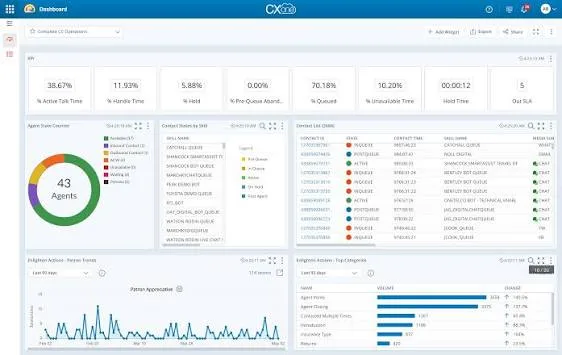
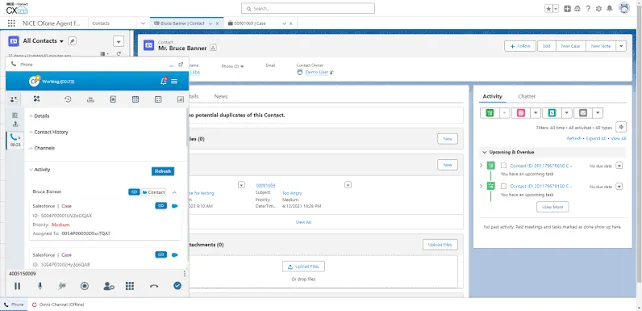
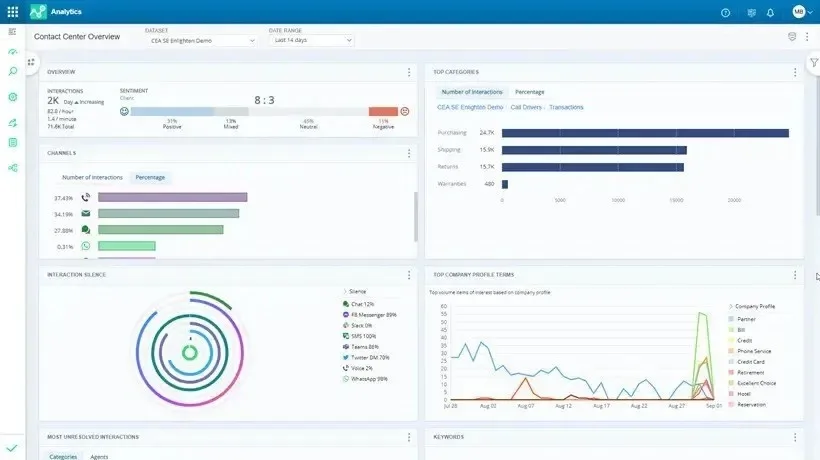
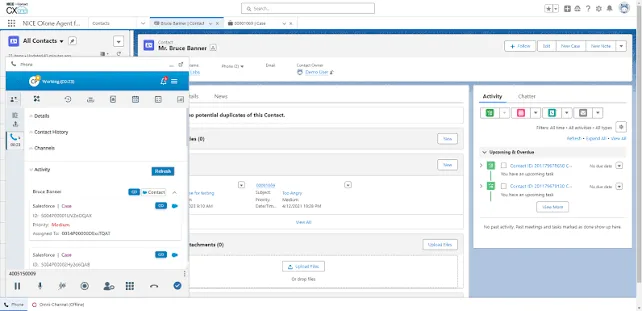
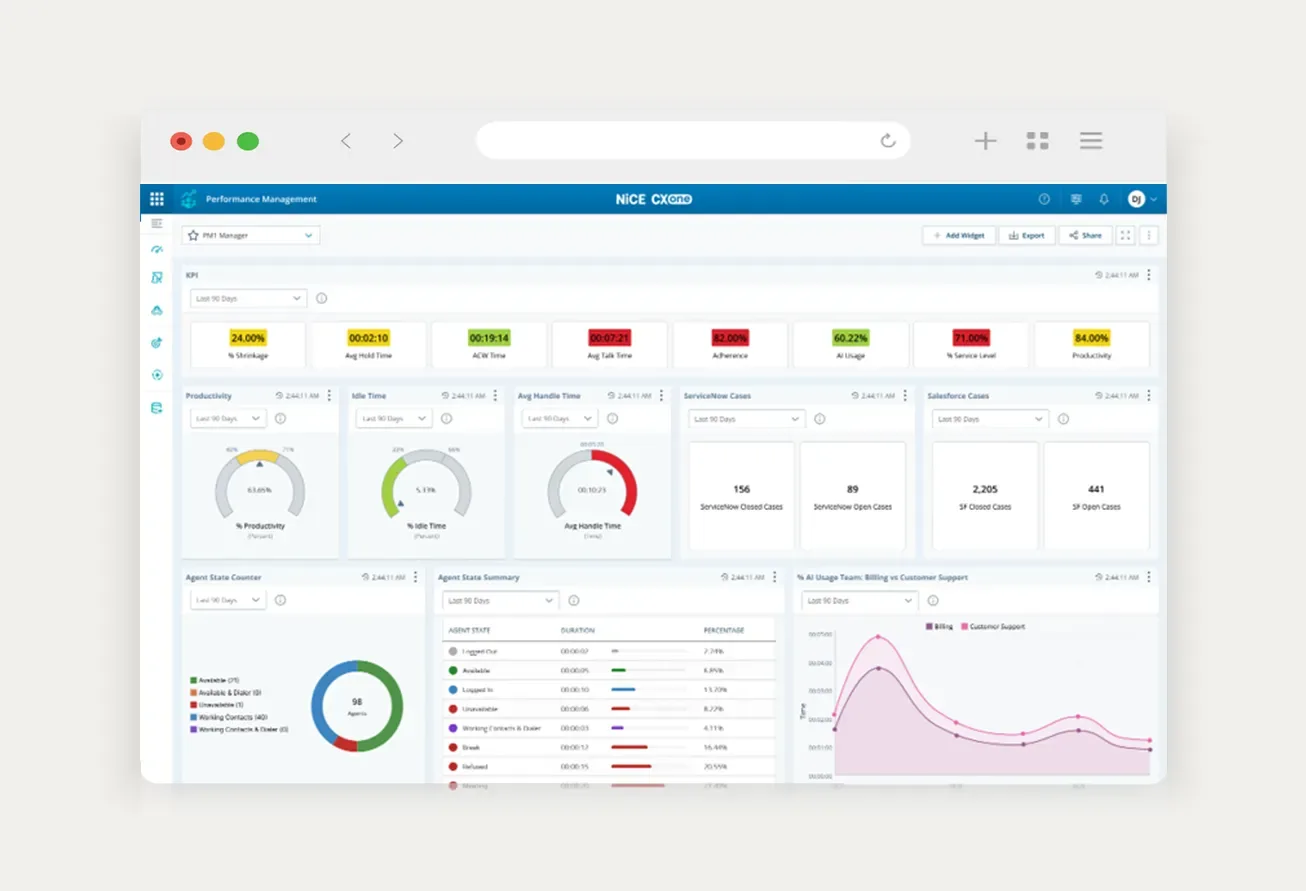
Table of contents
- 1. NiCE CXone Connects Customer Service Operations
- 2. How This NiCE CXone Review Was Assessed
- 3. Omnichannel Routing and Agent Workflows
- 4. NiCE CXone AI and Automation
- 5. Interaction Analytics and Quality Management
- 6. Workforce Management and Scheduling
- 7. CRM Integrations and Business Systems
- 8. Security, Privacy and Compliance Controls
- 9. Reporting and Contact Center Performance
- 10. Implementation, Training and Administration
- 11. NiCE CXone Pricing and Contract Costs
- 12. Who Should Choose NiCE CXone?
- Frequently Asked Questions
1. NiCE CXone Connects Customer Service Operations
NiCE CXone gives customer service organizations a cloud platform for managing customer conversations, supporting agents, analyzing interactions, and coordinating contact center operations.
Its value comes from bringing communication channels, workforce tools, automation, and performance data into a connected operating environment.
For companies handling substantial volumes of customer requests, that structure can make it easier to maintain consistent service across teams and channels.
The platform is designed for organizations that need more than basic call handling.
Depending on the products and licenses selected, teams can use NiCE CXone for voice and digital interactions, intelligent routing, interaction recording, quality management, workforce management, analytics, and AI assisted customer service.
These capabilities can help supervisors understand what is happening across a contact center while giving agents better access to customer context and relevant information.
The central buying question is whether your organization needs this breadth of functionality.
A small support team with a single telephone queue may find a simpler service desk sufficient.
A large contact center with several channels, complex schedules, regulatory obligations, and demanding reporting requirements has more reasons to consider NiCE CXone.
The distinction matters because enterprise contact center software is an operational investment.
Licensing is only one part of the cost.
Configuration, integrations, training, process changes, data governance, and ongoing administration all influence whether the platform produces measurable improvements.
NiCE CXone is most compelling when a business wants to coordinate these activities rather than manage each one through disconnected systems.
Buyers should still evaluate the exact modules included in a proposed package, the availability of integrations in their environment, and the commercial terms offered for their expected workload.
2. How This NiCE CXone Review Was Assessed
A reliable software review should separate documented capabilities from assumptions about what a product will deliver in a particular business.
This review uses NiCE's published product information, pricing materials, integration descriptions, and security documentation to evaluate the platform's main strengths, practical limitations, and suitability for different contact center environments.
The assessment considers six buying factors.
These are the breadth of customer interaction channels, the quality of operational coordination, the usefulness of analytics, the potential role of automation, the demands of implementation, and the clarity of the commercial model.
Security and compliance also receive attention because contact centers frequently process personal information, payment details, account records, and sensitive conversations.
This is a research based review rather than a claim of a completed hands on deployment.
Actual performance depends on the customer's configuration, network conditions, integrations, product entitlements, agent workflows, and the quality of the underlying data.
A feature appearing in vendor documentation does not guarantee that it is included in every package or available under every contract.
That distinction is particularly important for NiCE CXone because the product family covers several related contact center capabilities.
Two organizations using the same platform name may have different experiences if one has basic interaction handling while the other has licensed workforce optimization, advanced analytics, and additional AI capabilities.
For a serious evaluation, buyers should request a demonstration based on realistic customer scenarios.
They should also ask the vendor to confirm current pricing, usage charges, implementation responsibilities, data handling arrangements, and the specific capabilities included in the proposed configuration.
The objective here is practical: identify where NiCE CXone can create operational value, explain what buyers need to validate, and clarify which organizations are likely to benefit most from its capabilities.
3. Omnichannel Routing and Agent Workflows
Contact centers often receive requests through several channels, including telephone, web messaging, and other digital communication methods.
If those interactions are managed in separate systems, agents may have to switch applications, repeat questions, or search for information already supplied by the customer.
These interruptions can slow service and make the experience feel inconsistent.
NiCE CXone is designed to help organizations coordinate customer interactions across supported channels.
Omnichannel routing can direct work to appropriate agents according to the rules configured by the business.
Depending on the deployment, those rules may consider agent availability, skills, interaction type, queue conditions, and other operational requirements.
The benefit is not simply that a request reaches an available person.
A well designed routing model helps match the customer's needs with an agent who can resolve them.
A billing question, for example, may need different expertise from a technical support request or a complaint requiring an escalation specialist.
Routing logic must reflect actual service operations.
If the skills assigned to agents are inaccurate, the queues are poorly designed, or priority rules conflict, even a capable platform can distribute work inefficiently.
Organizations should map their existing routing decisions before implementation and establish clear ownership for maintaining those rules.
The agent workspace is another important part of the experience.
Agents need to understand the interaction, access relevant customer information, and move between tasks without losing context.
NiCE's CRM integration options are intended to reduce the need to jump between separate contact center and customer relationship management applications.
The quality of this experience depends on the particular CRM connection and the way it is configured.
Buyers should test whether agents can access the fields they need, whether records update reliably, and whether the integration supports the workflows used by the business.
A demonstration should include common cases as well as exceptions, such as an unidentified caller, a duplicate customer record, or a conversation that needs escalation.
Organizations should also examine how routing works during unexpected demand.
Campaign launches, service interruptions, billing cycles, and seasonal peaks can produce sudden changes in interaction volume.
Routing policies should be tested under these conditions rather than evaluated only during a quiet demonstration.
For a multi channel operation, the strongest reason to consider NiCE CXone is its potential to coordinate the work surrounding each interaction.
The value depends on thoughtful configuration and whether the selected package supports the channels and routing controls the organization actually needs.
4. NiCE CXone AI and Automation
Artificial intelligence is an important part of the NiCE CXone proposition, but buyers should avoid treating every AI capability as a single feature.
Different applications address different problems.
Some help customers find answers without speaking to an agent.
Others assist agents during live conversations, analyze interaction patterns, or help supervisors identify coaching opportunities.
Customer facing automation can handle selected requests before a human agent becomes involved.
Suitable examples include routine questions, guided information gathering, and simple service workflows that follow clear business rules.
Effective automation can reduce avoidable queue volume and allow employees to focus on interactions that require judgement, empathy, investigation, or authorization.
The limits are just as important as the potential benefits.
An automated experience needs an appropriate path to human assistance when a request falls outside its supported scope.
If the system repeatedly misunderstands a customer, fails to recognize an exception, or makes escalation difficult, automation may increase frustration rather than improve service.
Agent assistance addresses a different problem.
During a conversation, an agent may need to search knowledge articles, confirm policy details, document the interaction, or identify the next step.
AI assisted tools can help reduce this effort where the relevant capabilities are available and the underlying information is accurate.
Analytics can also help organizations examine patterns across customer conversations.
For example, recurring questions about a product change may indicate that the website, documentation, or onboarding process needs improvement.
Repeated complaints about a particular procedure may point to a policy problem rather than an individual agent performance issue.
These insights become useful when managers connect them to action.
A report identifying repeated customer frustration is only a starting point.
The organization must determine the cause, assign responsibility, make an appropriate change, and monitor whether the problem declines.
NiCE also offers AI capabilities under its broader customer experience portfolio, including tools associated with its Enlighten and CXone offerings.
Exact availability, naming, functionality, and commercial treatment should be verified against the current proposal because product packaging can change.
Buyers should request a scenario based AI demonstration rather than a general presentation.
Ask the vendor to show how an automated interaction handles ambiguous requests, how a customer reaches a person, what data the AI uses, how generated responses are controlled, and what records are available for review.
It is also worth defining an AI measurement plan before deployment.
Useful indicators may include containment rate, transfer rate, repeat contact rate, customer satisfaction, average handling time, and the percentage of interactions requiring correction.
No single metric is sufficient.
A high automation rate, for example, is not a success if customers must contact the business again to resolve the same problem.
NiCE CXone's AI potential is strongest when automation is applied to clearly defined use cases with measurable outcomes and appropriate oversight.
Organizations should start with workflows that are frequent, well documented, and relatively low risk before extending AI into complex or sensitive decisions.
5. Interaction Analytics and Quality Management
Contact center managers need to understand more than the number of calls answered.
They need to know why customers are contacting the business, where conversations become difficult, which policies cause confusion, and whether agents follow required procedures.
Interaction analytics and quality management can help turn conversation data into information that supports these decisions.
NiCE offers analytics capabilities designed to examine customer interactions using voice and text data.
Depending on the modules selected, organizations can identify patterns, review customer sentiment indicators, investigate recurring issues, and look for opportunities to improve service.
This can provide a broader view than relying only on a small sample of manually reviewed calls.
The distinction between analytics and quality management is useful.
Analytics can help identify patterns across large volumes of interactions.
Quality management focuses on evaluating interactions against defined standards, coaching requirements, and compliance criteria.
These activities complement each other, but they solve different operational problems.
A contact center might use analytics to discover that customers frequently ask for clarification after receiving a particular explanation.
Quality reviewers could then examine relevant conversations, determine whether the problem comes from unclear guidance or inconsistent agent behavior, and update training materials accordingly.
Quality evaluation also requires careful design.
A scorecard should measure behaviors that matter to customers and the organization, rather than reward agents for superficial compliance.
If the evaluation criteria are unclear or contradictory, automated scoring and manual reviews can produce results that employees do not trust.
AI supported evaluation may help expand the number of interactions that can be assessed, but organizations should validate the results against human review.
Accent variation, background noise, language differences, domain specific terminology, and unusual conversation patterns can affect automated interpretation.
The business should understand the system's limitations before using its outputs for consequential personnel decisions.
Managers should distinguish between individual performance problems and systemic causes.
If many agents struggle with the same process, additional coaching may not solve the issue.
The underlying workflow, product information, customer interface, or policy may need attention.
Reporting is most useful when it leads to a defined action.
A supervisor should be able to move from a recurring issue to relevant interactions, review the evidence, assign a corrective measure, and check whether the intervention changes outcomes.
The exact workflow available depends on the licensed modules and configuration.
Before purchasing, ask NiCE to demonstrate how an interaction is selected for review, how scoring criteria are configured, how managers challenge or correct an assessment, and how findings can be connected to coaching.
Also confirm data retention, recording access, export options, and permissions for sensitive conversations.
For organizations with significant interaction volume, analytics and quality management can support a more consistent approach to service improvement.
The platform's value depends on the accuracy of its analysis and the willingness of managers to act on what the data reveals.
6. Workforce Management and Scheduling
Workforce management addresses one of the most expensive challenges in customer service: having the right number of appropriately skilled people available when demand arrives.
Too few agents can create long queues and abandoned contacts.
Too many can raise labor costs without improving the customer experience proportionately.
NiCE's contact center portfolio includes workforce management capabilities intended to help organizations plan staffing, align schedules with expected demand, and monitor operational performance.
Depending on the licensed configuration, workforce tools can support forecasting, scheduling, and management of agent availability.
Forecasting depends on usable historical data.
Contact volume, average handling time, service levels, seasonality, product launches, and exceptional events can all influence staffing requirements.
If an organization has recently changed its channels or routing model, older data may no longer reflect current demand.
The planning process should therefore combine system generated forecasts with operational knowledge.
Managers need to account for known campaigns, public holidays, scheduled maintenance, policy changes, and other events that could affect demand.
A forecast is a decision aid, not a guarantee of what will happen.
Scheduling presents a related challenge.
Agents have different skills, working arrangements, break requirements, and availability.
A schedule that satisfies the overall headcount target may still leave a specialist queue understaffed.
Workforce planning should consider both total coverage and the distribution of skills across time periods.
Intraday management helps supervisors respond when actual demand differs from expectations.
If contacts arrive faster than predicted or average handling time increases, managers may need to adjust breaks, reassign suitable work, or activate an approved contingency plan.
These changes should respect labor rules, employee agreements, and service commitments.
Workforce management also affects employee experience.
Schedules that change unpredictably or ignore reasonable preferences can create dissatisfaction and contribute to turnover.
Organizations should consider schedule transparency, the process for requesting changes, and how managers communicate unexpected adjustments.
Buyers should investigate how NiCE CXone handles the specific workforce practices used by their organization.
Ask about forecasting inputs, schedule optimization, employee access, shift changes, adherence reporting, and the treatment of multiple skill groups.
Confirm whether the required functions are included in the proposed package or sold separately.
The platform should also fit the contact center's existing planning process.
If managers rely on external payroll systems, employee scheduling tools, or business intelligence applications, determine how relevant data moves between systems and who is responsible for resolving synchronization problems.
Workforce management is particularly valuable for larger operations where staffing decisions have a direct effect on cost and customer waiting time.
Smaller teams may not need advanced forecasting, especially if their demand is predictable and their schedules can be managed with simpler tools.
The best evaluation connects staffing features to actual business outcomes.
Compare forecast accuracy, schedule adherence, overtime, service level, abandonment, and employee satisfaction before and after deployment.
Improvements should be assessed together because optimizing one measure can create undesirable effects elsewhere.
7. CRM Integrations and Business Systems
A contact center rarely operates independently.
Customer records may live in a CRM, orders in an enterprise resource planning system, technical issues in a service management application, and product guidance in a separate knowledge base.
The usefulness of NiCE CXone depends partly on how well it connects the interaction layer with these systems.
NiCE publishes CRM integration options for platforms including Salesforce, Microsoft Dynamics, Oracle, ServiceNow, Zendesk, Kustomer, and Pega.
The company's integration information describes options that can bring contact center controls and customer context into a consolidated agent experience.
The precise behavior depends on the selected connector, the target application, and the deployment design.
A prebuilt integration can reduce the need to develop every connection from scratch.
It does not eliminate implementation work.
Organizations still need to configure authentication, map fields, define permissions, test data synchronization, and determine how errors will be handled.
Field mapping deserves particular attention.
A customer may have several identifiers, duplicate records, different account types, or contact details that are not consistent across systems.
The integration must identify the correct record without exposing information to an unauthorized user or updating the wrong account.
The organization should also decide which system owns each data field.
If two platforms can change the same value, unclear ownership can lead to overwritten information or conflicting records.
A documented data model helps prevent this problem and makes support easier after launch.
Integration performance affects the agent experience directly.
If the CRM panel loads slowly, records fail to appear, or agents must repeatedly refresh information, the theoretical benefit of a unified workspace diminishes.
Testing should include normal traffic and realistic peak conditions.
Beyond CRM, NiCE describes an ecosystem of applications, APIs, software development kits, and marketplace integrations.
These options can support connections to analytics platforms, knowledge systems, communication tools, and other enterprise services.
The breadth of the ecosystem is useful, but buyers should verify that the particular connector they need is supported and maintained.
When an integration is business critical, ask whether it is native, partner provided, or custom built.
Establish who supports it, how upgrades are handled, what happens when an endpoint changes, and whether additional fees apply.
A connector that works during a demonstration may still require significant work to satisfy production security and reliability requirements.
Organizations should evaluate integrations as complete workflows rather than isolated technical links.
For example, a customer complaint may need to create or update a CRM record, retrieve order information, attach an interaction recording, and trigger a follow up task.
Every step should be tested, including failures and recovery.
NiCE CXone is a stronger fit for businesses that want contact center activity connected to their wider customer systems.
The real value comes from reliable data exchange and a usable agent workflow, not simply the number of logos shown in an integration catalogue.
Official integration information is available at https://www.nice.com/platform/integrations.
8. Security, Privacy and Compliance Controls
Contact centers routinely process information that needs careful protection.
Customer conversations can include personal details, account identifiers, payment information, health related questions, and records of complaints.
Security must therefore be evaluated as part of the operating model rather than treated as a procurement checkbox.
NiCE maintains a Trust Center that describes its security, privacy, compliance, and reliability approach for CXone.
Its published materials list a range of standards and regulatory frameworks, including ISO 27001, SOC 2 related assurance, GDPR, HIPAA, PCI DSS, and FedRAMP authorization for applicable services and environments.
Buyers should confirm the current status and exact scope of any certification or authorization relevant to their intended deployment.
A certification does not automatically make a customer's implementation compliant.
The organization remains responsible for its own access policies, agent training, retention rules, lawful processing, configuration, and use of customer data.
Contract terms and the division of responsibilities between customer and provider should be reviewed carefully.
Role based access control is especially important in contact centers with multiple teams and levels of authority.
Agents may need access to active interactions, while supervisors may require quality review tools and administrators may manage system configuration.
The principle of least privilege means granting each role only the access required for its responsibilities.
Recording controls also deserve attention.
Organizations should determine when calls are recorded, which interactions are excluded, how consent or notification requirements are handled, who can replay recordings, and how long records are retained.
The correct configuration depends on the business's jurisdiction, industry, and policies.
Data encryption, authentication, audit logging, incident response, and operational monitoring are further areas to examine.
Buyers should request the documentation necessary for their risk assessment, including relevant audit summaries, data processing terms, subprocessor information, and procedures for handling security incidents.
Regional data handling may be important for organizations subject to localization requirements.
NiCE describes sovereign cloud options for certain regions and specialized environments.
Availability should be confirmed for the particular products, data types, and countries involved.
A regional hosting statement should not be interpreted as a blanket guarantee that every type of data remains in a chosen jurisdiction under every service configuration.
AI introduces additional questions.
Businesses should understand what information is processed by AI features, how access is controlled, whether data is used to improve models, how generated outputs are monitored, and what records are available for audit.
The answers may differ by feature and contractual arrangement.
For regulated operations, request a security review before implementation rather than after a configuration has already been selected.
Involve legal, privacy, compliance, and information security stakeholders early.
They should assess both the vendor's controls and the customer's proposed workflows.
NiCE CXone offers substantial published security and compliance documentation, which can support enterprise due diligence.
The purchasing decision should still depend on the exact product scope, contract, data flows, regional requirements, and evidence accepted by the organization's own risk teams.
Official documentation is available at https://www.nice.com/company/trust-center.
9. Reporting and Contact Center Performance
Contact center leaders need reliable measures to understand service quality, staffing efficiency, and the reasons customers are contacting the organization.
NiCE CXone includes reporting and analytics capabilities designed to help teams examine operational activity and make more informed decisions.
Common measures include service level, average speed of answer, abandonment rate, average handling time, first contact resolution, customer satisfaction, and agent occupancy.
Each indicator answers a different question.
A low average handling time may indicate efficient service, but it may also reflect rushed conversations or unresolved requests if considered without other measures.
The most useful reporting model combines operational metrics with quality indicators.
A service level target tells managers how quickly customers are reaching the team.
Quality results help determine whether those conversations are effective.
Repeat contact data can reveal whether customers need to return because the original issue was not resolved.
Dashboards should be designed around the decisions their users make.
An executive may need a consolidated view of performance across business units, while a supervisor may need a live queue view and a list of agents requiring support.
Giving every user the same dashboard can create unnecessary complexity.
Metric definitions should be documented before reporting begins.
Different teams sometimes calculate similar measures differently, especially when a contact can move between queues or channels.
If departments use inconsistent definitions, management discussions may focus on reconciling numbers instead of solving service problems.
Data freshness is another consideration.
Some operational decisions require near real time information, while strategic analysis may use daily or weekly summaries.
Buyers should confirm how quickly data becomes available, which filters can be applied, and whether information can be exported to an existing business intelligence environment.
NiCE describes options for using native business intelligence tools and streaming data into other analytics systems.
Its integration ecosystem also supports connections to external technologies.
The relevant capabilities, limitations, and costs should be validated for the proposed package.
Reporting becomes more valuable when it informs a repeatable management process.
Teams should review trends, identify the causes of deviations, assign actions, and check whether those actions improve outcomes.
A dashboard that is opened only for monthly reporting provides less operational value than one connected to regular decisions.
Before purchasing, ask for examples based on your own performance indicators.
Test whether managers can answer practical questions such as which queue has the longest delay, which contact reason is increasing, and whether a recent training intervention improved quality.
Also confirm retention periods, report access permissions, and the ability to reconcile system metrics with finance or workforce data.
NiCE CXone's reporting capabilities are most relevant to organizations that want to manage service operations with consistent evidence.
Their effectiveness depends on accurate definitions, accessible dashboards, appropriate permissions, and a culture that uses data to improve processes rather than simply rank employees.
10. Implementation, Training and Administration
Enterprise contact center software can change how agents work, how supervisors manage performance, and how customer information moves through the business.
Implementation therefore requires more than activating accounts and distributing login details.
It requires a deliberate plan for processes, configuration, integrations, training, testing, and operational ownership.
The first step should be a clear map of the existing environment.
Document the channels in use, customer systems, routing rules, service targets, recording policies, workforce processes, reporting requirements, and known pain points.
This gives the project team a baseline against which the proposed configuration can be evaluated.
Next, prioritize the workflows that matter most.
A contact center may want to replace its telephone system, introduce digital channels, connect its CRM, improve quality management, and deploy AI at the same time.
Attempting every change in a single launch can make testing and troubleshooting harder.
A phased rollout can reduce risk.
The organization might begin with a defined group or queue, validate core routing and recording, and then expand after resolving operational issues.
The right approach depends on business criticality, deployment complexity, contractual commitments, and the resources available to support the project.
Testing should cover more than the ideal path.
Include failed integrations, incorrect customer matches, unavailable agents, peak volumes, permission restrictions, and escalation scenarios.
Test the experience from both sides: customers need a reliable route to assistance, and agents need enough information to resolve the request.
Training should be role specific.
Agents need to understand their workspace and common interaction tasks.
Supervisors need reporting, coaching, queue management, and escalation procedures.
Administrators need configuration knowledge, access control, troubleshooting methods, and change management practices.
Operational documentation should be ready before launch.
It should explain who can change routing rules, how new agents are added, how incidents are escalated, how reports are maintained, and how changes are tested.
Without clear ownership, small configuration changes can become dependent on a few specialists.
The organization should also prepare for adoption challenges.
Employees may resist changes if they do not understand the reason for them or believe that monitoring tools will be used unfairly.
Communicating the purpose of analytics, clarifying data access, and involving agents in workflow design can improve trust.
Post launch support is equally important.
The project team should monitor service levels, customer complaints, integration errors, agent feedback, and training needs during the early operating period.
A successful technical launch does not guarantee that every process will work well under real demand.
Buyers should clarify the division of implementation responsibilities with NiCE and any implementation partner.
Confirm who handles configuration, migration, integration development, training, testing, and ongoing support.
Ask about expected timelines, dependencies, acceptance criteria, and charges for work outside the initial scope.
NiCE CXone can support complex contact center environments, but that breadth makes project discipline essential.
Organizations that define their requirements, assign clear ownership, and validate workflows before launch are better positioned to realize the platform's potential.
11. NiCE CXone Pricing and Contract Costs
NiCE CXone pricing should be assessed against the capabilities an organization intends to use, not only the advertised entry price.
The platform has multiple packages and optional capabilities, and the total contract can depend on the number of agents, the selected suite, usage, implementation requirements, and additional services.
NiCE's published pricing information lists several CXone Mpower packages.
The publicly displayed prices include Omnichannel Suite at $110 per agent per month, Essential Suite at $135, Core Suite at $169, Complete Suite at $209, and Ultimate Suite at $249 per agent per month.
The vendor also presents a session based pricing option for Ultimate in some configurations.
These figures should be treated as published reference prices, not a guarantee of the price available to every customer.
Package names and inclusions matter.
A lower priced option may include the basic capabilities needed by one organization but omit advanced workforce management, analytics, AI functions, or other features required by another.
Comparing only the headline monthly amount can lead to an incomplete purchasing decision.
A sensible comparison starts with a requirements list.
Identify the channels, routing capabilities, recording and retention requirements, workforce tools, analytics, integrations, AI features, and support arrangements that are necessary.
Then ask the vendor to map each requirement to the proposed package and identify anything that requires an add on or separate agreement.
Agent count is only one part of the calculation.
Some environments may have seasonal staffing, part time agents, supervisors who need different licenses, or usage patterns that affect the best commercial arrangement.
Buyers should confirm minimum seat commitments, billing intervals, contract length, expansion terms, and the treatment of inactive or temporary users.
Implementation can also influence the total cost of ownership.
Costs may include discovery, configuration, integration work, data migration, training, change management, and ongoing administration.
If the business requires custom reporting or complex connections to older systems, those activities should be estimated separately.
The organization should model expected growth.
A package that fits the current team may become less suitable as the business adds channels, new markets, or more advanced automation.
Ask how changes in agent count, product selection, and usage affect the contract, and whether a midterm upgrade changes the pricing basis.
Support and service commitments should be evaluated alongside price.
Buyers should understand which support tier is included, what response commitments apply, and whether implementation or ongoing optimization services carry separate charges.
A lower subscription may be less attractive if essential operational support is unavailable or expensive.
For an accurate commercial comparison, request a written quotation with line items for licenses, usage, add ons, professional services, support, and any minimum commitments.
The quotation should also identify applicable taxes, billing terms, renewal provisions, and conditions for price changes.
NiCE CXone is best evaluated as an enterprise operating platform rather than a simple per seat utility.
Its price may be justified where advanced routing, workforce coordination, analytics, and automation address meaningful service costs.
Organizations with modest needs should compare the total expense with simpler alternatives before committing.
Current package information is available at https://www.nice.com/websites/pricing.
12. Who Should Choose NiCE CXone?
NiCE CXone is most relevant to organizations that manage significant customer interaction volumes and need stronger coordination across service channels, people, data, and performance management.
It is worth considering when fragmented systems make it difficult to understand the customer journey or manage consistent service across teams.
Large customer service departments may benefit from a unified environment for routing, interaction analytics, quality management, workforce planning, and integrations.
These capabilities can help supervisors coordinate operations and identify problems that are difficult to detect when each team relies on separate tools.
Regulated organizations may also find the platform's published security and compliance documentation relevant.
However, suitability should be established through a review of the exact products, data flows, contractual commitments, and required authorizations.
The presence of a certification does not replace an organization's own compliance assessment.
Businesses with multiple customer channels should evaluate whether NiCE CXone can simplify the agent experience.
If employees regularly switch between telephone tools, messaging platforms, CRM records, and knowledge systems, integration and workspace improvements may reduce friction.
The benefit should be demonstrated with real workflows rather than assumed from a product description.
The platform may be less suitable for a very small operation with a handful of agents, straightforward call routing, and limited reporting requirements.
Such a business may not need the breadth of an enterprise contact center suite, and the implementation effort could outweigh the operational benefits.
It may also be a poor fit for organizations that lack the resources to manage a substantial implementation.
Complex routing, multiple integrations, analytics, and AI require ownership, training, governance, and ongoing refinement.
A business that expects advanced results without investing in these activities may be disappointed.
Companies with strict budget limits should compare total contract costs rather than just subscription figures.
Include licensing, implementation, integrations, support, administration, and any usage based charges.
If the main requirement is basic telephone service or a simple shared inbox, a more focused tool may deliver better value.
A final decision should be based on measurable needs.
Estimate current queue delays, repeat contacts, quality issues, staffing inefficiencies, integration problems, and manual reporting effort.
Then identify which NiCE CXone capabilities could address those problems and agree on how results will be measured after deployment.
The right buyer is not necessarily the company with the largest contact center.
It is the organization whose operational complexity justifies the platform and whose teams can use its capabilities consistently.
Key features
- Omnichannel customer interaction routing
- Voice and digital channel management
- Skills based interaction distribution
- Configurable queue priority rules
- Unified agent workspace capabilities
- Customer relationship management integrations
- Real time operational reporting dashboards
- Historical contact center performance analysis
- AI assisted customer service workflows
- Automated customer self service
- Interaction recording and playback
- Speech and text interaction analytics
- Automated quality evaluation support
- Agent performance coaching workflows
- Workforce demand forecasting capabilities
- Agent schedule planning and optimization
- Intraday staffing performance monitoring
- Customer sentiment trend identification
- Compliance monitoring and audit trails
- Role based access control
- Enterprise application integration options
- Developer APIs and SDK access
- CXexchange marketplace application extensions
- Knowledge management system connectivity
- Contact center operational performance monitoring
Pricing
- Voice and digital channel support
- Omnichannel routing for customer interactions
- Core agent workspace capabilities
- Prebuilt CRM integration options
- Contact center reporting tools
- Expanded contact center operating capabilities
- Omnichannel routing and agent workspace
- CRM integrations for connected workflows
- Reporting for operational performance monitoring
- Additional tools for contact center management
- Advanced customer experience capabilities
- Expanded AI and automation options
- Enhanced contact center workflow support
- Broader operational management functionality
- Additional capabilities subject to configuration
Pros & cons
Pros
- Comprehensive contact center capabilities in one platform
- Supports voice and digital interactions
- Configurable routing for complex queues
- Useful analytics across customer conversations
- Workforce planning supports staffing efficiency
- CRM integrations improve agent context
- AI capabilities support targeted automation
- Quality management helps standardize service
- Security documentation supports enterprise assessment
- Multiple packages suit different requirements
- APIs enable broader system connectivity
- Reporting supports operational decision making
- Supports large scale service environments
- Marketplace expands integration possibilities
Cons
- Pricing requires careful package comparison
- Implementation can demand specialist resources
- Advanced capabilities may increase total costs
- Configuration requires clear operational ownership
- Integration quality varies by connector
- AI results require ongoing validation
- Complex reporting needs careful metric definitions
- Training is essential for adoption
- Small teams may find it excessive
- Some features require separate licensing
- Contract terms affect overall affordability
- Data governance remains customer responsibility
- Custom integrations can require additional work
- Product availability can vary by package
NiCE specs
- Platforms: Cloud based platform accessed through supported web browsers and mobile integrations where available
- Free plan: No publicly listed general purpose free plan
- Starting price: $110 per agent / month for Omnichannel Suite
- Integrations: 200+ pre integrated applications and broader integration options
- Support: Documentation, vendor support, and professional services subject to agreement
- Best for: Mid sized and enterprise contact centers with complex service operations
Our verdict
NiCE CXone is a strong option for organizations that need to coordinate customer interactions, agent workflows, workforce planning, quality management, analytics, and automation across a demanding contact center operation. Its breadth is a meaningful advantage when several teams and systems must work together, but that same breadth creates implementation, governance, and cost considerations. Buyers should validate package inclusions, integrations, support terms, and AI controls through realistic demonstrations and a written quotation. Smaller teams with basic calling requirements may be better served by simpler software. For complex service environments with clear operational goals and resources for implementation, NiCE CXone deserves serious consideration.
View PlansFrequently Asked Questions
What is NiCE CXone used for?
How much does NiCE CXone cost?
Does NiCE CXone support CRM integrations?
Is NiCE CXone suitable for small businesses?
Is NiCE CXone secure for regulated industries?
Reader reviews
Be the first to review